EU Businesses Move from Talk to Action on Reducing Reliance on China

EU Businesses Move from Talk to Action on Reducing Reliance on China
By
Junia Wells
Last updated:
December 11, 2025
First Published:
December 11, 2025

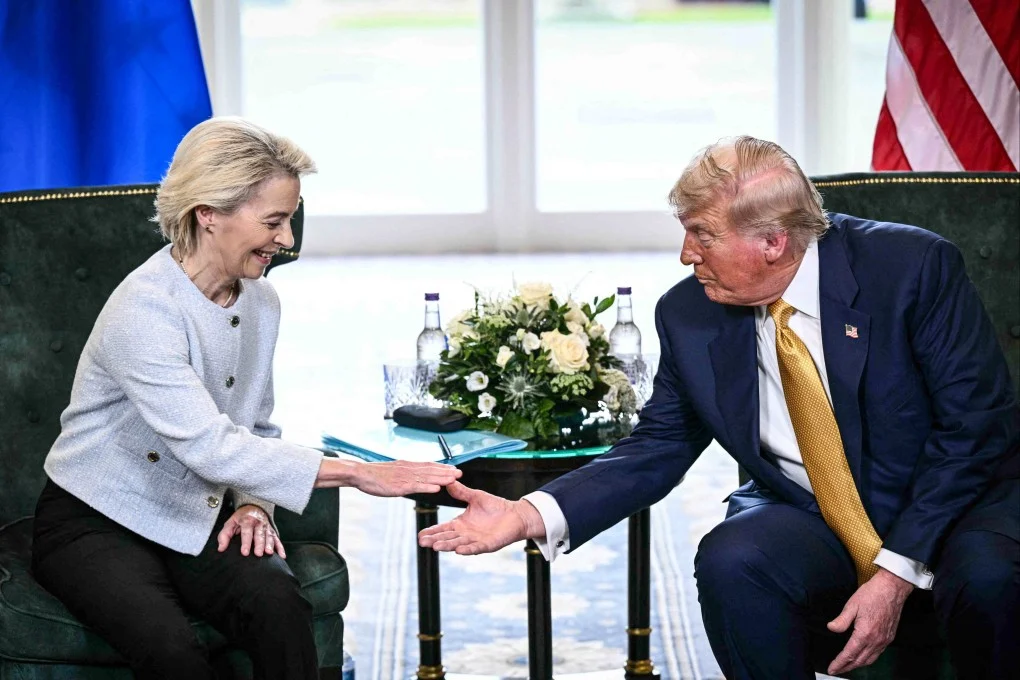
Photo: South China Morning Post
European businesses are shifting from discussion to decisive action on reducing dependence on China, according to Jens Eskelund, president of the European Union Chamber of Commerce in China. Eskelund made the remarks ahead of the EU Chamber’s latest report on supply chain risks, highlighting how global companies are reassessing their exposure after a turbulent 2025.
“Dependencies are being examined in far greater detail than ever before,” Eskelund said. “The question now is whether Europe can manufacture even basic products, like toothpaste, without Chinese-sourced ingredients.”
China’s trade surplus through November hit a record $1 trillion, reflecting strong export demand despite U.S. tariffs and other trade barriers. The EU Chamber noted that China’s share of global container shipments rose to 37% in the first three quarters of this year, up from 36% at the end of 2024 and 31.7% before the pandemic. Factors such as a weak yuan and domestic overproduction have contributed to this growth.
The report urges EU businesses to eliminate single-source dependencies on both China and the U.S. and calls on policymakers to accelerate efforts to identify and address critical supply chain vulnerabilities.
Supply chain concerns are not new. During the Covid-19 pandemic, global lockdowns highlighted the fragility of relying heavily on Chinese manufacturing. Eskelund emphasized that the stakes today are even higher, as companies must also consider the geopolitical risks of depending on a single government or market. Rising tensions over U.S.-China tariffs and Beijing’s export controls on critical materials, including rare earths, have intensified the urgency.
Surveys by the EU and American Chambers of Commerce in China show a record number of businesses are reconsidering investments in the country. In a November survey of 131 EU Chamber members, roughly a third reported plans to source supplies or build capacity outside China. Meanwhile, about half of respondents indicated that their China-based suppliers were already shifting production to other markets.
Experts note that diversification does not necessarily mean reshoring to home countries. “The reality is ‘friendshoring,’” said Cameron Johnson, Shanghai-based senior partner at Tidalwave Solutions. Companies are relocating production to countries such as Mexico or Southeast Asia, often with Chinese firms partnering or setting up operations abroad.
Car manufacturers are among the sectors leading this trend, with some Chinese companies proactively shifting operations overseas ahead of government directives. Eskelund said this illustrates how businesses are taking the initiative to reduce exposure while still leveraging China’s industrial capabilities.
As 2026 approaches, EU companies are expected to continue mapping and restructuring their supply chains, balancing risk management with efficiency, and positioning themselves to navigate an increasingly complex global trade environment.

Popular articles


Subscribe to unlock premium content
From Forest Floors to Global Markets The Rise of Luxury Mushroom Cultivation in Europe

From Remote Runways to Billion-Dollar Gateways

Crypto in the Arctic

From Forest Floors to Global Markets The Rise of Luxury Mushroom Cultivation in Europe
From Remote Runways to Billion-Dollar Gateways
From Forest Floors to Global Markets The Rise of Luxury Mushroom Cultivation in Europe