
EU and Australia Finalize Landmark Trade Pact to Cut Tariffs and Secure Critical Supply Chains

EU and Australia Finalize Landmark Trade Pact to Cut Tariffs and Secure Critical Supply Chains
By
Alina Sinclair
Last updated:
March 24, 2026
First Published:
April 25, 2026

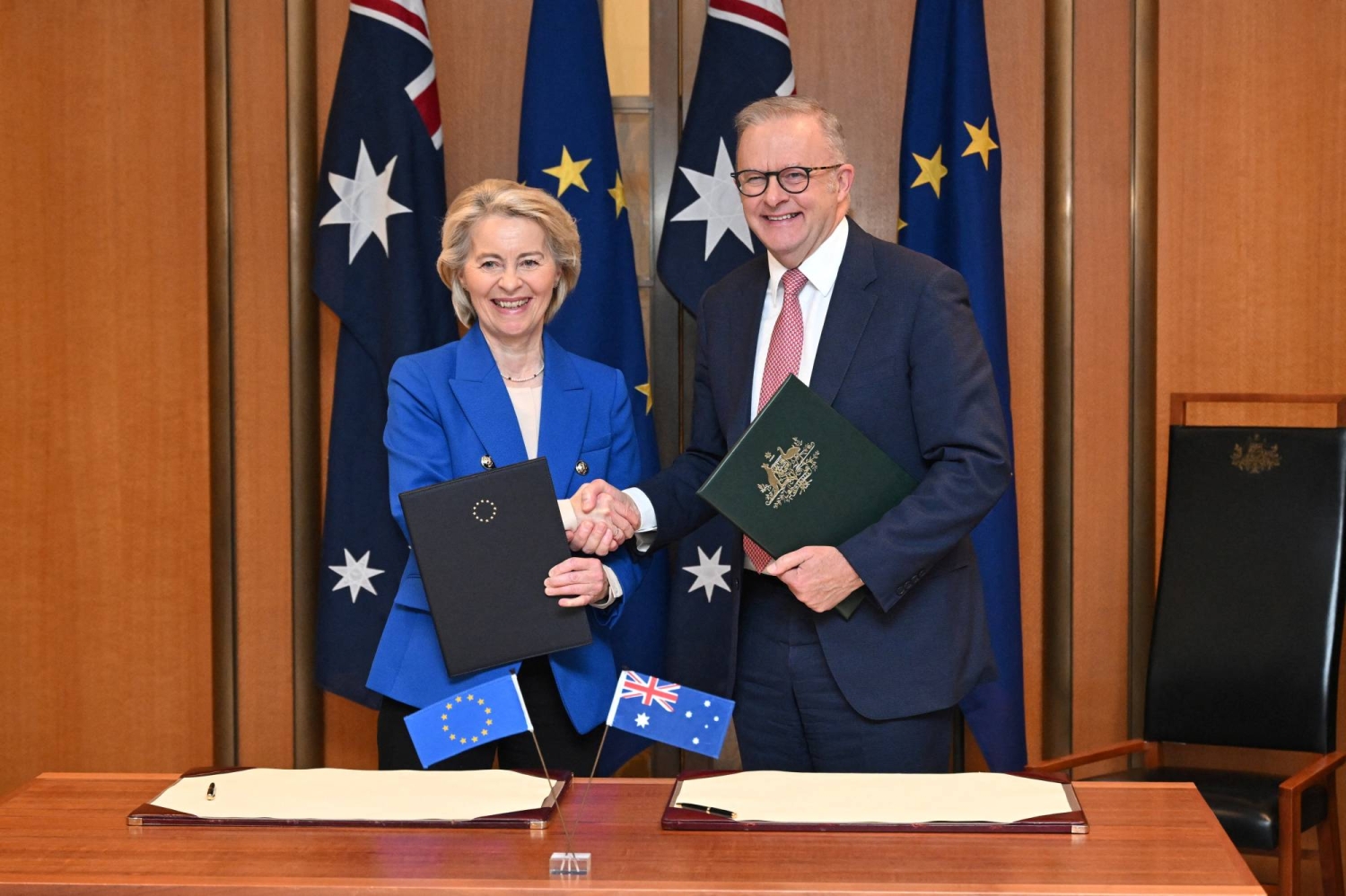
Photo: Arise News
A Long-Awaited Agreement Finally Materializes
After nearly eight years of complex negotiations, the European Union and Australia have officially sealed a comprehensive free trade agreement, marking a pivotal shift in global economic alignment. The deal, finalized following high-level discussions between Ursula von der Leyen and Anthony Albanese, reflects a broader effort among Western economies to strengthen partnerships amid rising geopolitical uncertainty.
This agreement is not just a routine trade pact. It represents a strategic recalibration as traditional allies look to diversify economic dependencies and shield themselves from external shocks, particularly those stemming from shifting U.S. trade policies and global conflicts.
Tariff Reductions to Unlock Billions in Trade
At the core of the agreement is an aggressive reduction in tariffs that is expected to significantly boost bilateral trade flows. The EU will eliminate approximately 98% of tariffs on Australian exports, covering key sectors such as agriculture, seafood, and raw materials. Meanwhile, Australia has committed to removing over 99% of tariffs on European goods, including automobiles, pharmaceuticals, and industrial chemicals.
This sweeping liberalization is projected to drive EU exports to Australia up by as much as 33% over the next decade, potentially reaching €17.7 billion annually. The EU already recorded a goods trade surplus of around €28 billion with Australia in 2024, and this gap could widen further as market access improves.
For Australian exporters, the agreement opens up a lucrative European market of over 440 million consumers, particularly benefiting producers of wine, beef, dairy, and grains.
Critical Minerals Take Center Stage
One of the most strategically important aspects of the deal is Europe’s enhanced access to Australia’s vast reserves of critical raw materials. These include lithium, aluminum, and manganese, which are essential for industries ranging from electric vehicles to renewable energy infrastructure.
As global supply chains become increasingly fragile, the EU is actively working to reduce its reliance on dominant suppliers like China. Securing stable access to Australian minerals provides a more resilient and politically aligned alternative.
This move aligns with Europe’s broader industrial strategy, which prioritizes supply chain security in sectors critical to future economic competitiveness, including battery production and green technologies.
Investment Flows and Safeguards
Beyond trade in goods, the agreement is expected to significantly boost investment flows. The EU is already Australia’s second-largest source of foreign investment, and projections suggest this could increase by over 87% in the coming years.
To address domestic concerns, particularly within Europe, the deal includes safeguard mechanisms. These provisions allow temporary protective measures if a surge in Australian imports threatens local industries, ensuring that liberalization does not come at the cost of economic stability.
Security and Strategic Cooperation Expand
The agreement goes beyond economics, incorporating deeper collaboration in areas such as maritime security, crisis response, and emerging technologies like artificial intelligence.
This reflects a broader trend where trade agreements are increasingly intertwined with geopolitical strategy. By aligning on both economic and security fronts, the EU and Australia are reinforcing a shared vision of a rules-based global order.
A Response to Global Instability
The timing of this deal is critical. Ongoing conflicts in the Middle East, including tensions linked to the Iran war, have heightened concerns about energy security and inflation, particularly in Europe. Rising oil prices and supply disruptions have exposed vulnerabilities in global markets.
At the same time, unpredictable trade measures from the United States, especially under the leadership of Donald Trump, have prompted allies to rethink their economic strategies. Tariff threats and unilateral policy decisions have strained traditional alliances, accelerating the push toward diversification.
Leaders across Western nations are now advocating for stronger cooperation among “middle powers” to counterbalance the influence of major global players and reduce exposure to abrupt policy shifts.
Part of a Broader EU Trade Strategy
This agreement with Australia is one piece of a much larger puzzle. Over the past year, the EU has actively pursued multiple trade deals to expand its global footprint.
Recent agreements with India and Indonesia aim to reduce tariffs on over 90% of traded goods, while a long-anticipated deal with the Mercosur bloc — including Argentina, Brazil, Uruguay, and Paraguay — is expected to come into provisional effect soon.
Together, these agreements signal a clear strategic direction: the EU is building a diversified network of trade partnerships to enhance economic resilience, secure supply chains, and maintain competitiveness in an increasingly fragmented global economy.
The Bigger Picture
The EU-Australia trade deal is more than a bilateral agreement. It is a reflection of a shifting global order where alliances are being redefined not just by geography, but by shared economic interests and political values.
As global trade becomes more complex and uncertain, partnerships like this will play a crucial role in shaping the next phase of economic globalization—one that is less dependent on single powers and more anchored in diversified, resilient networks.
.webp)
Popular articles



Subscribe to unlock premium content
Crypto in the Arctic

Iceland’s Seaweed Revolution
Private Island Rentals for Corporate Retreats Hit $1 Billion

Crypto in the Arctic
Iceland’s Seaweed Revolution
Crypto in the Arctic


