Etsy Shares Surge After $1.2 Billion Depop Sale to eBay

Etsy Shares Surge After $1.2 Billion Depop Sale to eBay
By
Rachel Steinberg
Last updated:
February 19, 2026
First Published:
February 19, 2026

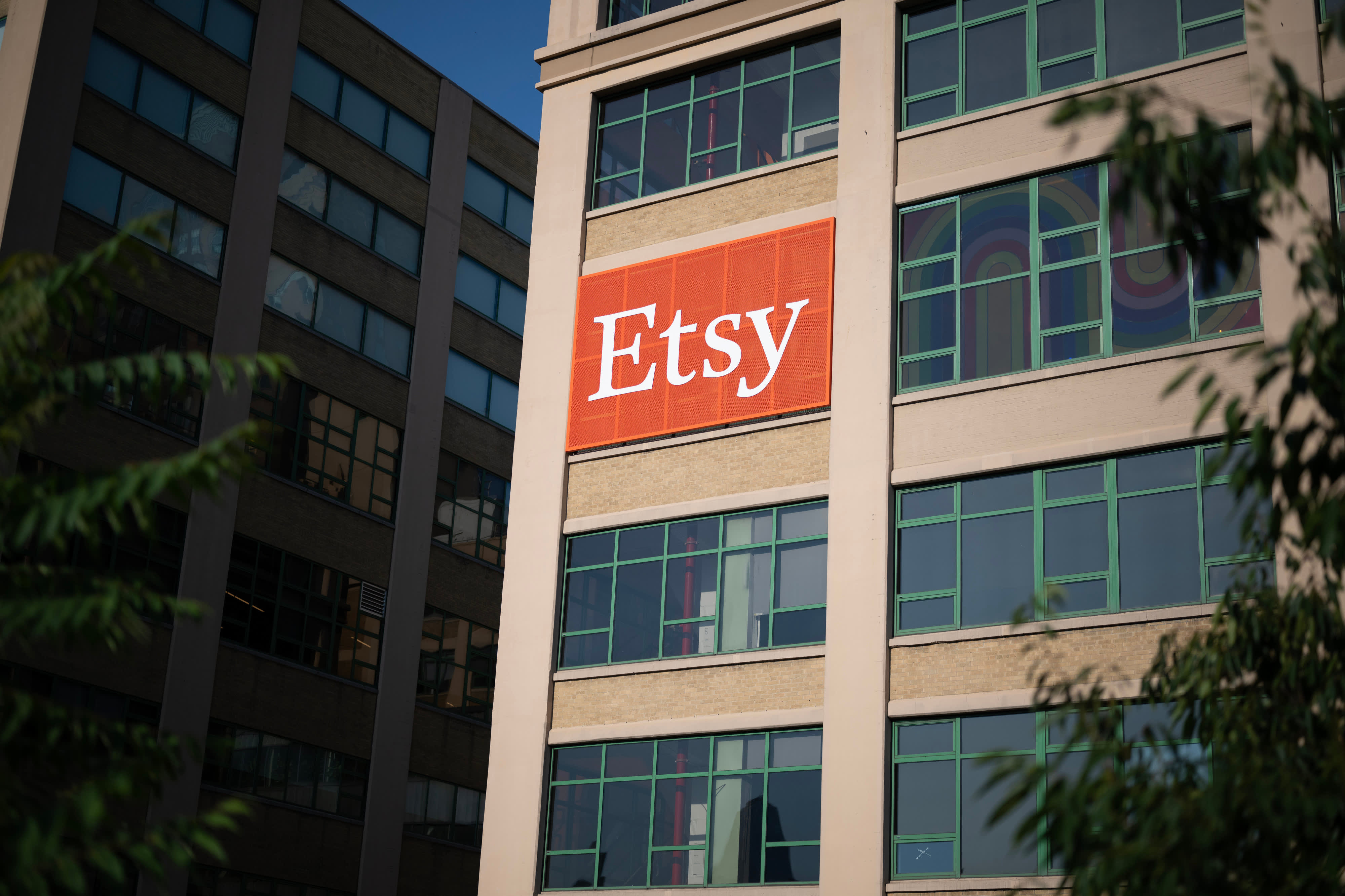
The Etsy Inc. headquarters in the Brooklyn borough of New York on June 25, 2024.
Victor J. Blue | Bloomberg | Getty Images
Deal Snapshot
Etsy saw its stock jump sharply in after-hours trading after announcing that eBay will acquire its resale fashion platform Depop for approximately $1.2 billion in cash.
The transaction, expected to close in the second quarter pending customary approvals, represents a strategic reshaping for both companies: Etsy is streamlining operations while eBay deepens its footprint in the rapidly expanding recommerce market.
Why Etsy Is Selling Depop
Etsy acquired Depop nearly five years ago for about $1.62 billion, aiming to capture younger shoppers and diversify revenue streams. While the platform built strong brand recognition among Gen Z consumers, Etsy has increasingly prioritized profitability and operational focus amid slower e-commerce growth.
Leadership said the sale allows the company to concentrate resources on improving its core handmade and vintage marketplace, where margins and long-term growth potential are more predictable.
The divestiture also reflects a broader unwind of Etsy’s earlier “house of brands” strategy. Over the past two years, the company has sold or scaled back several acquisitions as it adapts to a post-pandemic normalization in online shopping demand.
Depop’s Strategic Value to eBay
For eBay, the acquisition strengthens one of its fastest-growing verticals: secondhand fashion. Depop’s social-commerce model and mobile-first design complement eBay’s existing marketplace infrastructure while helping the company reach a younger demographic that has historically been harder to capture.
Depop’s user base is heavily concentrated among consumers under 35, with strong engagement in categories such as vintage apparel, sneakers, and streetwear. This aligns with broader industry trends showing resale fashion growing at roughly double the pace of traditional retail, driven by sustainability concerns and value-oriented shopping behavior.
eBay executives indicated that integrating Depop’s community-driven features with its global logistics and payments capabilities could unlock new monetization opportunities and cross-platform growth.
Market Reaction and Financial Context
Investors responded quickly to the announcement. Etsy shares rose more than 14 percent in extended trading, reflecting optimism that a leaner corporate structure could improve profitability and execution.
eBay stock also moved higher, climbing over 8 percent after the company simultaneously reported stronger-than-expected quarterly results.
In its latest earnings release, eBay posted adjusted earnings of about $1.41 per share on revenue of roughly $2.97 billion, both ahead of consensus estimates. Gross merchandise volume reached about $21 billion, marking double-digit year-over-year growth and signaling continued momentum in key categories such as collectibles, refurbished goods, and fashion.
Competitive Pressures Shaping the Move
The transaction comes as Etsy navigates a challenging operating environment. Since the pandemic-era surge in online spending, the company has faced slowing buyer growth, softer discretionary demand, and intensifying competition from platforms such as Amazon, Shopify, and emerging low-cost marketplaces.
At the same time, rising marketing costs and macroeconomic headwinds have pressured margins across the e-commerce sector, prompting many companies to streamline portfolios and focus on core strengths.
For eBay, the purchase reflects a strategy centered on category leadership rather than broad marketplace expansion. By doubling down on niches like luxury resale, collectibles, and pre-owned fashion, the company aims to differentiate itself in a crowded digital retail landscape.
What the Deal Signals for the Recommerce Industry
The sale highlights continued consolidation within the secondhand economy, a segment projected to exceed $350 billion globally within the next few years. As consumers increasingly embrace circular shopping models, large marketplaces are racing to secure platforms with strong community engagement and brand loyalty.
Depop’s integration into eBay could accelerate innovation in social shopping, creator-led storefronts, and AI-driven product discovery, areas seen as key growth drivers for resale marketplaces.
Bottom Line
Etsy’s decision to sell Depop marks a strategic pivot toward operational focus and profitability, while eBay gains a culturally relevant platform that strengthens its position in the fast-growing resale fashion market.
The deal underscores a broader shift across e-commerce: scale alone is no longer enough. Companies are prioritizing specialization, efficiency, and targeted growth as the industry enters a more mature phase.

Popular articles


Subscribe to unlock premium content
Healing from Afar in Brazil

The Culinary Revolution Delivered to Your Door

Paws of Prestige in Singapore

Healing from Afar in Brazil
The Culinary Revolution Delivered to Your Door
Healing from Afar in Brazil