Empty Chairs in Houston: Saudi Aramco CEO Abandons Global Energy Summit as Middle East Conflict Reaches Breaking Point

Empty Chairs in Houston: Saudi Aramco CEO Abandons Global Energy Summit as Middle East Conflict Reaches Breaking Point
By
Junia Wells
Last updated:
March 23, 2026
First Published:
March 23, 2026

Getty Images
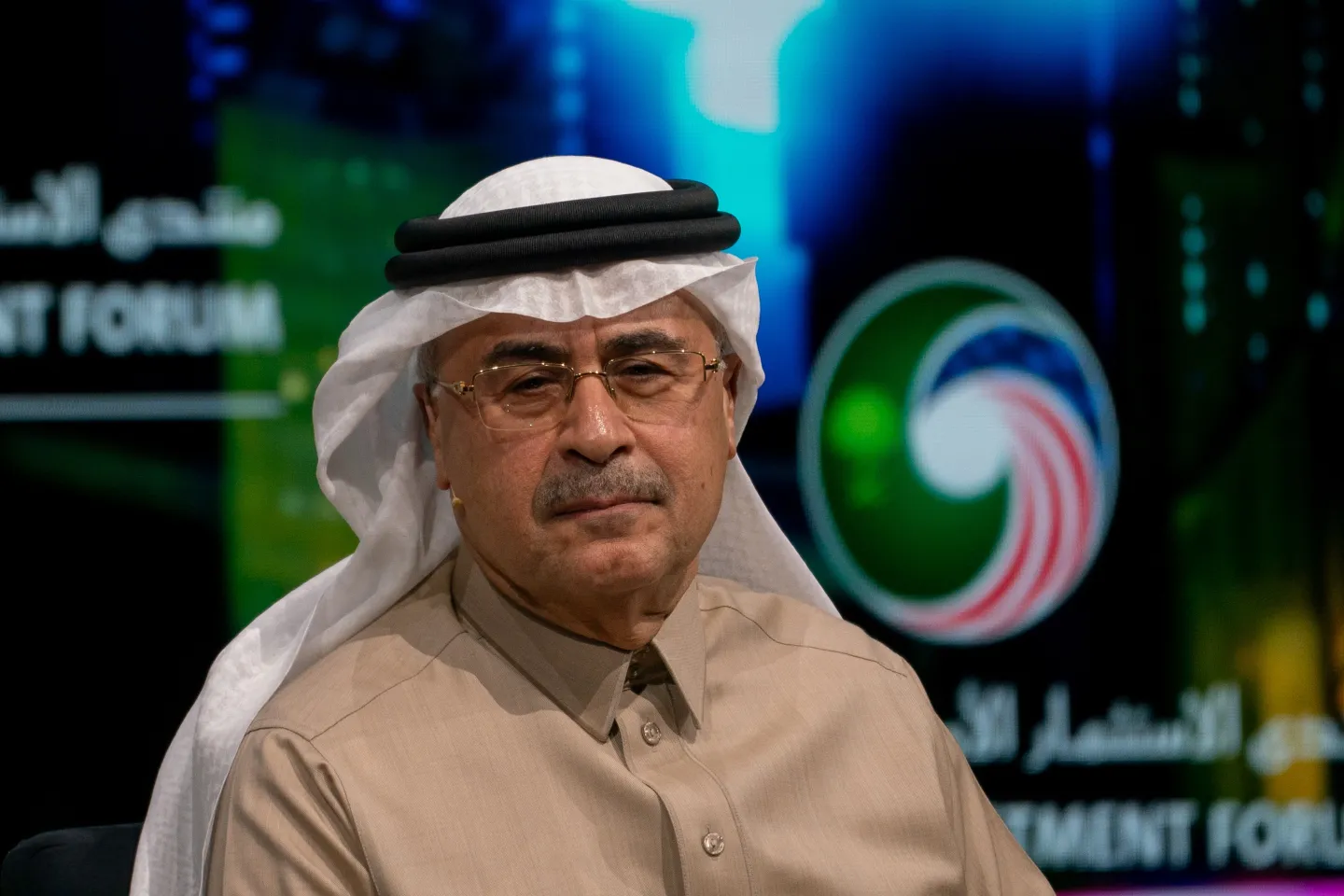
The biggest stage in the energy world, CERAWeek in Houston, will have a notable void at its center this week. Amin Nasser, the veteran CEO of Saudi Aramco who has steered the world’s largest oil exporter for over a decade, has officially canceled his appearance. Rather than taking the podium to discuss global transitions, Nasser is remaining in the Kingdom to navigate a geopolitical firestorm that has put a target on the back of the world’s most critical energy infrastructure.
A Leadership Retreat to the Frontlines
Nasser’s withdrawal is a rare and somber move for an executive who is usually a fixture of the Houston summit. Sources indicate he will not even provide a pre-recorded video message—a sign that his full attention is required for the operational survival of Aramco’s assets. This decision comes as the conflict enters its fourth week, with a death toll exceeding 2,000 and the Strait of Hormuz—the artery for a fifth of global oil consumption—effectively paralyzed.
The "no-show" list is growing. Sheikh Nawaf Al-Sabah, CEO of Kuwait Petroleum Corporation, has also scrapped his travel plans, opting to join sessions virtually from Kuwait. Meanwhile, the UAE’s ADNOC and the Mubadala wealth fund are also reconsidering their presence, signaling a unified regional shift toward crisis management over international diplomacy.
Aramco’s Infrastructure Under Fire
The scale of the current threat echoes the 2019 attacks on Abqaiq, but with much higher stakes. Aramco has already been forced to slash production by roughly 2 million barrels per day (bpd) across two major fields. To keep the world’s economy moving, the company is attempting a massive logistics pivot: piping millions of bpd from its East Coast to the Red Sea port of Yanbu.
However, even the "backup plan" is under siege. On March 19, the SAMREF refinery—a joint venture between Aramco and Exxon—was struck by a drone. This strike was part of a coordinated wave that hit Qatar’s Ras Laffan complex, which could knock 17% of Qatar’s LNG capacity offline for up to five years. Nasser recently warned that the continuation of this war would have "catastrophic consequences" for global markets, a prediction that seems to be coming true as Brent crude continues its volatile ascent.
The Trump Ultimatum and the Energy Moat
The pressure isn't just coming from the skies; it's coming from Washington. President Donald Trump has issued a 48-hour ultimatum to Tehran to reopen the Strait or face the "obliteration" of its power plants.
Trump
has also signaled a major shift in U.S. foreign policy, stating that the nations who use the Strait of Hormuz must be the ones to police it, asserting that "The United States does not!"
This leaves Saudi Arabia and its neighbors in an precarious position. They are forced to defend their own "energy moat" against Iranian ballistic missiles and drones while the primary waterway for their revenue remains a no-go zone for tankers.
From "Make Energy Great Again" to Survival Mode
The tone of this year’s CERAWeek is a haunting contrast to last year’s event. Just twelve months ago, the UAE’s Sultan Al Jaber was echoing Trump’s rhetoric by pledging to "make energy great again," and Nasser was famously joking that there was a better chance of Elvis Presley appearing than of a total shift away from fossil fuels.
Today, the jokes have stopped. The focus has shifted from the "energy transition" to "energy preservation." For the CEOs of the Gulf, the priority is no longer making headlines in Houston; it is keeping the lights on in Riyadh, Kuwait City, and Abu Dhabi.
.webp)
Popular articles



Subscribe to unlock premium content
Scented Sophistication at Home

Rediscovering Cinema in the Age of Streaming
Speed, Luxury, and Adrenaline
Scented Sophistication at Home
Rediscovering Cinema in the Age of Streaming
Scented Sophistication at Home