Dubai Port Chief Drawn Into Newly Unsealed Epstein Email Disclosure

Dubai Port Chief Drawn Into Newly Unsealed Epstein Email Disclosure
By
Rachel Steinberg
Last updated:
February 12, 2026
First Published:
February 12, 2026

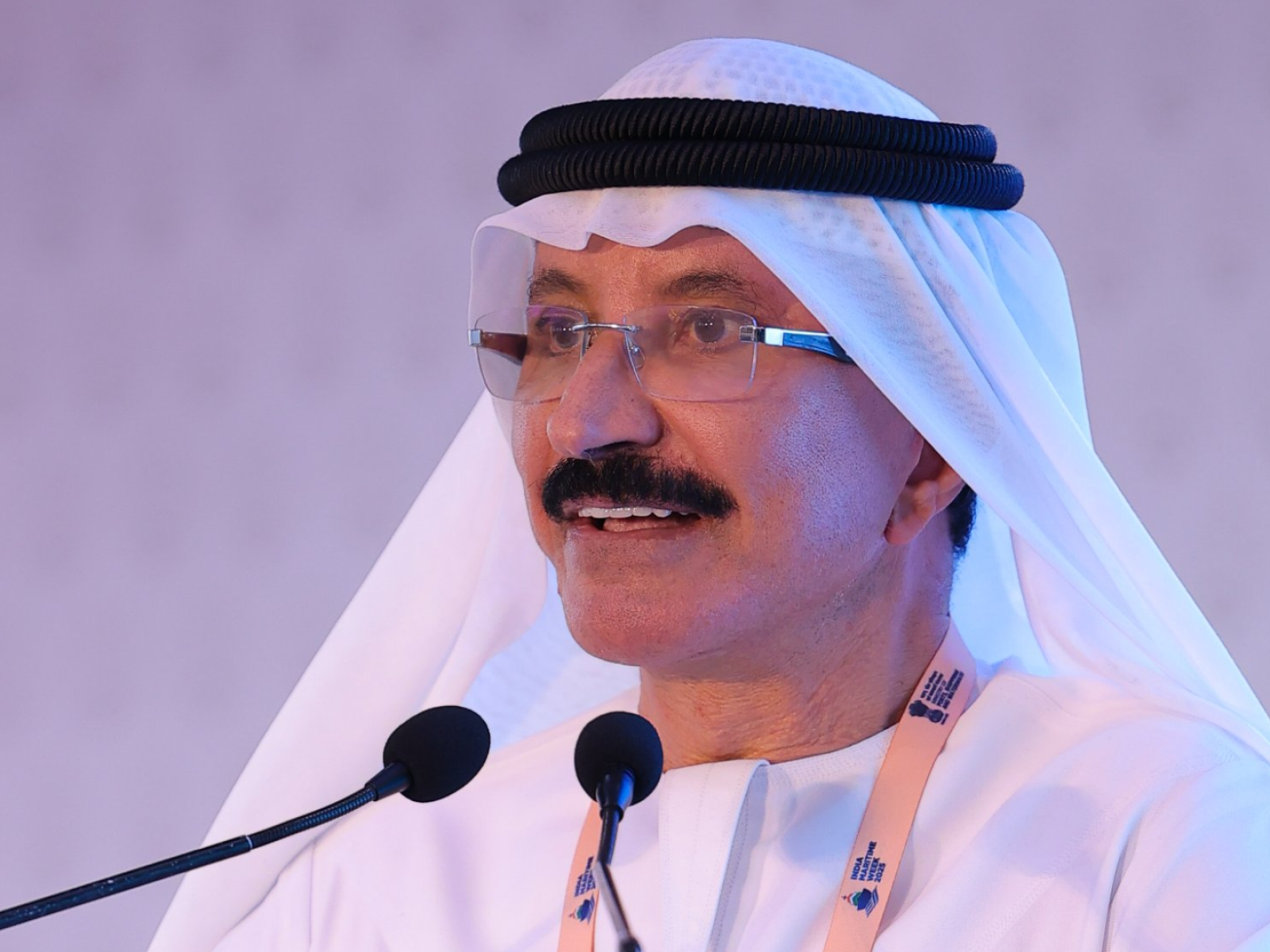
Photo: International Business Times
Fresh disclosures from U.S. authorities have placed one of the Middle East’s most prominent business executives back under the spotlight. Newly unsealed Justice Department documents identify Sultan Ahmed bin Sulayem, chairman and CEO of global ports operator DP World, as the recipient referenced in a 2009 email sent by Jeffrey Epstein that mentioned a so-called “torture video.”
The release follows a review of previously redacted files by U.S. lawmakers. Screenshots of the email circulated publicly show Epstein writing to an unnamed recipient asking, “where are you? Are you ok, I loved the torture video.” A reply indicates the sender was in China and planned to be in the United States in May. Subsequent clarification from U.S. officials indicated that the redaction concerned personal identifying information, and bin Sulayem’s name appeared elsewhere in the broader document set.
No criminal wrongdoing has been alleged against bin Sulayem, and U.S. authorities have emphasized that the inclusion of a name in the Epstein files does not constitute evidence of illegal conduct or confirm participation in any alleged schemes. It also remains unclear what the referenced video was or whether it was ever transmitted.
Even so, the disclosure has renewed attention on the depth and duration of contact between the Emirati executive and Epstein, spanning more than a decade and touching on business, politics and personal matters.
A powerful figure in global trade
Bin Sulayem is not a peripheral business leader. As head of DP World, he oversees one of the world’s largest port and logistics operators, with more than 75 marine and inland terminals across six continents. The company handles close to 10% of global container traffic annually, moving tens of millions of twenty-foot equivalent units through hubs in Europe, Asia, the Americas and Africa.
He played a central role in developing Jebel Ali Port into one of the busiest deep-water ports globally and helped transform DP World into a multinational logistics powerhouse with revenues measured in the tens of billions of dollars. Earlier in his career, he led Nakheel Properties, the Dubai government developer behind landmark artificial island projects that reshaped the emirate’s coastline.
Coming from a prominent Emirati family, bin Sulayem has long been seen as a key architect of Dubai’s rise as a global trade and finance hub. He has appeared regularly at international forums, including the World Economic Forum in Davos, and has served as a high-profile representative of the UAE’s economic ambitions.
Years of communication
The Justice Department’s document archive contains thousands of references to the name “Sulayem,” many of which appear to be email exchanges dating from approximately 2007 through 2019. These communications continued well after Epstein’s 2008 conviction for soliciting prostitution from a minor.
In some correspondence, Epstein described bin Sulayem as a close personal friend and one of his most trusted contacts. The emails reportedly covered a wide spectrum of subjects, from proposed business introductions and investment discussions to personal matters and explicit content.
Some exchanges referenced Epstein’s private island in the U.S. Virgin Islands, Little St. James, which prosecutors later described as a base for sex trafficking operations. The existence of correspondence about meetings does not, by itself, establish attendance or participation in any illegal acts, and authorities have not alleged that bin Sulayem was involved in criminal conduct.
Business networking and political connections
The newly examined materials also illustrate how Epstein positioned himself as an intermediary among influential figures. In one 2014 exchange, Epstein appeared to encourage former U.K. cabinet minister Peter Mandelson to consider joining a board associated with bin Sulayem. Other emails show introductions or proposed connections involving former Israeli Prime Minister Ehud Barak and additional international business leaders.
Public reporting over the past several years has detailed Epstein’s efforts to connect wealthy associates with senior political and corporate figures, including retail magnate Les Wexner and former banking executive Jes Staley. In some instances, individuals have acknowledged professional contact with Epstein while denying knowledge of or involvement in criminal behavior.
The files also include references to figures in U.S. politics. According to the documents, bin Sulayem was invited to attend the 2017 U.S. presidential inauguration by a senior U.S. diplomat and sought Epstein’s view on whether to accept. Other emails referenced discussions about meetings with prominent American political strategists.
Such communications underscore the extent to which Epstein embedded himself within global business and political networks. However, U.S. officials have repeatedly cautioned that association or correspondence does not equate to participation in wrongdoing.
Corporate implications
The renewed attention arrives at a sensitive time for DP World and its international partners. The company operates critical infrastructure in dozens of countries and maintains relationships with sovereign wealth funds, pension funds and multinational corporations.
Following the latest disclosures, Canada’s second-largest pension fund announced it would pause future transactions with DP World, stating it expected further clarity regarding the situation. No regulatory action has been announced against the company or its leadership.
Bin Sulayem’s broader affiliations have also drawn notice. DP World joined the UN Women HeForShe Alliance in 2022 as a corporate champion, pledging support for gender equality initiatives within the traditionally male-dominated logistics and trade sector. The program concluded in late 2024, and representatives have indicated there is no current partnership.
Market observers note that reputational risk can carry tangible consequences in sectors tied to public infrastructure, institutional capital and global governance networks. For multinational operators like DP World, stakeholder confidence spans governments, investors, customers and international organizations.
Heightened scrutiny, limited legal findings
Despite the wave of headlines, authorities have stressed that being named in Epstein-related files does not constitute proof of misconduct. To date, no charges or formal allegations have been brought against bin Sulayem in connection with the disclosed emails.
The broader Epstein document releases continue to generate political and media interest, particularly as lawmakers debate transparency and accountability surrounding previously sealed records. For executives whose names appear in the files, the impact may be reputational rather than legal, depending on the context and evidence.
For now, the situation places one of the Gulf’s most influential business leaders at the intersection of global trade leadership and renewed scrutiny tied to one of the most notorious financial scandals of the past two decades.

Popular articles


Subscribe to unlock premium content
Gigi Hadid x Tommy Hilfiger

ED by Ellen Redefines Celebrity Media

Oprah’s Empire of Influence

Gigi Hadid x Tommy Hilfiger
ED by Ellen Redefines Celebrity Media
Gigi Hadid x Tommy Hilfiger