Companies Shift Operations to Malaysia as Rising Costs Push Businesses Beyond Singapore

Companies Shift Operations to Malaysia as Rising Costs Push Businesses Beyond Singapore
By
Leah Rosenfeld
Last updated:
June 11, 2026
First Published:
June 11, 2026

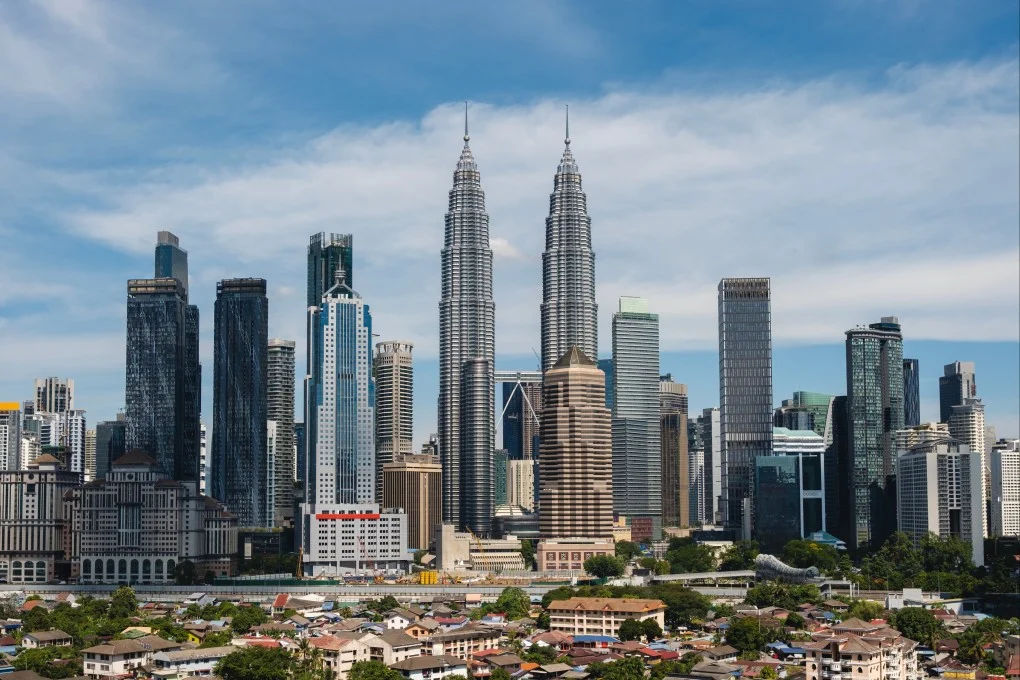
Photo: South China Morning Post
A growing number of multinational corporations are relocating parts of their operations from Singapore to Malaysia, highlighting a broader shift in global business strategy as companies seek lower operating costs, greater scalability, and stronger access to regional growth opportunities.
While Singapore remains one of Asia’s leading financial and business hubs, rising costs for labor, office space, manufacturing, and logistics are prompting firms to rethink where they place different parts of their operations. Rather than abandoning Singapore altogether, many businesses are adopting a dual-market approach, retaining high-value functions in Singapore while moving manufacturing, production, and operational activities across the border to Malaysia.
Industry experts say the trend has accelerated significantly in 2026 and reflects a larger global movement toward supply chain diversification, cost optimization, and regional resilience.
A Growing Corporate Migration Trend
Several major companies have announced operational shifts in recent months, signaling a noticeable increase in cross-border business restructuring.
Fashion retailer H&M revealed plans to move its Southeast Asia headquarters from Singapore to Kuala Lumpur, impacting dozens of positions. Meanwhile, brewing giant Heineken announced that large-scale production activities previously handled in Singapore would be transferred to facilities in Malaysia and Vietnam.
Food and beverage companies have followed a similar path.
Bread manufacturer Gardenia announced workforce reductions in Singapore as part of a broader effort to relocate bakery production operations to Malaysia. Beverage producer Yeo's also streamlined operations by consolidating can manufacturing activities across the border.
Together, these moves illustrate a growing preference among corporations to separate strategic management functions from production and operational activities.
Why Malaysia Is Becoming More Attractive
The appeal of Malaysia comes down to economics.
Operating costs in Malaysia are significantly lower than in Singapore across multiple categories, including labor, industrial land, warehousing, utilities, and office rentals. For businesses facing rising global costs and tighter profit margins, these savings can be substantial.
Malaysia also offers a larger domestic population of more than 35 million people, compared with Singapore’s population of approximately 6 million. This provides companies with greater opportunities to serve local consumers while expanding manufacturing and distribution networks.
Government incentives are adding further momentum.
Through various investment programs and industrial initiatives, Malaysia has introduced tax incentives, investment grants, and infrastructure support designed to attract multinational companies. Some qualifying industries can benefit from preferential tax rates and investment incentives aimed at boosting long-term economic development.
As a result, Malaysia is increasingly positioning itself as a regional manufacturing and operations hub for companies serving Southeast Asia.
The Johor-Singapore Economic Corridor Is Changing the Equation
One of the biggest developments influencing corporate decision-making is the emergence of the Johor-Singapore Special Economic Zone (JS-SEZ).
Covering more than 3,500 square kilometers, the economic zone is designed to strengthen cross-border cooperation between Singapore and Malaysia while making it easier for companies to operate across both markets.
The initiative targets key industries including:
- Advanced manufacturing
- Digital economy and technology
- Financial services
- Logistics and transportation
- Education and training
- Healthcare
- Business services
Governments on both sides view the project as a strategic effort to enhance regional competitiveness as global competition for investment, talent, and industrial capacity intensifies.
Improved transportation links, streamlined regulations, and enhanced business connectivity are expected to make cross-border operations significantly more efficient over the coming years.
Singapore Remains a Critical Business Hub
Despite the growing movement toward Malaysia, experts emphasize that Singapore continues to play a vital role in corporate strategies.
Many companies relocating operational functions are maintaining their regional headquarters, executive teams, research centers, and innovation hubs in Singapore.
The city-state remains highly attractive due to its:
- Stable political environment
- Strong legal framework
- World-class financial system
- Highly skilled workforce
- Advanced digital infrastructure
- Global connectivity
For multinational corporations, Singapore continues to serve as a preferred location for strategic decision-making, corporate leadership, finance, research and development, and regional management.
This explains why most companies are not completely leaving Singapore but are instead redistributing functions based on cost efficiency and business needs.
From Relocation to Regional Diversification
Industry leaders increasingly describe the trend not as a corporate exodus but as a regional diversification strategy.
Rather than choosing between Singapore and Malaysia, many organizations are leveraging the strengths of both countries.
Under this model:
- Singapore handles headquarters operations, innovation, finance, and executive leadership.
- Malaysia supports manufacturing, logistics, production, warehousing, and operational expansion.
This approach allows companies to reduce costs while maintaining access to Singapore’s premium business ecosystem.
The strategy also enhances resilience by reducing concentration risk and creating more flexible supply chains, an objective that has become increasingly important since the disruptions caused by the COVID-19 pandemic and ongoing geopolitical tensions.
Global Supply Chains Are Driving the Shift
The movement of operations from Singapore to Malaysia reflects broader changes taking place across the global economy.
Over the past several years, businesses worldwide have reevaluated supply chains following pandemic disruptions, trade disputes, inflationary pressures, and geopolitical uncertainty.
Companies are increasingly adopting strategies that prioritize:
- Cost efficiency
- Supply chain resilience
- Geographic diversification
- Faster market access
- Reduced operational risk
Southeast Asia has emerged as one of the biggest beneficiaries of this trend. Countries such as Malaysia, Vietnam, Indonesia, and Thailand continue attracting investments from companies seeking alternatives to traditional manufacturing centers.
Malaysia's combination of infrastructure, skilled labor, competitive costs, and proximity to Singapore makes it particularly attractive for businesses pursuing this strategy.
Will More Companies Fully Relocate?
One of the key questions facing investors and policymakers is whether future corporate moves will involve complete relocations or hybrid operating models.
Many analysts believe "twinning" strategies will become increasingly common. Under this approach, companies maintain high-value activities in Singapore while relocating production and operational functions to Malaysia.
However, some firms may eventually choose full-scale relocation if Malaysia's incentives, market opportunities, and infrastructure continue to improve.
The answer will likely depend on how effectively the Johor-Singapore Special Economic Zone delivers on its promise of seamless cross-border business operations.
The Bottom Line
The increasing number of companies shifting operations from Singapore to Malaysia reflects a broader transformation in how global businesses allocate resources and manage growth.
Driven by lower costs, attractive tax incentives, greater operational flexibility, and access to a larger consumer market, Malaysia is becoming an increasingly important destination for multinational investment.
At the same time, Singapore continues to retain its position as a leading regional headquarters and innovation center.
Rather than signaling a decline for Singapore, the trend points toward a more integrated economic relationship between the two countries, where businesses use both markets strategically to maximize efficiency, resilience, and long-term growth.
.webp)
Popular articles



Subscribe to unlock premium content
From Bean to Buzz in Thailand

The Rise of Celebrity-Curated Designer Board Games

Iceland’s Geothermal Revolution

From Bean to Buzz in Thailand
The Rise of Celebrity-Curated Designer Board Games
From Bean to Buzz in Thailand
.png)