Citigroup Defies Market Weakness as Trump Praise Highlights Bank’s Remarkable Turnaround

Citigroup Defies Market Weakness as Trump Praise Highlights Bank’s Remarkable Turnaround
By
Rachel Steinberg
Last updated:
June 11, 2026
First Published:
June 11, 2026

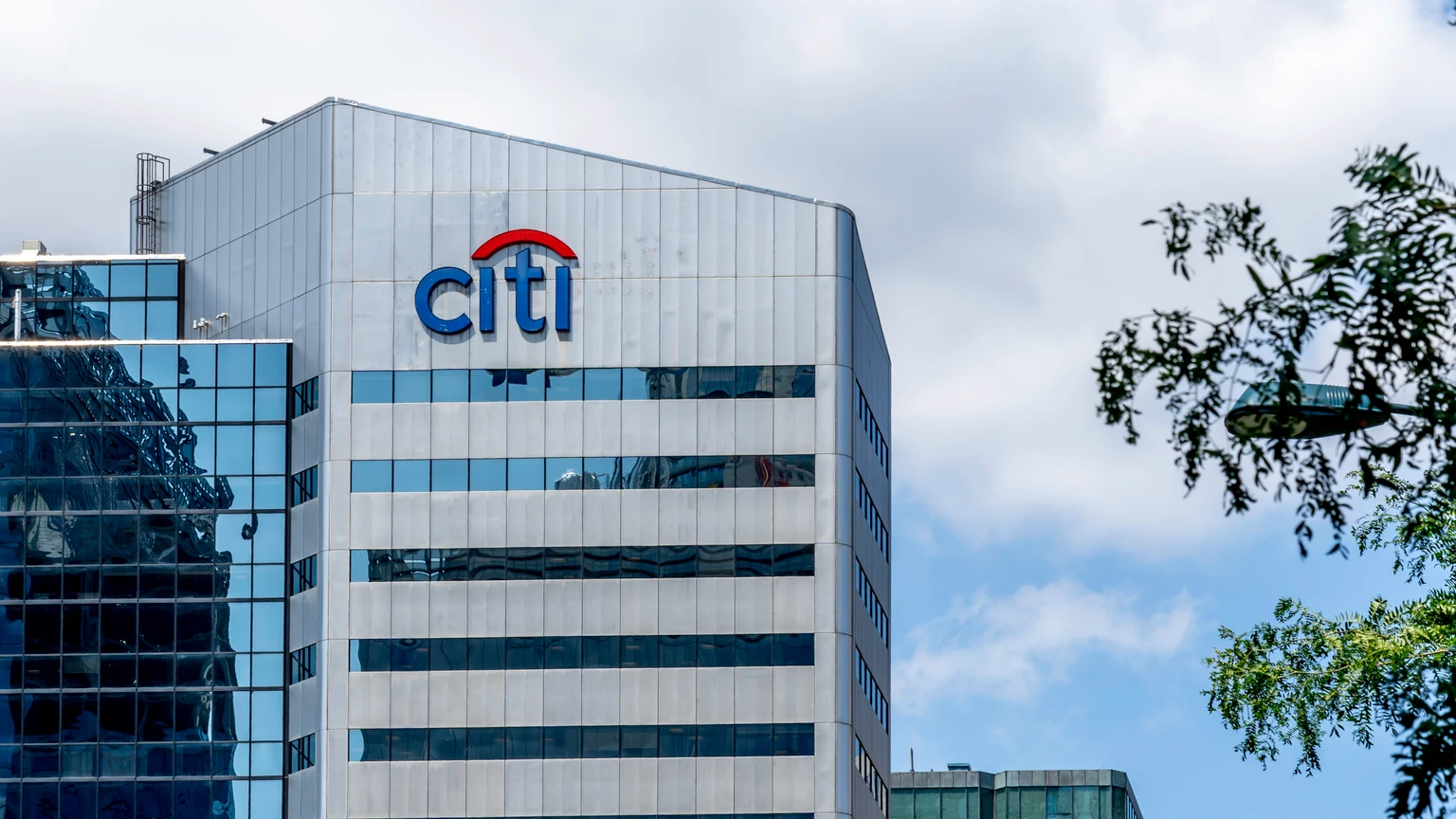
Photo: Seeking Alpha
As broader markets struggled and several major banking stocks moved lower, shares of Citigroup stood out by outperforming both the financial sector and the wider market following a public endorsement from President Donald Trump.
The attention came after Trump used his social media platform to congratulate Citigroup and its CEO, Jane Fraser, praising the bank's performance and describing its recent progress as a "big comeback." The message was posted shortly after U.S. markets opened, helping put the banking giant in the spotlight during an otherwise challenging trading session.
Although Citigroup shares eventually closed lower alongside much of the market, the stock significantly outperformed several of its largest competitors, reinforcing investor confidence in the bank's ongoing turnaround story.
Trump's Endorsement Sparks Early Investor Interest
The market reaction began shortly after trading opened when Trump publicly highlighted Citigroup's reported success in mergers and acquisitions advisory services.
The endorsement immediately attracted investor attention, pushing Citigroup shares as high as $137.12 during morning trading. At their peak, the stock gained nearly 1.8%, outperforming most major U.S. financial institutions.
While broader market weakness eventually pulled shares lower by the close, Citigroup still fared better than several major banking rivals and the benchmark S&P 500.
The episode demonstrated how high-profile public endorsements can temporarily influence investor sentiment, particularly when they align with an existing positive narrative surrounding a company's performance.
Citigroup's Dealmaking Performance Remains Strong
Trump's comments referenced Citigroup's role in the mergers and acquisitions market, one of the most closely watched areas of investment banking.
Although various league tables use different methodologies, Citigroup continues to rank among the world's leading M&A advisors. The bank has advised on dozens of major transactions across multiple industries, including energy, infrastructure, technology, healthcare, and financial services.
According to industry data, Citigroup has advised on approximately 97 transactions valued at more than $285 billion so far in 2026. While that places the firm behind several Wall Street competitors in overall deal volume and value, it remains firmly among the industry's elite advisory institutions.
The global M&A market has remained active despite economic uncertainty, elevated interest rates, and geopolitical tensions. Investment banks that maintain strong advisory pipelines continue to benefit from corporate restructuring, consolidation activity, and strategic acquisitions.
Wall Street Competition Remains Intense
The investment banking landscape remains fiercely competitive, with several major institutions battling for market share.
Industry leaders including Goldman Sachs, JPMorgan Chase, Morgan Stanley, and Bank of America continue to dominate many league tables across mergers and acquisitions, capital markets, and advisory services.
Goldman Sachs has remained particularly strong in deal advisory, reportedly working on nearly 200 transactions worth close to $1 trillion in aggregate value during the year.
Even so, Citigroup's ability to remain a top-five global M&A advisor highlights the progress the bank has made in strengthening its investment banking franchise.
The institution has also built a particularly strong presence in sectors such as energy, infrastructure, and power, areas that have become increasingly important amid the global transition toward energy security and modernization.
Citi's Stock Is Quietly Beating Most Major Banks
While much of Wall Street's attention has focused on technology stocks and artificial intelligence, Citigroup has been one of the strongest-performing large bank stocks in recent years.
The company's shares have gained more than 14% in 2026, significantly outperforming the broader market and many of its banking peers.
For comparison:
- Citigroup is up roughly 14.3% this year.
- Goldman Sachs has gained approximately 13.9%.
- Bank of America has slipped around 1%.
- JPMorgan Chase has declined more than 4%.
- Wells Fargo has fallen over 12%.
This performance is particularly notable given Citigroup's long history of underperforming competitors following the global financial crisis.
For years, investors viewed Citi as one of the most challenging turnaround stories among major U.S. banks. That perception has gradually begun to change.
Jane Fraser's Turnaround Strategy Is Delivering Results
Much of Citigroup's recent success has been attributed to CEO Jane Fraser, who became the first woman to lead a major U.S. bank.
Since taking over, Fraser has launched an extensive restructuring effort designed to simplify the organization, improve profitability, strengthen regulatory compliance, and focus resources on higher-growth areas.
Key elements of the transformation include:
- Streamlining business operations
- Reducing organizational complexity
- Cutting costs and eliminating redundancies
- Expanding high-margin businesses
- Improving risk management systems
- Increasing operational efficiency
The restructuring has involved thousands of job reductions and the consolidation of various business units, moves that were initially met with skepticism but have increasingly won support from investors.
The strategy is aimed at improving returns, boosting shareholder value, and narrowing the valuation gap between Citigroup and its largest competitors.
A Three-Year Rally Reflects Renewed Confidence
Investor optimism surrounding Citigroup has been building steadily.
The bank's stock has now recorded gains for three consecutive years, making it one of the strongest comeback stories in the financial sector.
The shares surged more than 70% in 2025, following a nearly 42% increase in 2024 and a 19% gain in 2023. Combined, those advances have dramatically improved shareholder returns and restored confidence in the company's long-term outlook.
The rally has been driven by stronger earnings, improving operational performance, successful cost-cutting initiatives, and growing confidence that management's transformation plan is working.
Energy Banking Emerges as a Key Strength
One area where Citigroup has established a particularly strong competitive position is energy and power-sector advisory work.
The bank has played a major role in several large energy transactions during 2026, advising on deals worth tens of billions of dollars.
As governments and corporations invest heavily in energy infrastructure, electricity generation, grid modernization, renewable energy, and power security, investment banks with strong sector expertise stand to benefit.
Citigroup's presence in these sectors could become increasingly valuable as global energy investment continues to expand over the coming decade.
The Bottom Line
Despite a difficult trading environment, Citigroup once again demonstrated its growing resilience as investors responded positively to President Trump's public praise and the bank's improving business performance.
More importantly, the market reaction reflects a broader shift in sentiment toward the company. Once viewed as one of Wall Street's most challenging turnaround stories, Citigroup is increasingly being recognized as a stronger, more efficient, and more competitive financial institution under Jane Fraser's leadership.
While competition from rivals remains intense, Citi's stock performance, restructuring progress, and growing influence in key investment banking sectors suggest that its turnaround story may still have further room to run.
.webp)
Popular articles



Subscribe to unlock premium content
From Bean to Buzz in Thailand

The Rise of Celebrity-Curated Designer Board Games

Iceland’s Geothermal Revolution

From Bean to Buzz in Thailand
The Rise of Celebrity-Curated Designer Board Games
From Bean to Buzz in Thailand
.png)