Chinese Exporters Shift Focus From U.S. Tariffs to Middle East Crisis as Trump-Xi Talks Approach

Chinese Exporters Shift Focus From U.S. Tariffs to Middle East Crisis as Trump-Xi Talks Approach
By
David Goldfarb
Last updated:
May 13, 2026
First Published:
May 13, 2026

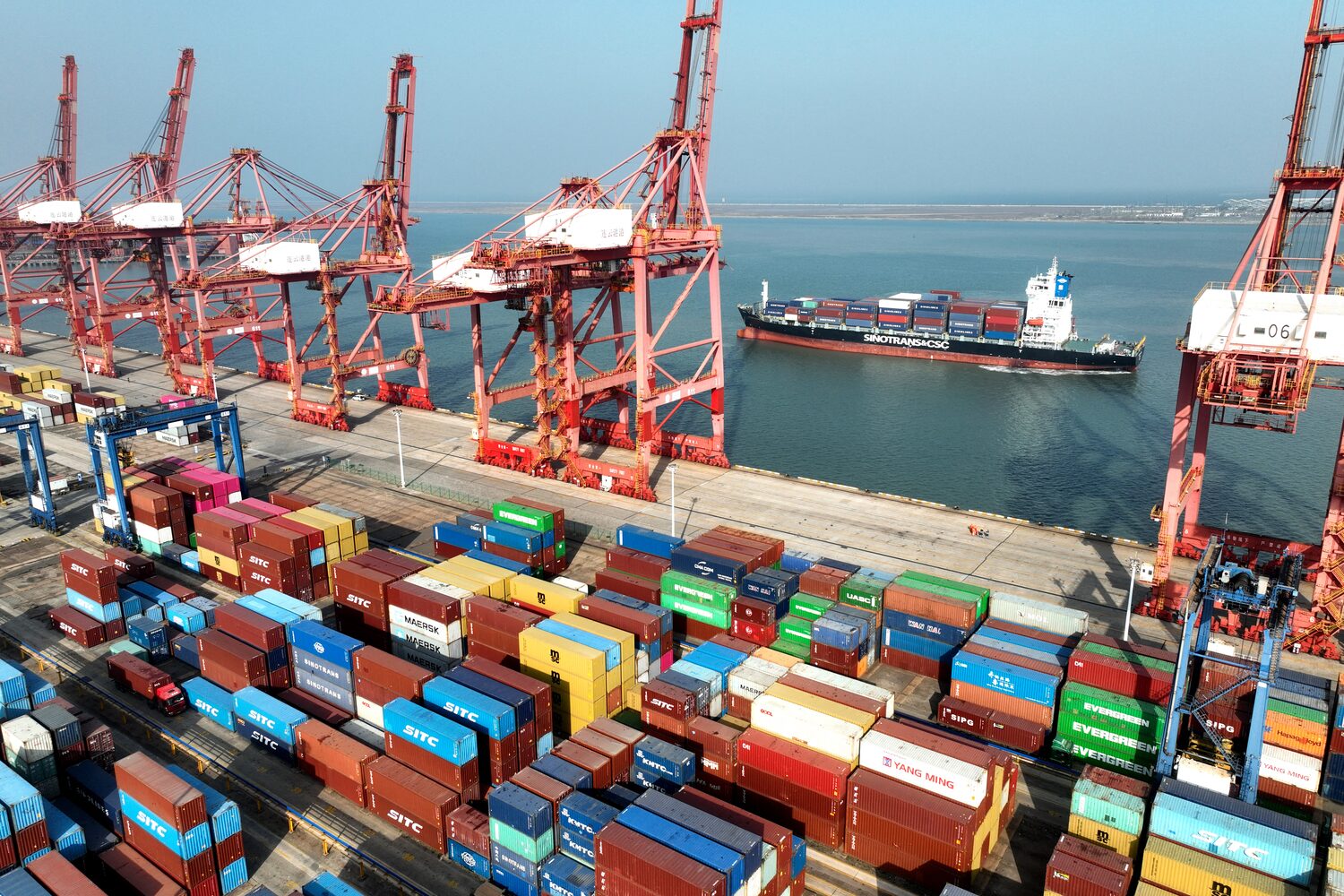
Chinese exporters who spent the past year adapting to aggressive U.S. tariffs are now facing a far larger challenge: the growing economic fallout from the conflict involving Iran and the wider Middle East.
As U.S. President Donald Trump and Chinese President Xi Jinping prepare for high-stakes discussions later this week, many Chinese businesses are no longer prioritizing tariff concerns. Instead, exporters are increasingly worried about disrupted shipping routes, higher energy costs, slowing global demand, and the possibility of prolonged instability across one of the world’s most important trade regions.
Executives across China’s manufacturing sector say the ongoing conflict is creating more immediate operational damage than the unpredictable tariff policies that dominated trade headlines over the last year.
Exporters Fear Global Supply Chain Shock
Over the past year, Chinese exporters aggressively diversified their operations to reduce dependence on the U.S. market. Many companies expanded manufacturing capacity into Southeast Asia, the Middle East, and Latin America while targeting new overseas buyers to offset the impact of higher American tariffs.
However, the escalating conflict around Iran has created a fresh wave of uncertainty that threatens global trade flows far beyond the United States.
Business leaders say disruptions around the Strait of Hormuz — one of the world’s most strategically important shipping corridors — are causing severe delays across international supply chains. The route handles a significant portion of global oil shipments and remains critical for cargo movement between Asia, Europe, and the Middle East.
Analysts warn that prolonged instability in the region could increase transportation costs worldwide, raise inflationary pressures, and weaken consumer demand in major export markets.
According to Wang Dan, China director at Eurasia Group, exporters across the country are overwhelmingly focused on the war rather than tariff negotiations ahead of the Trump-Xi meeting.
She said many companies are already preparing contingency plans, including potential downsizing during the second half of the year if the conflict continues disrupting trade routes and weakening overseas orders.
Shipping Delays and Freight Costs Hit Manufacturers
Chinese manufacturers are already feeling the impact of the crisis through rising logistics costs and severe delivery delays.
Bryan Zheng, founder and CEO of Shenzhen-based smart helmet manufacturer Livall Tech, said his company has been forced to rely heavily on expensive air freight shipments after maritime transit times through the Strait of Hormuz stretched to nearly 50 days. Under normal conditions, those shipments typically take between 30 and 40 days.
The delays are affecting delivery schedules across Europe and the Mediterranean region, forcing businesses to absorb significantly higher transportation expenses to meet customer deadlines.
Port congestion throughout Asia has added further pressure. Major export hubs including Shanghai and Ningbo are reportedly experiencing backlogs due to labor shortages, capacity constraints, and rerouted cargo traffic caused by regional instability.
Alternative shipping methods have also become more complicated. Rail freight, often viewed as a faster and cheaper option for China-Europe trade, has faced restrictions after some products were categorized as sensitive dual-use goods due to the ongoing conflict zones along transit routes.
Manufacturers say these disruptions are now impacting nearly every stage of production and distribution.
Energy Prices and Raw Material Costs Surge
The Middle East crisis is also driving up global energy prices, creating another major challenge for Chinese exporters already operating on thin margins.
China remains one of the world’s largest importers of crude oil and industrial raw materials, making its manufacturing sector especially vulnerable to geopolitical disruptions in energy-producing regions.
Higher oil prices are increasing factory operating costs, transportation expenses, and prices for petroleum-based industrial materials. Analysts say the impact is spreading rapidly across industries including chemicals, plastics, electronics, packaging, fertilizers, and heavy manufacturing.
An index tracking Chinese input costs for raw materials, fuel, and electricity rose 3.5% year over year in April, accelerating sharply from just 0.8% growth in March after years of subdued industrial inflation.
Cameron Johnson, senior partner at Shanghai-based supply chain consulting firm Tidalwave Solutions, said the conflict is affecting far more than shipping lanes.
According to Johnson, businesses are increasingly worried because the crisis is disrupting supply chains globally, including oil derivatives, industrial inputs, fertilizers, and transportation systems that manufacturers rely on daily.
Industry experts say these pressures could eventually reduce profit margins for exporters and increase costs for consumers worldwide.
Chinese Exporters Have Adapted to Tariff Pressure
While geopolitical tensions are intensifying, many Chinese exporters say they have already adjusted to the long-running U.S.-China trade dispute.
The tariff war forced companies to rethink their global strategies after American duties on some Chinese goods temporarily climbed into triple-digit territory last year.
Rather than waiting for conditions to normalize, many manufacturers relocated parts of their supply chains overseas, diversified customer bases, and developed pricing strategies that allowed them to pass additional tariff costs onto buyers.
Trade data reflects this transition. Although China’s exports to the United States fell roughly 20% last year, exports to several other regions surged.
Shipments to Africa jumped nearly 26%, exports to Southeast Asia climbed more than 13%, trade with the European Union increased over 8%, and exports to Latin America rose more than 7%.
Trade with Gulf nations also expanded rapidly. China’s exports to countries including Saudi Arabia, the United Arab Emirates, Qatar, Kuwait, and Iran rose 9% last year to nearly $145 billion, almost double the level recorded in 2019.
Because of these adjustments, many businesses no longer expect a return to the pre-tariff era even if political relations improve.
Trump-Xi Summit Seen as Key Opportunity
Despite muted expectations around tariffs, the upcoming meeting between Trump and Xi is still being closely watched by global markets and exporters alike.
Economists believe both governments are likely to emphasize restoring stability around the Strait of Hormuz and protecting international shipping flows, as continued disruption would damage both economies.
Yue Su, principal economist for China at Economist Intelligence Unit, said the summit could also create opportunities for limited trade concessions and discussions around lowering tariff pressures through increased purchases of American goods.
However, most exporters remain cautious.
A recent U.S. court ruling challenging Trump’s authority to impose certain tariffs has complicated the legal landscape, but businesses say they no longer assume trade tensions will disappear permanently.
Ash Monga, founder and CEO of sourcing services company IMEX in Guangdong, said many exporters have learned not to rely too heavily on a single market after years of trade uncertainty.
Instead of expanding U.S.-focused production aggressively, companies are increasingly building flexible supply chains designed to operate in a world where geopolitical friction, tariffs, and regional conflicts are becoming a permanent part of global commerce.
A New Era of Global Trade Uncertainty
For Chinese exporters, the conversation has shifted dramatically over the past year. Tariffs, once viewed as the biggest threat to growth, are now being overshadowed by fears of broader geopolitical instability and supply chain disruption.
The Iran conflict has exposed how deeply connected global trade, shipping, and energy markets have become. Even companies far removed from the Middle East are now experiencing rising costs, delivery delays, and growing uncertainty about future demand.
As the Trump-Xi summit approaches, exporters are hoping for signs of stability rather than sweeping trade breakthroughs. For many businesses, ending the conflict and reopening disrupted shipping lanes has become far more urgent than negotiating another round of tariff reductions.
.webp)
Popular articles



Subscribe to unlock premium content
Living History Like Never Before

Capturing the Night Like Never Before

Transforming Small Spaces Into Personal Sanctuaries

Living History Like Never Before
Capturing the Night Like Never Before
Living History Like Never Before