Chinese Electric Vehicles Are Moving Closer to America Despite Tariffs and Political Resistance

Chinese Electric Vehicles Are Moving Closer to America Despite Tariffs and Political Resistance
By
Augusta Parker
Last updated:
June 8, 2026
First Published:
June 8, 2026

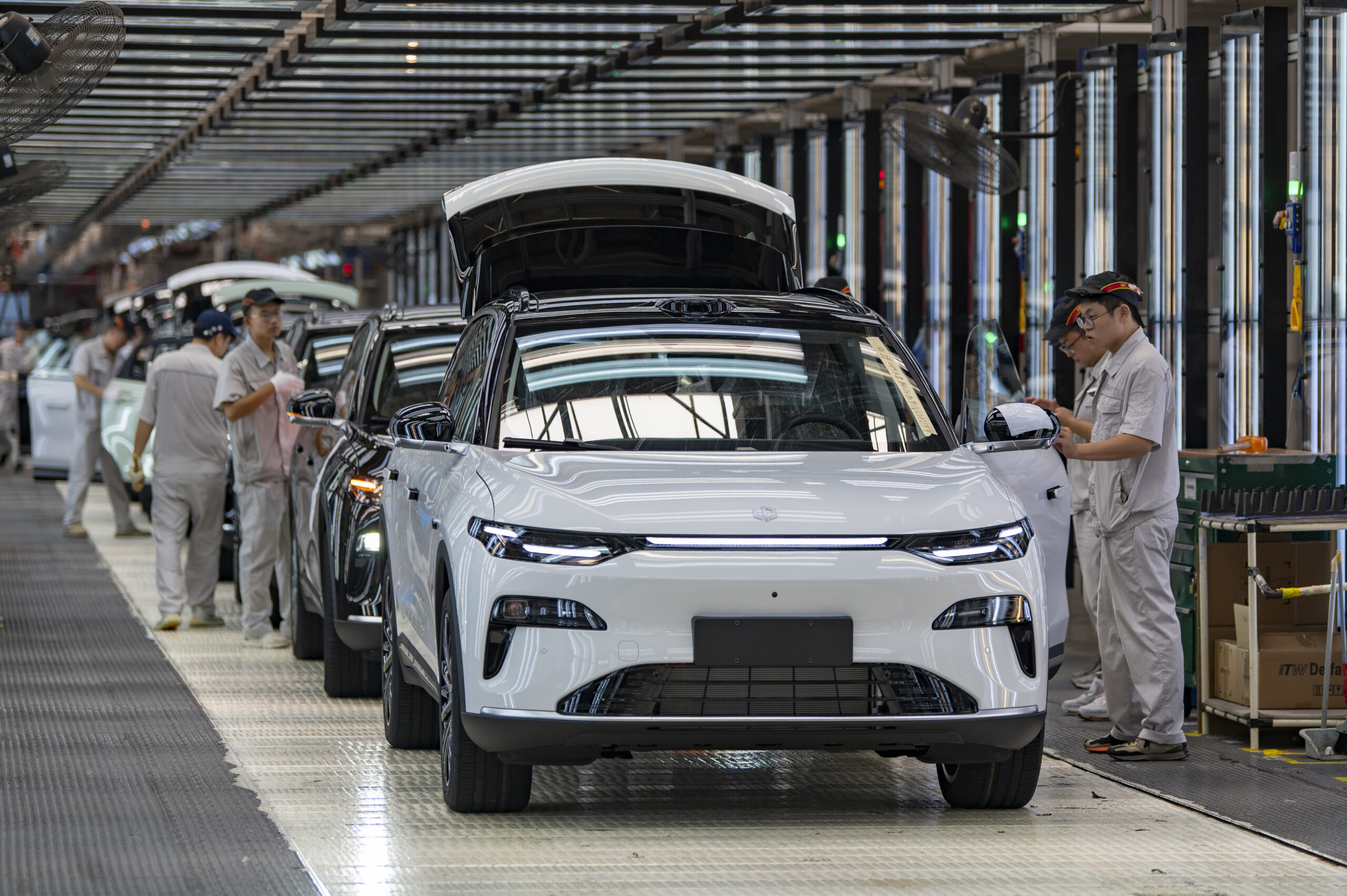
Photo: East Asia Forum
For years, the United States has remained the one major automotive market that Chinese electric vehicle manufacturers have been unable to penetrate. While Chinese automakers have rapidly expanded across Europe, the United Kingdom, Southeast Asia, Australia, Latin America, and the Middle East, America has remained protected by tariffs, regulatory barriers, and political opposition.
That situation may not last forever.
Although Chinese-built electric vehicles face significant obstacles entering the United States directly, industry experts increasingly believe that Chinese EV brands, technologies, and manufacturing partnerships could find their way into the American market within the next several years. Rather than arriving through traditional imports, they may enter through joint ventures, North American production facilities, strategic partnerships, and locally assembled vehicles.
The question is no longer whether Chinese automakers want access to the U.S. market. The bigger question is how they will get there.
China's Global EV Expansion Is Reshaping the Auto Industry
Over the past decade, China has transformed itself into the world's dominant electric vehicle powerhouse.
The country now accounts for roughly 75% of global EV manufacturing and approximately 40% of worldwide EV exports. Chinese automakers have spent years building production capacity, securing battery supply chains, investing in software development, and expanding into foreign markets.
Companies such as BYD, Geely, Great Wall Motor, Chery, Nio, Xpeng, Zeekr, and Leapmotor have evolved from regional players into global competitors.
China's rise has been remarkable. Two decades ago, the country produced fewer than one million vehicles annually. Today, it is the world's largest automotive producer, expected to manufacture more than 34 million vehicles this year, including nearly 12 million electric vehicles.
Chinese brands now play a central role in global EV adoption, accounting for roughly 60% of worldwide electric vehicle sales.
As domestic competition intensifies and profit margins shrink, Chinese manufacturers are increasingly looking overseas to sustain growth.
America Remains the Missing Piece
Despite their success elsewhere, Chinese automakers have yet to gain meaningful access to the world's second-largest automotive market.
The United States presents a unique challenge.
Chinese-made EVs face steep tariffs that make direct imports economically uncompetitive. Additional restrictions on connected vehicle technology, software systems, data collection practices, and autonomous driving features have created further barriers.
Political opposition remains strong across both major parties.
Lawmakers, labor unions, domestic automakers, and industry groups have repeatedly warned that unrestricted Chinese vehicle imports could threaten American manufacturing jobs and undermine domestic investment.
As a result, direct sales of Chinese-built EVs in the United States remain highly unlikely in the near future.
Yet experts increasingly believe alternative routes are emerging.
Why U.S. Automakers Face a Difficult Reality
The debate comes at a challenging moment for Detroit's traditional automakers.
While companies such as Ford, General Motors, and Stellantis continue investing in electric vehicles, many have slowed or adjusted their EV strategies in response to weaker-than-expected consumer demand and profitability concerns.
At the same time, Chinese manufacturers continue improving vehicle quality while driving down costs.
Many Chinese EVs now offer advanced software, long driving ranges, fast charging capabilities, sophisticated driver-assistance systems, and competitive pricing that often undercuts Western rivals.
Industry analysts increasingly argue that Chinese companies have established a substantial lead in battery technology, manufacturing efficiency, and EV production scale.
While American automakers remain strong in trucks, SUVs, and internal combustion vehicles, the transition toward electrification has exposed new competitive challenges.
The concern for many industry leaders is that falling behind in EV development could have long-term consequences as global markets continue moving toward electrification.
Partnerships Could Become the Preferred Path
Rather than entering the United States independently, many Chinese automakers may initially rely on partnerships with established Western manufacturers.
Industry observers see this as the most realistic scenario.
Joint ventures would allow Chinese companies to access American manufacturing infrastructure, dealer networks, regulatory expertise, and local workforces while reducing political resistance.
For U.S. automakers, partnerships could provide access to lower-cost platforms, advanced battery technologies, software systems, and production expertise.
Such collaborations are already becoming common globally.
Several major Western manufacturers maintain partnerships with Chinese companies for battery sourcing, vehicle development, software integration, and manufacturing operations.
Many analysts believe the next phase of cooperation could involve vehicles built in North America using Chinese technology and engineering.
Ford, GM, and Stellantis Already Have Chinese Connections
The idea of cooperation is not theoretical.
Ford has reportedly explored deeper relationships with Chinese automotive groups while simultaneously developing its next-generation affordable EV platform. Ford CEO Jim Farley has publicly praised Chinese EV technology and has acknowledged driving Chinese-made electric vehicles for research purposes.
General Motors continues sourcing battery components from Chinese suppliers while maintaining extensive operations in China through longstanding joint ventures.
Stellantis has gone even further, becoming a major shareholder in Chinese EV maker Leapmotor and establishing a partnership designed to expand electric vehicle sales globally.
These relationships illustrate how interconnected the automotive industry has become.
Even as governments debate trade restrictions, automakers continue seeking ways to benefit from China's technological and manufacturing strengths.
Mexico and Canada Could Become Key Gateways
North America may ultimately play a critical role in Chinese automakers' U.S. ambitions.
Several Chinese manufacturers are actively evaluating production opportunities in Mexico and Canada, where lower labor costs, established supply chains, and trade agreements offer attractive advantages.
Mexico has already become a major destination for Chinese vehicle exports.
Chinese brands currently account for roughly one-quarter of vehicle sales in Mexico, making the country one of the most important international markets for China's automotive industry.
Canada has also emerged as a potential opportunity. Several Chinese automakers are exploring manufacturing, assembly, and investment options as they evaluate long-term expansion plans.
If Chinese-owned facilities begin producing vehicles within North America, the path toward eventual U.S. market access becomes significantly easier.
However, trade rules remain a major obstacle.
The USMCA Factor Could Shape the Future
The future of Chinese EVs in North America may depend heavily on the ongoing evolution of the United States-Mexico-Canada Agreement (USMCA).
Under current rules, vehicles assembled in Mexico or Canada can qualify for favorable treatment only if a substantial percentage of their components originate within North America.
The Trump administration has indicated that future negotiations may include even stricter requirements for U.S.-made content.
Policymakers are increasingly focused on ensuring that batteries, motors, software systems, electronics, and critical components are sourced domestically.
These requirements could complicate efforts by Chinese automakers to use North American manufacturing as a pathway into the U.S. market.
Nevertheless, most industry analysts believe manufacturers will continue adapting their strategies to comply with evolving regulations.
Consumer Interest Continues to Grow
While political debates dominate headlines, consumer attitudes tell a different story.
Rising gasoline prices, growing interest in electric transportation, and increasing awareness of Chinese automotive innovation are influencing public opinion.
Market surveys suggest a growing percentage of Americans would consider purchasing a Chinese vehicle if it were available.
Many consumers are attracted by the combination of advanced technology, competitive pricing, and strong performance specifications offered by leading Chinese brands.
In markets where Chinese EVs compete directly with established Western manufacturers, they have frequently gained market share by offering more features at lower prices.
That value proposition could eventually resonate with American buyers as well.
China Is Producing More EVs Than It Can Sell at Home
Another reason Chinese automakers are aggressively pursuing international expansion is simple economics.
China's electric vehicle industry has become extraordinarily productive.
Recent estimates suggest Chinese manufacturers produced around 16 million electric vehicles last year, significantly exceeding domestic demand. The resulting surplus has pushed automakers to seek customers abroad.
Vehicle exports have surged to record levels, exceeding 2.5 million units annually.
For many Chinese manufacturers, overseas expansion is no longer optional—it is essential.
As competition intensifies within China, access to major international markets becomes increasingly important for maintaining growth and profitability.
The Long-Term Outlook
Most automotive experts agree on one point: electric vehicles will play an increasingly important role in the future of transportation, and China currently occupies a leadership position in that transition.
The United States can attempt to slow Chinese market entry through tariffs, regulations, and trade barriers, but many analysts believe those measures are unlikely to permanently prevent Chinese EV technology from reaching American consumers.
Whether through joint ventures, North American manufacturing, licensing agreements, software partnerships, battery supply chains, or locally assembled vehicles, Chinese influence within the U.S. EV market appears likely to grow over time.
The timeline remains uncertain, but the direction is becoming clearer.
As global automotive competition intensifies and the industry continues its shift toward electrification, Chinese automakers are steadily moving closer to America's doorstep. Many experts believe that by the end of this decade, some form of Chinese-developed electric vehicles will be present on U.S. roads—not necessarily through direct imports, but through partnerships and production strategies designed to navigate the complex political and regulatory landscape.
For American consumers and automakers alike, the arrival of Chinese EVs may be less a question of if and more a question of when.
.webp)
Popular articles



Subscribe to unlock premium content
Zara’s Hyper-Fast Fashion Supply Chain Is Changing Global Retail

A Taste of Italy Redefined

Boutique Eco-Lodges in Costa Rica Redefining Ultra-Luxury Travel

Zara’s Hyper-Fast Fashion Supply Chain Is Changing Global Retail
A Taste of Italy Redefined
Zara’s Hyper-Fast Fashion Supply Chain Is Changing Global Retail
.png)