Delta Sets Its Sights on Pacific Dominance as Rivalry With United Intensifies

Delta Sets Its Sights on Pacific Dominance as Rivalry With United Intensifies
By
Rachel Steinberg
Last updated:
June 8, 2026
First Published:
June 8, 2026

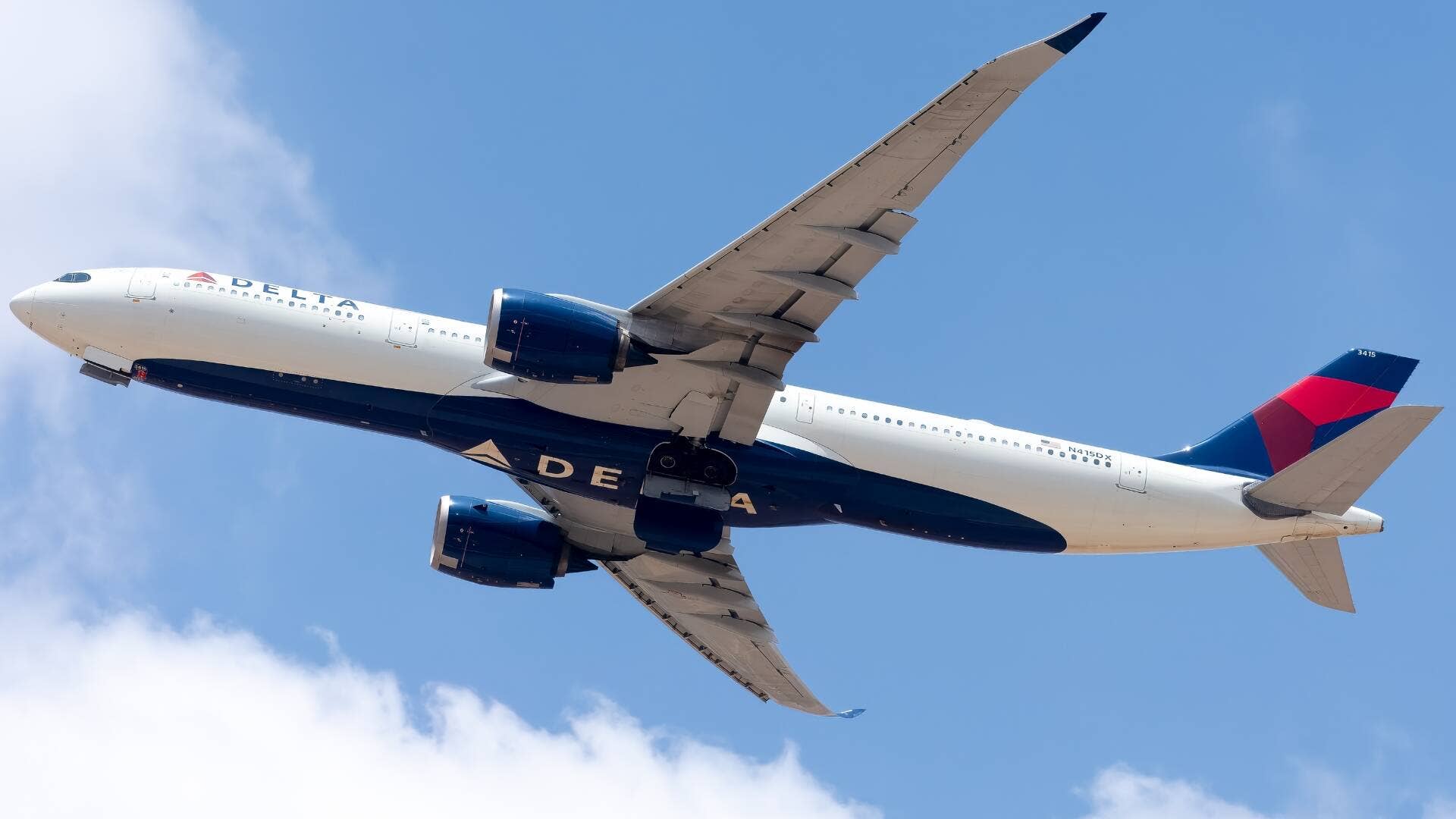
Photo: Travel Host
The competition between America's two most profitable airlines is entering a new phase, with Delta Air Lines openly declaring its ambition to become the leading U.S. carrier across the Pacific Ocean. While Delta currently holds the title of the most profitable airline in the United States, United Airlines remains the dominant force in trans-Pacific travel, a position Delta is now determined to challenge.
Speaking during the International Air Transport Association (IATA) annual meeting in Rio de Janeiro, Delta President Peter Carter outlined an aggressive vision for the airline's future. His message was clear: Delta intends to strengthen its presence across Asia-Pacific markets and eventually become the world's leading airline.
The comments highlight the growing strategic importance of international travel, particularly long-haul routes connecting North America with Asia, as airlines increasingly look beyond the mature domestic market for growth opportunities.
The Battle for the Most Profitable Aviation Market
Trans-Pacific air travel has become one of the most valuable segments of the global aviation industry.
Flights connecting the United States with major Asian destinations such as Japan, South Korea, Hong Kong, Singapore, and China often generate higher margins than domestic routes. These journeys typically attract a large number of business travelers, corporate accounts, and affluent leisure passengers willing to pay premium fares for comfort and convenience.
As a result, airlines can generate substantial revenue from premium cabins, loyalty programs, cargo operations, and corporate travel contracts.
While Delta has built a strong international network over the years, United has maintained a significant advantage in the Pacific region.
Financial filings show that Delta generated approximately $2.8 billion in trans-Pacific revenue last year. United, by comparison, produced nearly $6.9 billion from its Pacific operations, highlighting the considerable gap Delta hopes to close.
The disparity reflects United's extensive route network across Asia and its long-standing investment in Pacific hubs and partnerships.
Delta's Global Growth Strategy
Delta's push into Asia is part of a broader strategy focused on international expansion.
The airline believes future growth will increasingly come from overseas markets rather than domestic routes. The U.S. aviation sector is already one of the most developed and competitive in the world, leaving limited room for substantial domestic passenger growth.
International markets, however, continue to offer opportunities as travel demand recovers and global tourism expands.
Delta has been steadily investing in long-haul operations, strategic alliances, premium services, and modern aircraft capable of serving distant destinations efficiently.
One of the most important pieces of its Asia strategy is its partnership with Korean Air. The joint venture gives Delta access to one of Asia's largest route networks through Seoul's Incheon International Airport, often regarded as one of the world's leading aviation hubs.
The recent merger between Korean Air and Asiana Airlines is expected to strengthen that partnership even further by creating a larger combined network and increasing connectivity throughout Asia.
Industry analysts believe this alliance could become a key weapon in Delta's efforts to challenge United's dominance across the Pacific.
New Routes Signal Rising Competition
Both Delta and United have been aggressively expanding their international networks.
Delta recently launched nonstop service between Los Angeles and Hong Kong, adding another major Asian gateway to its portfolio. The route targets both corporate travelers and high-spending leisure passengers seeking direct access between two major financial centers.
United, meanwhile, continues to leverage its extensive Pacific network by introducing new routes from its San Francisco hub. Among its latest additions is nonstop service to Sapporo, Japan, a destination expected to attract premium travelers heading to Hokkaido's world-famous ski resorts.
The route expansion by both carriers reflects growing confidence in international travel demand and underscores how important Asia has become to future airline profitability.
Beyond Japan and Hong Kong, airlines are increasingly targeting secondary destinations across Asia as travelers seek new experiences and governments invest heavily in tourism infrastructure.
Delta's Luxury Playbook
A major factor behind Delta's success has been its premium-focused business model.
Over the past two decades, the airline has transformed itself from a traditional carrier into a premium travel brand. Significant investments have been made in airport lounges, onboard experiences, premium seating products, digital services, and customer loyalty programs.
One of Delta's most valuable assets is its long-standing partnership with American Express, which generates billions of dollars annually through co-branded credit card programs and loyalty rewards.
This premium strategy has helped Delta consistently outperform many competitors in profitability despite operating in an industry known for razor-thin margins.
The airline reported net profits exceeding $5 billion last year, making it the most profitable carrier in the United States.
United's Aggressive Response
United Airlines has not stood still while Delta expanded.
Under CEO Scott Kirby, United has embarked on one of the most ambitious growth strategies in aviation. The company has invested heavily in new aircraft, advanced technology systems, customer experience improvements, and international expansion.
United's international network now reaches destinations that few competitors serve directly, including emerging tourism and business markets across Europe, Asia, and the Arctic region.
The airline has also ordered hundreds of new aircraft as part of a long-term modernization strategy designed to increase capacity while improving fuel efficiency and passenger comfort.
Kirby has repeatedly emphasized United's goal of becoming the world's best airline, making direct competition with Delta inevitable.
During the same industry conference, Kirby welcomed Delta's challenge, describing it as recognition that United has emerged as an equal competitor.
His response reflected the increasingly intense rivalry between the two carriers, which now dominate profitability within the U.S. airline industry.
Why International Travel Matters More Than Ever
The aviation industry's future growth increasingly depends on international travel.
Domestic air travel in the United States remains strong, but market maturity limits opportunities for explosive expansion. Most major routes are already heavily served, and population growth alone cannot generate the level of demand airlines seek.
International markets, particularly Asia-Pacific regions, offer stronger long-term growth potential due to expanding middle classes, rising business activity, increasing tourism demand, and deeper global economic integration.
According to aviation industry forecasts, passenger traffic between North America and Asia is expected to continue growing throughout the next decade, supported by economic development, rising incomes, and increased connectivity.
This makes the Pacific region one of the most strategically important battlegrounds for global airlines.
A Two-Airline Race at the Top
While American Airlines remains a major player, industry profits have increasingly concentrated around Delta and United.
Both companies have successfully differentiated themselves through premium offerings, extensive international networks, and loyalty ecosystems that encourage repeat business.
Their competition extends far beyond route maps.
The battle includes airport lounges, corporate travel contracts, frequent flyer programs, onboard technology, customer experience innovations, and fleet modernization.
As each airline attempts to outdo the other, passengers often benefit from improved services and increased route options.
However, for investors and industry observers, the rivalry represents something even larger: a contest to determine which airline will define the future of premium global travel.
Looking Ahead
Delta's ambition to become the leading U.S. carrier across the Pacific marks a significant escalation in its competition with United Airlines.
Backed by strong profitability, strategic partnerships, and an expanding international network, Delta believes it can close the gap and eventually challenge United's long-standing Pacific leadership.
United, meanwhile, remains committed to defending its position through continued investment, route expansion, and operational growth.
As both airlines pursue dominance in one of aviation's most lucrative markets, the battle for trans-Pacific supremacy is likely to intensify over the coming years.
For travelers, investors, and the broader airline industry, the rivalry between Delta and United is shaping up to be one of the defining corporate competitions in global aviation.
.webp)
Popular articles



Subscribe to unlock premium content
Zara’s Hyper-Fast Fashion Supply Chain Is Changing Global Retail

A Taste of Italy Redefined

Boutique Eco-Lodges in Costa Rica Redefining Ultra-Luxury Travel

Zara’s Hyper-Fast Fashion Supply Chain Is Changing Global Retail
A Taste of Italy Redefined
Zara’s Hyper-Fast Fashion Supply Chain Is Changing Global Retail
.png)