China’s Property Downturn Deepens as S&P Slashes Sales Outlook for 2026

China’s Property Downturn Deepens as S&P Slashes Sales Outlook for 2026
By
David Goldfarb
Last updated:
February 10, 2026
First Published:
February 10, 2026

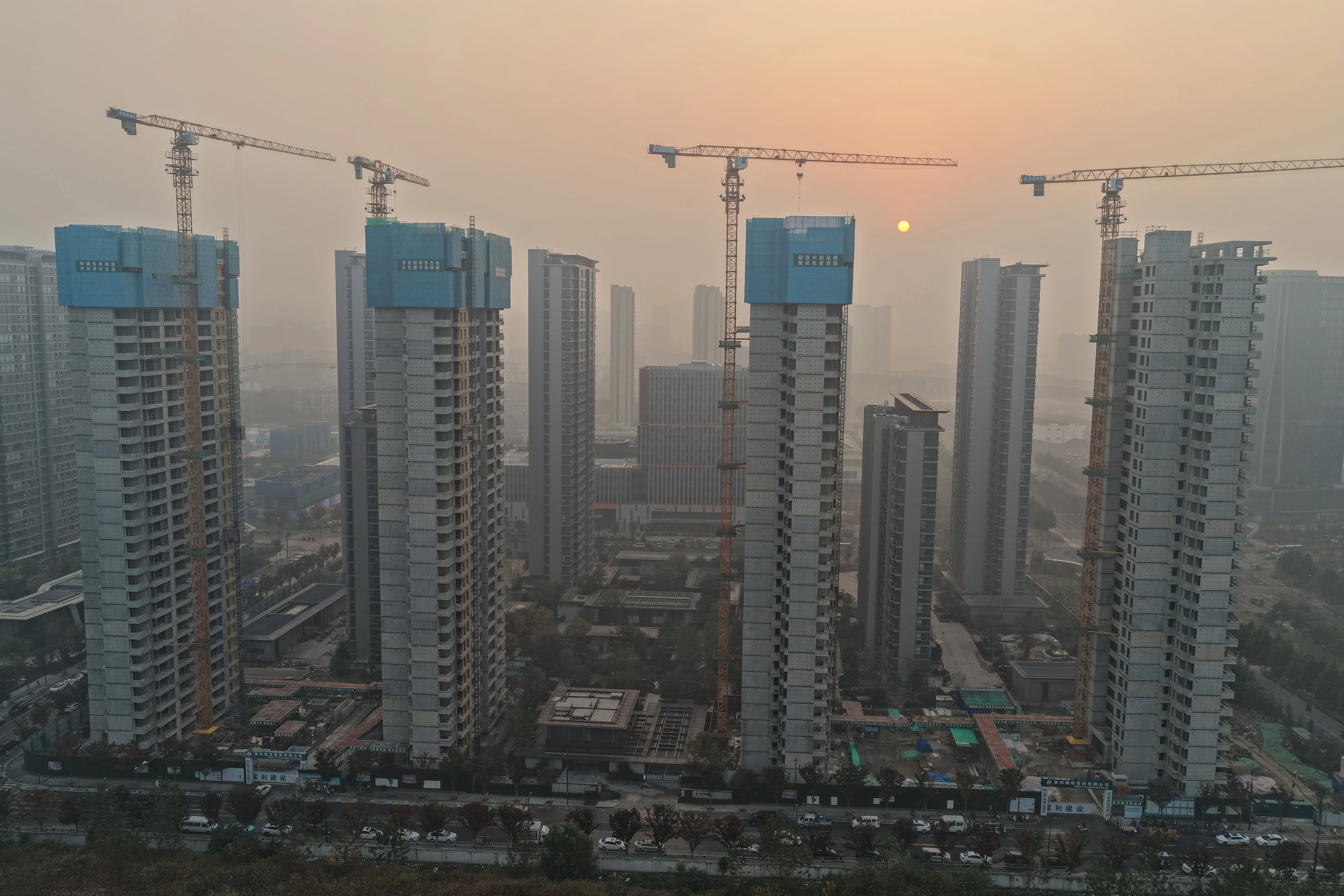
Photo: South China Morning Post
S&P Turns More Bearish on China’s Housing Market
S&P Global Ratings has sharply downgraded its outlook for China’s property sector, warning that the downturn is worsening faster than previously expected. Barely two months into 2026, the ratings agency now believes the housing slump will be significantly deeper than earlier projections.
In a note released Sunday, S&P said China’s primary real estate sales are likely to fall by 10% to 14% this year. That compares with the far milder 5% to 8% decline the firm had forecast for 2026 sales back in October, underscoring how rapidly conditions have deteriorated.
Analysts described the slowdown as so severe and prolonged that only the central government has the capacity to meaningfully absorb the country’s growing stock of unsold homes.
Oversupply Becomes the Core Problem
China’s property market, which once contributed more than 25% of the country’s economic activity when related industries are included, has shrunk dramatically. Annual home sales volume has been cut roughly in half over the past four years.
The slump began after Beijing moved to curb developers’ heavy reliance on debt, but it has been prolonged by persistently weak buyer demand. Despite falling sales, developers continued building, worsening an already serious oversupply problem.
According to S&P, China has now recorded six consecutive years of completed but unsold new housing, creating a glut that continues to weigh on prices and sentiment.
The agency said government purchases of unsold homes for use as affordable housing could help reduce inventory, but efforts so far have been limited and fragmented, falling short of what is needed to stabilize the market.
Prices Still Falling, Confidence Still Eroding
S&P expects home prices to decline by another 2% to 4% this year, roughly matching the drop seen last year. Falling prices, the agency warned, are undermining buyer confidence and reinforcing a negative feedback loop in which households delay purchases in anticipation of further declines.
“This is a vicious cycle with no easy escape,” the analysts said, adding that excess supply remains the single biggest obstacle to recovery.
What has alarmed analysts most is that price weakness is no longer confined to smaller or lower-tier cities.
Big Cities No Longer a Safe Haven
S&P said price declines in China’s largest cities worsened in the fourth quarter of last year, challenging the long-held view that top-tier markets would lead any recovery.
Beijing, Guangzhou, and Shenzhen each recorded home price declines of at least 3% last year. Shanghai was the lone exception, with prices rising 5.7% in 2025 compared with 2024.
“These were markets we previously considered relatively healthy,” the analysts noted, adding that their deterioration reduces the likelihood of a nationwide rebound in the near term.
Forecasts Keep Getting Worse
The trajectory of S&P’s forecasts highlights how quickly the outlook has deteriorated. In May 2025, the agency predicted a modest 3% decline in new home sales. By October, that estimate had been revised to an 8% drop.
Actual sales ended up falling 12.6% in 2025, totaling about 8.4 trillion yuan, or roughly $1.21 trillion. That figure is less than half of the 18.2 trillion yuan recorded at the market’s peak in 2021.
The continued weakness is intensifying pressure on already strained developers.
Rising Credit Risks for Developers
S&P warned that if property sales fall another 10 percentage points below its base-case projections for this year and next, four of the ten Chinese developers it currently rates could face downward pressure on their credit ratings.
The warning does not include China Vanke, once among the country’s largest developers, which requested delays on certain debt repayments late last year, highlighting the depth of stress across the sector.
Despite these risks, Chinese authorities have so far avoided large-scale rescue measures for the property industry, choosing instead to focus policy support on advanced manufacturing and high-tech development.
Broader Economic Implications
Economists caution that China’s push into high-tech industries may not be enough to offset the drag from real estate. A recent assessment by U.S.-based research firm Rhodium Group concluded that gains from technology and industrial upgrades are unlikely to fully compensate for the prolonged housing slump.
As a result, China’s economy is becoming more dependent on exports for growth, increasing its exposure to global trade tensions at a time of rising geopolitical uncertainty.
Policy Decisions in Focus
Attention now turns to China’s top policymakers, who are expected to unveil economic targets and policy priorities at a major parliamentary meeting next month. Investors and analysts will be watching closely for signs of stronger, more coordinated support for the property sector.
For now, S&P’s latest downgrade reinforces a sobering reality: China’s housing market downturn is not only far from over, but increasingly difficult to reverse.
.webp)
Popular articles



Subscribe to unlock premium content
Zara’s Hyper-Fast Fashion Supply Chain Is Changing Global Retail

The Rise of Apple Stores as Experiential Brand Centers Worldwide

Boutique Eco-Lodges in Costa Rica Redefining Ultra-Luxury Travel

Zara’s Hyper-Fast Fashion Supply Chain Is Changing Global Retail
The Rise of Apple Stores as Experiential Brand Centers Worldwide
Zara’s Hyper-Fast Fashion Supply Chain Is Changing Global Retail