China’s November Retail Sales Undershoot Forecasts as Consumer Weakness Intensifies

China’s November Retail Sales Undershoot Forecasts as Consumer Weakness Intensifies
By
David Goldfarb
Last updated:
December 15, 2025
First Published:
December 15, 2025

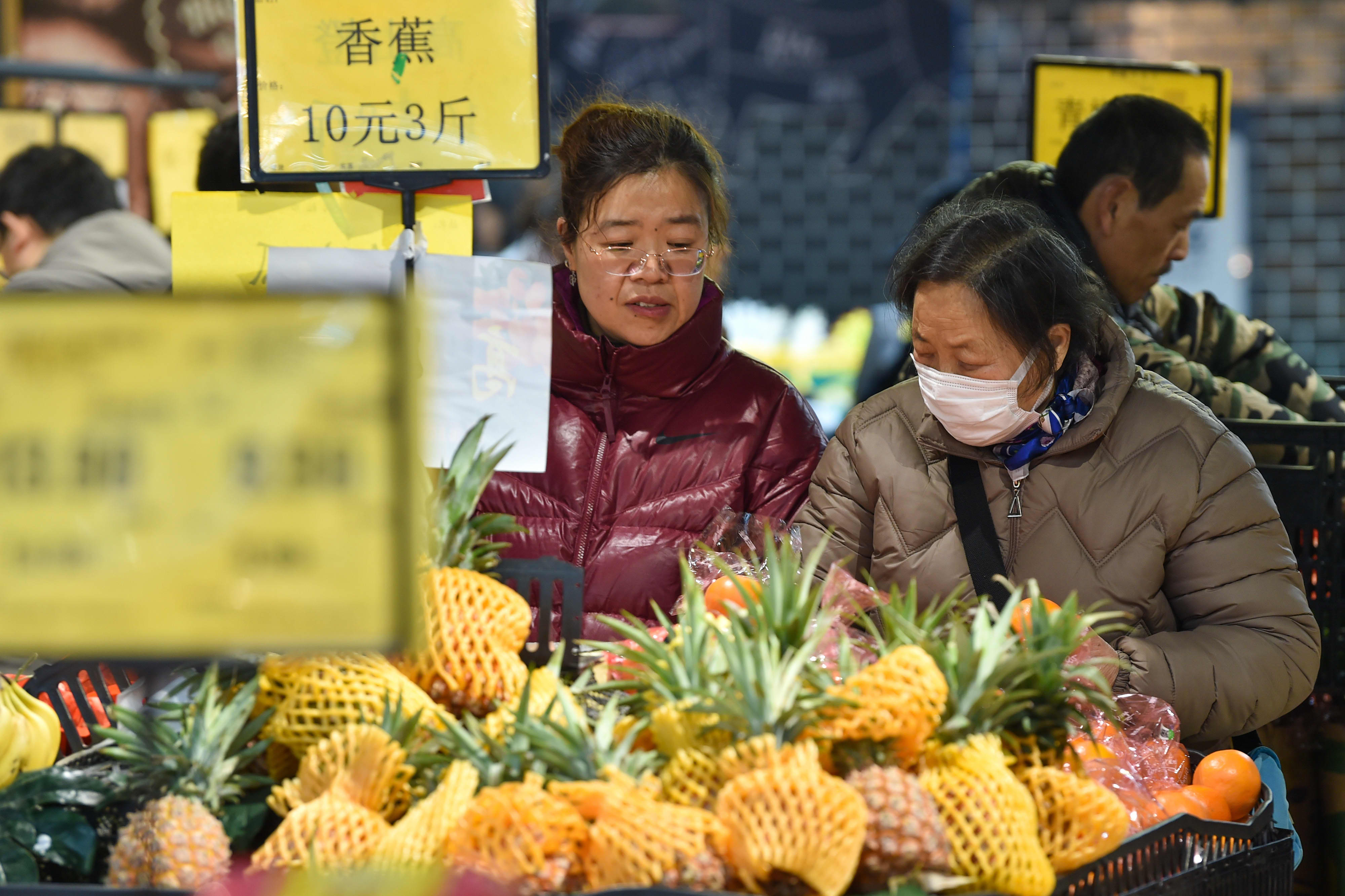
Citizens are shopping at a supermarket in Nanjing, East China’s Jiangsu province, on March 9, 2024.
Costfoto | Nurphoto | Getty Images
Economic Momentum Loses Further Steam
China’s economic slowdown became more pronounced in November as key indicators across consumption, production, and investment all fell short of expectations. The latest official data points to persistent weakness in domestic demand, even as policymakers attempt to stabilize growth by managing supply and containing risks in the troubled property sector.
Retail sales, a core measure of household consumption, rose just 1.3% year over year in November. That marked a sharp slowdown from October’s 2.9% growth and came well below market expectations of around 2.8%, reinforcing concerns that consumer confidence remains fragile.
Consumption Remains the Weak Link
The underperformance in retail activity reflects mounting pressure on household spending. Analysts note that falling home prices, job uncertainty, and subdued wage growth continue to weigh on sentiment.
Auto sales emerged as a major drag. Data from the China Automobile Dealers Association showed that vehicle retail sales by volume fell 8.1% year on year in November to 2.23 million units, marking the first annual decline in three years. The drop followed the suspension of trade-in subsidies by several local governments, removing a key support for big-ticket purchases.
Online shopping also failed to deliver the usual boost. This year’s Singles’ Day shopping festival began earlier than usual, stretching from early October through Nov. 11. While the extended promotions were designed to stimulate demand, they instead pulled spending forward into October. Gross merchandise volume during the period grew about 12%, sharply down from roughly 20% growth last year, suggesting consumers are increasingly cautious.
Industrial Output and Investment Miss Expectations
Industrial production rose 4.8% in November from a year earlier, missing forecasts for a 5% increase and marking its weakest growth since August 2024. The data points to uneven recovery in manufacturing as domestic orders soften and companies remain cautious on expansion.
Fixed-asset investment, which includes infrastructure, manufacturing, and real estate, contracted 2.6% in the January-to-November period compared with the same period last year. That decline was deeper than economists’ expectations and worsened from a 1.7% contraction recorded through October. It was also the sharpest downturn since the early stages of the pandemic, according to long-term data.
Real estate investment continued to deteriorate, plunging 15.9% in the first 11 months of the year. This marked a significant acceleration from the earlier 10.3% decline and underscores how the prolonged property slump is spilling over into the broader economy.
Property Slump Weighs on Confidence
Housing market weakness remains a central risk. In November, price declines across 70 major cities intensified. New home prices fell 1.2% year on year in top-tier cities such as Beijing, Guangzhou, and Shenzhen, while resale home prices dropped 5.8%.
Economists warn that the sustained fall in property prices is directly eroding household wealth and confidence. As housing accounts for a large share of household assets in China, prolonged weakness continues to suppress discretionary spending and long-term consumption plans.
Labor Market Offers Limited Relief
The urban unemployment rate stood at 5.1% in November, unchanged from the previous month. While headline joblessness appears stable, youth unemployment remains elevated. The most recent reading showed joblessness among young people at 17.3%, highlighting structural stress in the labor market.
Analysts argue that without a clearer improvement in employment prospects and income growth, any rebound in consumption is likely to remain muted.
Policy Response and Lingering Doubts
Chinese authorities have reiterated their commitment to supporting domestic demand. The finance ministry has announced plans to issue ultra-long-term special government bonds next year to fund projects tied to national security, equipment upgrades, and consumer trade-in programs. Officials have also pledged to increase investment spending to cushion the downturn in fixed-asset investment.
Despite these signals, market participants remain cautious. Many economists argue that targeted measures may not be sufficient to generate a sustained recovery without broader reforms aimed at boosting household income, strengthening social safety nets, and restoring confidence in the private sector.
Exports Mask Domestic Weakness
China is still on track to meet its official growth target of around 5%, largely due to strong exports to non-U.S. markets. In November, the country recorded a record trade surplus of $1.1 trillion in just 11 months, surpassing the previous full-year high.
However, the growing reliance on external demand has raised concerns about imbalances. International observers, including the International Monetary Fund, have urged Beijing to accelerate efforts to shift growth toward domestic consumption and reduce dependence on exports and currency depreciation.
Outlook for the Months Ahead
The November data reinforces the view that China’s recovery remains uneven and increasingly dependent on policy support and external demand. While authorities have acknowledged the need for rebalancing, investors and economists are looking for clearer timelines and more forceful measures to revive consumption, stabilize the property sector, and restore long-term confidence in the economy.
Until those steps materialize, the risk of prolonged weakness in domestic demand is likely to remain a central challenge for China’s growth outlook.

Popular articles


Subscribe to unlock premium content
The New Wave of Superyacht Ownership

Micro-Experience Convenience Stores Are Reinventing Quick Stops

Custom Vans for Digital Nomads Redefine Mobility

The New Wave of Superyacht Ownership
Micro-Experience Convenience Stores Are Reinventing Quick Stops
The New Wave of Superyacht Ownership