China’s Lunar New Year Spending Surge Signals Measured Recovery in Consumer Demand

China’s Lunar New Year Spending Surge Signals Measured Recovery in Consumer Demand
By
Alina Sinclair
Last updated:
February 26, 2026
First Published:
February 26, 2026

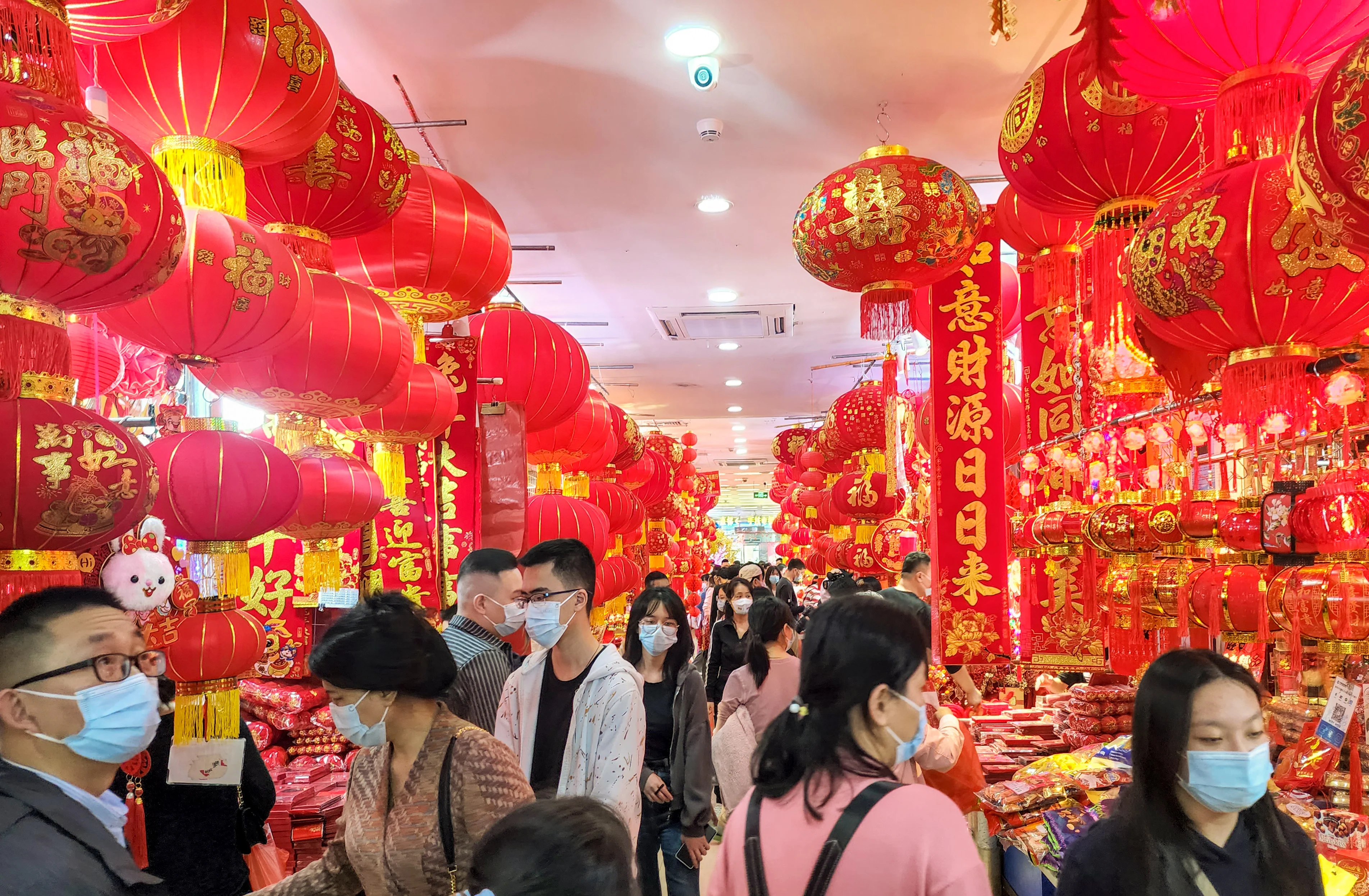
Photo: South China Morning Post
China’s consumer economy showed clear signs of improvement during the latest Lunar New Year holiday, with travel volumes, tourism receipts, and services spending all rising at a solid pace. The data indicates that recent policy support is helping stabilize demand, reinforcing expectations that authorities will continue with incremental easing rather than large-scale stimulus.
Market observers say the holiday performance provides an important real-time snapshot of household confidence, particularly as China continues its post-pandemic transition toward a consumption-driven growth model.
Travel Boom Drives Consumption Momentum
The nine-day holiday period delivered robust mobility data across the country. Daily tourism trips rose 5.7% year over year, while total holiday spending increased 5.5%, according to official figures. Rail traffic alone surpassed 18.7 million passengers in a single day, setting a new record for the festive period.
Travel-related categories once again outperformed goods consumption. Analysts at CCB International Securities noted that spending on experiences such as tourism, entertainment, and hospitality continues to recover faster than traditional retail.
Bookings for bundled hotel and theme park packages more than doubled compared with last year on Fliggy, a travel service owned by Alibaba. Emerging destinations including Altay in Xinjiang and Pu’er in Yunnan also recorded booking growth exceeding 100%, reflecting a shift toward experiential and domestic tourism.
Spending Growth Moderates as Consumers Stay Price Conscious
Despite the increase in overall activity, household spending behavior remained cautious. Average spending per tourist trip slipped 0.2% compared with a year earlier, highlighting ongoing deflationary pressures and a preference for value-oriented consumption.
Analysts at Morgan Stanley said the data suggests sentiment is improving but households are still managing budgets carefully. The longer holiday period and increased mobility boosted volumes, yet the slower pace of spending growth relative to 2025 underscores lingering income uncertainty.
Hospitality and Duty-Free Retail See Strong Gains
Hotel operators reported high occupancy levels, particularly in coastal and southern destinations. H World Group said occupancy rates exceeded 90% in its top ten markets, with strong family travel driving demand for larger rooms and group-friendly accommodations.
In Hainan, duty-free retail continued to be a bright spot. Holiday-period sales climbed 30.8% year over year to 2.72 billion yuan, supported by expanded zero-tariff policies aimed at encouraging domestic luxury spending.
Policy Signals Point to Targeted Support
The holiday data arrives just ahead of key policy meetings where economic targets will be outlined. Premier Li Qiang is expected to emphasize stable growth and domestic demand when announcing policy priorities.
Rather than broad stimulus, policymakers appear focused on maintaining consumption growth within a stable range. According to analysts at WisdomTree, authorities are aiming to prevent a sharp slowdown, with consumption expansion likely anchored around the 2% to 3% range.
Local governments also rolled out more than 2.05 billion yuan in vouchers and subsidies ahead of the holiday, helping support baseline demand.
Structural Shift Toward Services
China’s policy framework increasingly prioritizes services consumption as a long-term growth engine. The National Bureau of Statistics recently adjusted its consumer price index methodology to give greater weight to services, reflecting the economy’s evolving structure.
Economists, including researchers at CUHK Business School, emphasize that sustainable consumption recovery will depend more on income growth and employment stability than on short-term promotions.
Outlook
Taken together, the Lunar New Year data paints a picture of gradual normalization rather than a rapid rebound. Consumers are traveling more and participating in service-led activities, but they remain selective in how much they spend.
This balanced recovery supports expectations that Beijing will continue deploying precise, targeted policy tools to reinforce confidence while avoiding the risks associated with large-scale stimulus.
.webp)
Popular articles



Subscribe to unlock premium content
Colombia’s Coffee Regions Are Becoming Luxury Travel Destinations Hidden in the Highlands

Chile’s Desert Skies Are Becoming the World’s Most Exclusive Destination

The Rise of Heritage Manor Stays in the United Kingdom Countryside

Colombia’s Coffee Regions Are Becoming Luxury Travel Destinations Hidden in the Highlands
Chile’s Desert Skies Are Becoming the World’s Most Exclusive Destination
Colombia’s Coffee Regions Are Becoming Luxury Travel Destinations Hidden in the Highlands