China’s AI Talent Reversal Gains Momentum as Tech Giants Chase the Next Trillion-Dollar Super App

China’s AI Talent Reversal Gains Momentum as Tech Giants Chase the Next Trillion-Dollar Super App
By
Alina Sinclair
Last updated:
June 5, 2026
First Published:
June 5, 2026

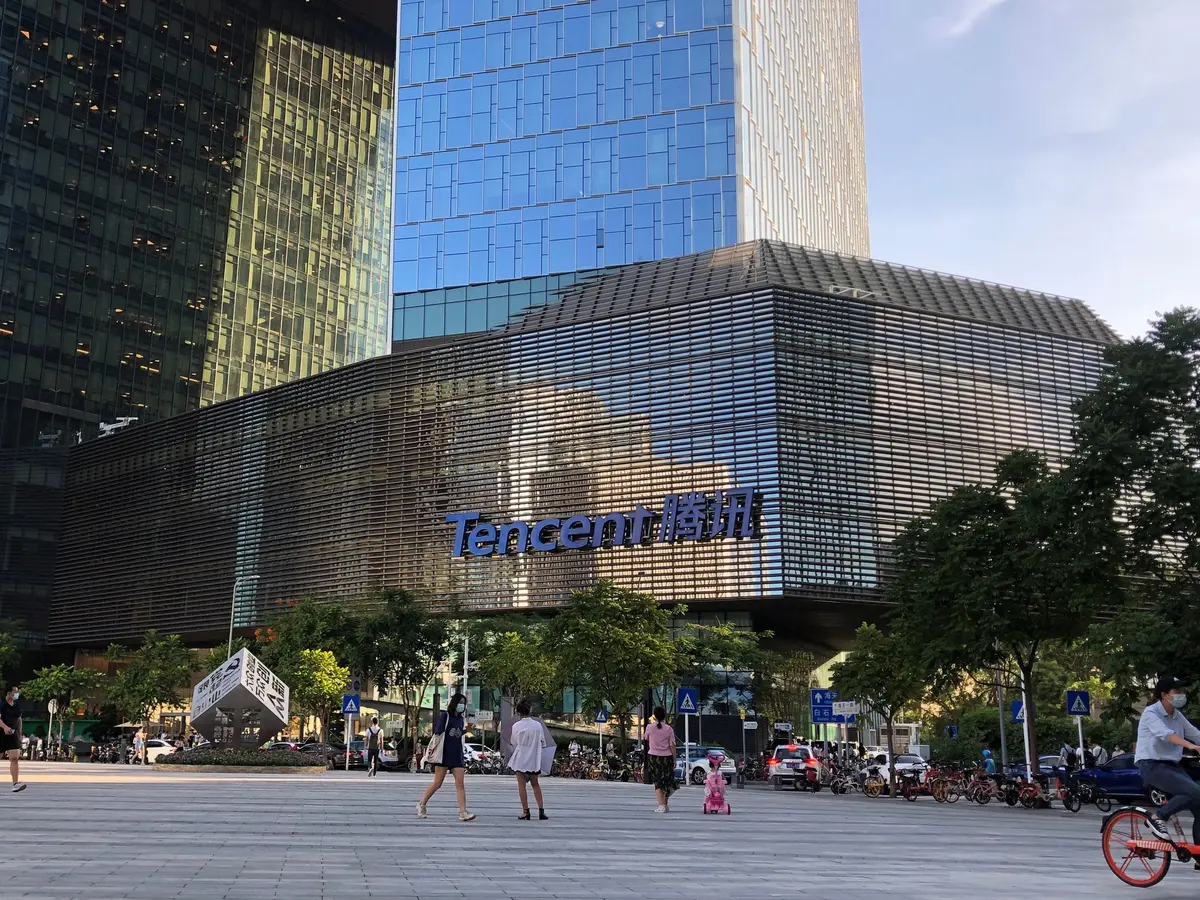
Photo: Al Arabiya
For years, the race toward artificial general intelligence (AGI) was largely viewed as a contest led by American technology giants. Companies such as OpenAI, Anthropic, Google DeepMind, and Microsoft invested billions of dollars in developing AI systems capable of matching or surpassing human-level reasoning.
Now, that landscape is beginning to change.
China’s leading technology companies are increasingly recruiting top AI researchers from Silicon Valley and global research institutions, signaling a strategic shift from merely applying artificial intelligence to actively competing at the frontier of AI innovation. One of the most notable examples is Tencent’s appointment of former OpenAI researcher Yao Shunyu as Chief AI Scientist, a move that highlights China's growing ambition to become a major force in the next phase of AI development.
China Expands Beyond AI Applications
Over the past several years, Chinese technology companies focused heavily on deploying AI across practical use cases, including manufacturing, logistics, consumer electronics, healthcare, autonomous systems, and enterprise software.
While American firms concentrated on building increasingly powerful foundation models and pursuing AGI, many Chinese companies prioritized commercial adoption and scalability. This strategy helped China rapidly integrate AI into everyday business operations and consumer products.
However, as generative AI technologies mature and competition intensifies, Chinese tech leaders are increasingly shifting their attention toward foundational research and long-term AI breakthroughs.
Tencent’s latest leadership move reflects this evolution.
Tencent’s New AI Chief Has a Bigger Vision
Speaking at a major AI and cloud computing event in Beijing, Tencent Chief AI Scientist Yao Shunyu outlined a bold vision for the future of artificial intelligence in China.
Having previously worked at OpenAI, Yao believes China should establish a dedicated, long-term organization focused on developing AGI and conducting frontier AI research.
According to Yao, achieving this goal will require a combination of deep scientific research, cutting-edge product development, and continued exploration of emerging AI capabilities.
His comments represent a significant departure from earlier views held by many Chinese technology leaders, who often suggested AGI remained a distant objective.
Several years ago, industry leaders estimated that human-level AI could still be a decade or more away. Today, however, advances in large language models, multimodal systems, reasoning capabilities, and AI agents have accelerated expectations across the industry.
The Search for the Next AI Super App
One of the most intriguing aspects of Yao’s vision is his belief that today's leading AI products are only the beginning.
He argued that ChatGPT and Claude are unlikely to remain the only dominant AI platforms and suggested that the industry has yet to discover its true "super app" moment.
The concept of a super app is particularly significant in China, where platforms such as WeChat transformed from messaging services into ecosystems that combine payments, shopping, transportation, entertainment, and business services.
According to Yao, the next generation of AI products could create entirely new digital ecosystems worth trillions of dollars globally.
Rather than relying solely on ever-larger AI models, he emphasized the importance of performance, efficiency, reliability, and affordability. He suggested that China may gain an advantage by developing smaller, more cost-effective models capable of delivering consistent results at scale.
This approach aligns with a growing trend across the AI industry, where companies are increasingly balancing raw model size with practical deployment costs and energy efficiency.
A Different Tone From the United States
While optimism surrounding AI continues to grow in China, some leading voices in the United States are becoming more cautious.
Several AI researchers and executives have raised concerns about the rapid pace of development, particularly as advanced models demonstrate increasingly sophisticated reasoning, coding, and autonomous capabilities.
AI safety has become a major topic among policymakers, regulators, and industry leaders. Concerns range from workforce disruption and misinformation to the long-term risks associated with highly autonomous systems.
These debates have fueled growing discussions about regulation, governance, and the appropriate speed of AI development.
In contrast, Chinese technology firms appear increasingly focused on accelerating innovation while simultaneously strengthening domestic AI capabilities.
Silicon Valley Talent Flows Back to China
A major factor behind China's AI momentum is the increasing movement of top technical talent back to the country.
Many Chinese researchers who spent years studying or working at leading American technology companies are now returning to take leadership positions within China's expanding AI ecosystem.
The trend reflects a combination of factors, including growing investment opportunities, government support for scientific research, competitive compensation packages, and expanding AI infrastructure within China.
Recent high-profile talent moves include:
- Former OpenAI researcher Yao Shunyu joining Tencent as Chief AI Scientist.
- AI researcher Hao Zhou reportedly leaving Google DeepMind to support Alibaba’s rapidly growing Qwen AI initiative.
- Former Google DeepMind executive Wu Yonghui departing California to lead AI research efforts at ByteDance Seed.
- Yang Zhilin, founder of AI startup Moonshot AI and creator of the Kimi model, bringing experience gained from Meta AI and Google Brain into China's startup ecosystem.
These moves demonstrate how China's technology sector is increasingly attracting world-class researchers who once contributed to some of the most influential AI projects in the United States.
Beijing Increases Investment in Research and Innovation
Talent recruitment is being reinforced by substantial national investment.
Chinese policymakers have made scientific self-sufficiency and technological innovation key priorities, directing resources toward advanced computing, semiconductor development, artificial intelligence, quantum technologies, and basic research.
Government initiatives over the next five years are expected to channel significant funding into universities, laboratories, startup ecosystems, and strategic industries.
The objective is not simply to commercialize existing technologies but to generate original breakthroughs that can shape future industries.
This long-term approach is becoming increasingly important as export restrictions and semiconductor controls continue to reshape the global technology landscape.
The Global AI Race Enters a New Phase
The competition between the United States and China is no longer centered solely on who can build the most powerful AI model.
Increasingly, the battle is also about attracting elite researchers, building sustainable innovation ecosystems, developing next-generation products, and creating entirely new digital platforms that can dominate future markets.
Tencent’s recruitment of a former OpenAI researcher symbolizes this broader transformation.
What was once a one-way flow of AI talent toward Silicon Valley is becoming a two-way exchange. As China invests more aggressively in foundational AI research and pursues its own vision for AGI, the global race for artificial intelligence leadership is entering a far more competitive and unpredictable phase.
For investors, technology companies, and policymakers alike, the implications could shape the future of the AI industry for decades to come.
.webp)
Popular articles



Subscribe to unlock premium content
Bali’s Digital Detox Revolution

Elevating Perspectives with Drone Photography
Dinner Reinvented in Los Angeles

Bali’s Digital Detox Revolution
Elevating Perspectives with Drone Photography
Bali’s Digital Detox Revolution