China’s AI IPO Boom Is Red Hot but Global Investors Face Closed Doors

China’s AI IPO Boom Is Red Hot but Global Investors Face Closed Doors
By
Calder Monroe
Last updated:
December 22, 2025
First Published:
December 22, 2025

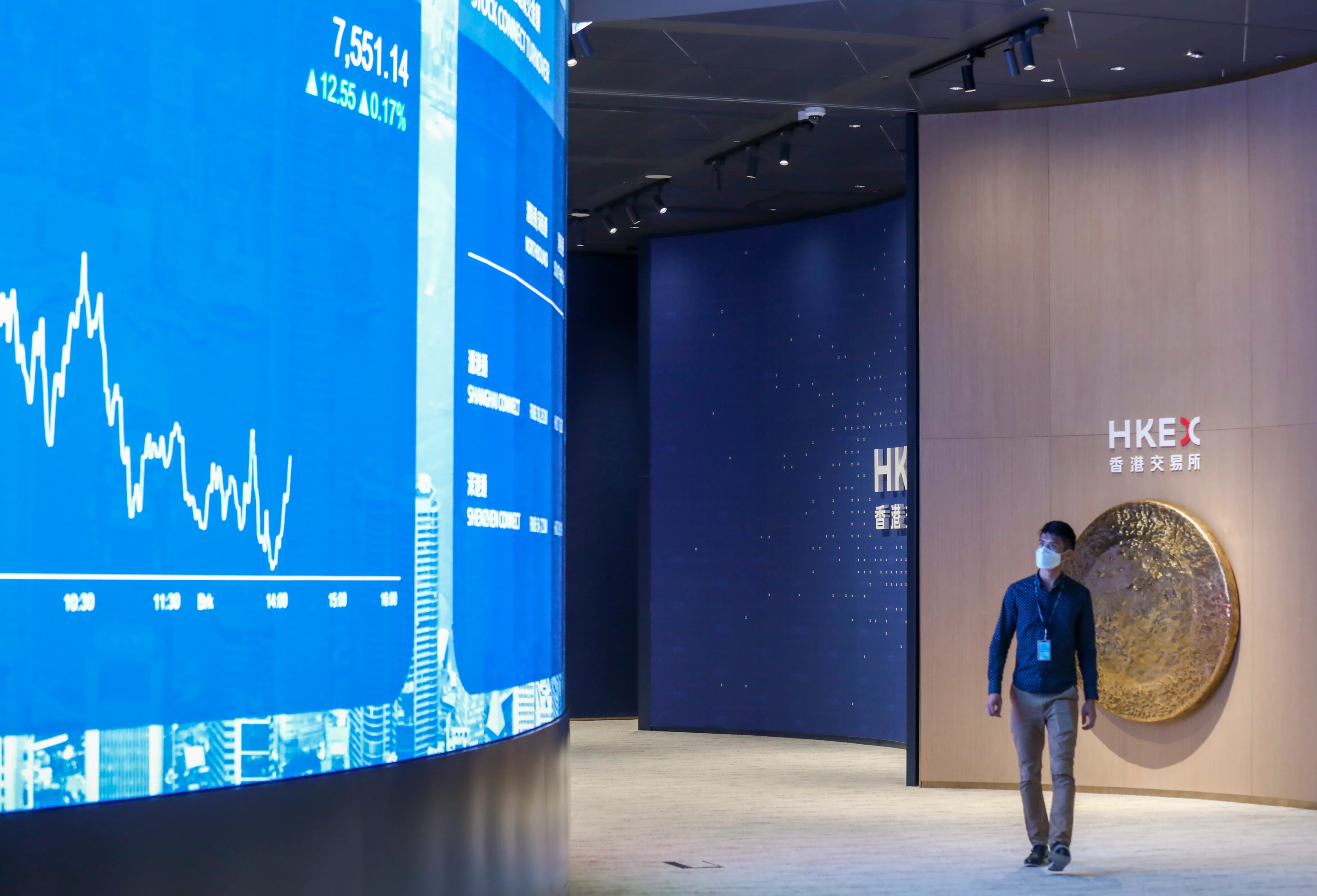
Photo: South China Morning Post
China’s artificial intelligence IPO market is on fire, delivering some of the most dramatic debut performances seen anywhere this year. But while domestic investors rush to secure allocations in the country’s most talked-about tech listings, overseas retail investors are finding that joining the rally is far easier said than done.
Recent listings highlight the scale of the enthusiasm. Shanghai-listed chipmaker MetaX Integrated Circuits surged nearly 700% on its market debut, briefly turning the company into one of the most closely watched AI stocks in the country. Earlier in the month, GPU designer Moore Threads recorded a first-day jump of more than 400%, underscoring the intense appetite for homegrown semiconductor and AI champions.
These eye-popping gains reflect China’s push to build domestic alternatives in strategic technologies such as artificial intelligence, advanced chips, and high-performance computing. However, access to these IPOs remains tightly controlled, especially for investors outside mainland China.
Why overseas retail investors are largely shut out
For most foreign retail investors, directly participating in mainland China IPOs is effectively impossible. Opening an onshore brokerage account with a Chinese securities firm typically requires a linked Chinese bank account, which in turn usually demands proof of residence in China or a valid long-term visa.
Even then, eligibility rules create additional hurdles. Foreign investors generally must already hold mainland-listed shares before they can enter an IPO lottery, a requirement that further narrows the pool.
“It’s not even possible for most foreign retail investors unless they open an account with a Chinese broker,” said Chris Zhang, executive director at China Fortune Securities Company. He added that most foreign banks lack the operational arrangements needed to support account openings with Chinese brokers, making the process unworkable for the vast majority of overseas individuals.
Official guidance from Shanghai’s municipal authorities reinforces these restrictions. Only a limited group of foreigners are permitted to open A-share brokerage accounts directly, including permanent residents, foreigners currently working in China, or those employed abroad but holding equity incentive plans in mainland-listed companies.
Stock Connect offers access but not to IPOs
For many global investors, Stock Connect remains the most practical route into mainland Chinese equities. The program allows overseas investors to buy A-shares through Hong Kong brokers without opening an onshore account or obtaining special licenses.
However, when it comes to IPOs, Stock Connect offers little relief. Newly listed stocks are not immediately eligible for trading under the scheme. Inclusion typically requires weeks or even months of post-listing trading history, sufficient liquidity, and a minimum market capitalization.
“Stock Connect does not work for IPOs because newly listed stocks are not included at the start,” said Theodore Shou, chief investment officer at Skybound Capital. “It usually takes several weeks to months for stocks to qualify, and even then, inclusion is not guaranteed.”
Access through Stock Connect also depends on individual Hong Kong brokers’ requirements, such as minimum account balances, risk disclosures, and internal eligibility checks, which can further limit participation.
The role of China’s STAR Market
Many of the most sought-after AI listings are debuting on Shanghai’s STAR Market, a Nasdaq-style board launched to support strategic sectors including semiconductors, artificial intelligence, and biotechnology. The STAR Market features looser profitability requirements to encourage innovation, but it also maintains tighter controls on foreign retail participation.
For overseas individuals hoping to gain exposure, indirect routes are often the only option. Foreign retail investors can invest in offshore funds domiciled outside China that allocate capital to A-shares and typically participate in IPOs on the STAR Market.
“These funds do take part in IPOs, but the exposure for retail investors is indirect and often very limited,” Shou said. IPO allocations may represent only a small fraction of a fund’s total assets, reducing the impact of any single blockbuster debut.
Institutional investors have clearer pathways
While retail investors face significant barriers, large global institutions have more direct access. Approved Qualified Foreign Institutional Investors can invest directly in onshore Chinese stocks, including IPOs.
The QFII and renminbi QFII frameworks are designed for major asset managers, banks, insurance companies, and sovereign wealth funds rather than individuals. Participants include global investment banks such as Morgan Stanley and Goldman Sachs, along with central banks and large pension funds.
To qualify, institutions must receive regulatory approval, appoint an onshore custodian, and complete foreign exchange registration with the State Administration of Foreign Exchange. While there are no explicit minimum asset thresholds, applicants are expected to demonstrate strong financial standing, extensive investment experience, robust governance, and a clean regulatory track record.
Market performance underscores the AI momentum
China’s AI and technology rally is already reshaping market benchmarks. The CSI 300 Information Technology Index is up 32% year to date, nearly double the 17% gain of the broader CSI 300. By comparison, Hong Kong’s Hang Seng Tech Index has risen 24% over the same period.
These figures highlight why interest in China’s AI IPOs is surging and why frustration among overseas investors continues to grow. For now, the strongest gains remain concentrated in markets that are easiest for domestic capital to access, leaving global retail investors watching from the sidelines as China’s AI boom gathers pace.

Popular articles


Subscribe to unlock premium content
The New Wave of Superyacht Ownership

Micro-Experience Convenience Stores Are Reinventing Quick Stops

Custom Vans for Digital Nomads Redefine Mobility

The New Wave of Superyacht Ownership
Micro-Experience Convenience Stores Are Reinventing Quick Stops
The New Wave of Superyacht Ownership