China’s AI Chip Push Gains Momentum as New IPOs Narrow the Gap With Nvidia

China’s AI Chip Push Gains Momentum as New IPOs Narrow the Gap With Nvidia
By
Leah Rosenfeld
Last updated:
December 18, 2025
First Published:
December 18, 2025

Getty Images
A Surge of Confidence in Domestic AI Chips
Chinese investors are pouring capital into local artificial intelligence chipmakers as the country accelerates efforts to build alternatives to Nvidia’s most advanced processors. A fresh wave of blockbuster IPOs is underscoring that shift, with new listings drawing extraordinary demand and signaling rising confidence in China’s semiconductor ambitions.
MetaX Integrated Circuits and Moore Threads have emerged as the latest beneficiaries of this momentum. Shares of MetaX surged roughly 700 percent in their Shanghai debut, while Moore Threads jumped more than 400 percent on its first day of trading just weeks earlier. The sharp rallies reflect investor expectations that domestic chipmakers will play a central role in China’s AI future as access to top-tier U.S. technology remains constrained.
Export Controls Reshape the Competitive Landscape
The renewed focus on domestic chip development is closely tied to U.S. export restrictions. Washington continues to bar China from purchasing Nvidia’s most powerful AI processors, even as some controls on lower-end chips have been eased. At the same time, Chinese regulators are signaling a longer-term strategy to reduce reliance on overseas suppliers, particularly in critical AI infrastructure.
Market analysts note that while China still trails Nvidia at the cutting edge, the policy environment is encouraging sustained investment across the semiconductor stack. Over time, this has created a more predictable growth runway for local players developing “good enough” alternatives for training and inference workloads.
GPUs at the Center of the Race
Like Nvidia, many of China’s emerging AI chip companies are focused on graphics processing units, which remain the backbone of modern AI systems. GPUs power large language models, data center workloads, and high-performance computing, making them strategically critical.
None of China’s chipmakers have yet produced a processor that matches Nvidia’s most advanced offerings on a one-to-one basis. However, progress in areas such as memory, interconnects, and system-level optimization has allowed domestic firms to narrow the performance gap, particularly for applications tailored to local customers.
Huawei Builds Scale Through Clusters
Huawei remains the most prominent domestic contender. The privately held technology giant is developing its Ascend series of AI chips, with a next-generation model scheduled for release in 2026. While individual Ascend chips have not outperformed Nvidia’s flagship processors, Huawei has focused on system-level innovation.
By linking a larger number of its own chips into high-performance clusters, Huawei has demonstrated AI systems capable of competing with Nvidia-based solutions. This approach leverages China’s strengths in networking and interconnect technologies, reducing dependence on top-end processors that are subject to export controls.
Baidu’s Full-Stack Strategy
Baidu has steadily expanded its footprint in AI hardware through Kunlunxin, a chip designer in which it holds a majority stake. The company unveiled a multi-year roadmap outlining new Kunlun processors planned for 2026 and 2027, targeting large language model training, inference, and enterprise workloads.
Baidu operates a hybrid strategy, using both self-developed chips and Nvidia products in its data centers. This flexibility has allowed it to position itself as a full-stack AI provider, spanning chips, servers, data centers, and applications. Analysts view Kunlun as one of the best-positioned domestic AI chips as Chinese hyperscalers increasingly prioritize local suppliers.
Alibaba Strengthens Its Cloud Arsenal
Alibaba began developing AI chips in the late 2010s, aligning hardware development with its growing cloud computing business. More recently, the company has focused on chips optimized for inference, a segment expected to grow rapidly as AI applications scale.
Reports that Alibaba secured a major customer for its AI chips helped lift its shares earlier this year, while analysts point to improving chip performance as a contributor to revenue growth in its cloud division. The strategy mirrors global trends, where inference efficiency is becoming just as important as raw training power.
Cambricon’s Breakout Performance
Cambricon has delivered one of the strongest financial performances among China’s AI chipmakers. Founded in 2016, the company reported record profits in the first half of 2025 as revenue surged more than 4,000 percent year on year to nearly 2.9 billion yuan. Net profit reached a record 1.04 billion yuan, highlighting accelerating adoption of its AI accelerators.
Investors increasingly see Cambricon as a potential leader in China’s AI accelerator market, particularly as customers seek domestically available alternatives to Nvidia’s downgraded chips.
New Entrants Fuel the IPO Wave
MetaX and Moore Threads exemplify a new generation of AI chip startups founded by veterans from AMD and Nvidia’s China operations. MetaX raised close to $600 million in its IPO, while Moore Threads is preparing to unveil a new GPU architecture at an upcoming developer conference in Beijing.
Other players are also advancing toward public markets. Biren Technology has received regulatory approval for an IPO, and Enflame continues to focus on AI training chips for data centers. IPO proceeds across the sector are being directed primarily toward research and development, ecosystem building, and next-generation chip design.
A Long-Term Challenge Takes Shape
China’s AI chip industry still faces substantial hurdles, including manufacturing maturity, software ecosystems, and customer acceptance. Yet the recent IPO surge highlights growing investor belief that domestic players can capture a meaningful share of the market as geopolitical pressures reshape global supply chains.
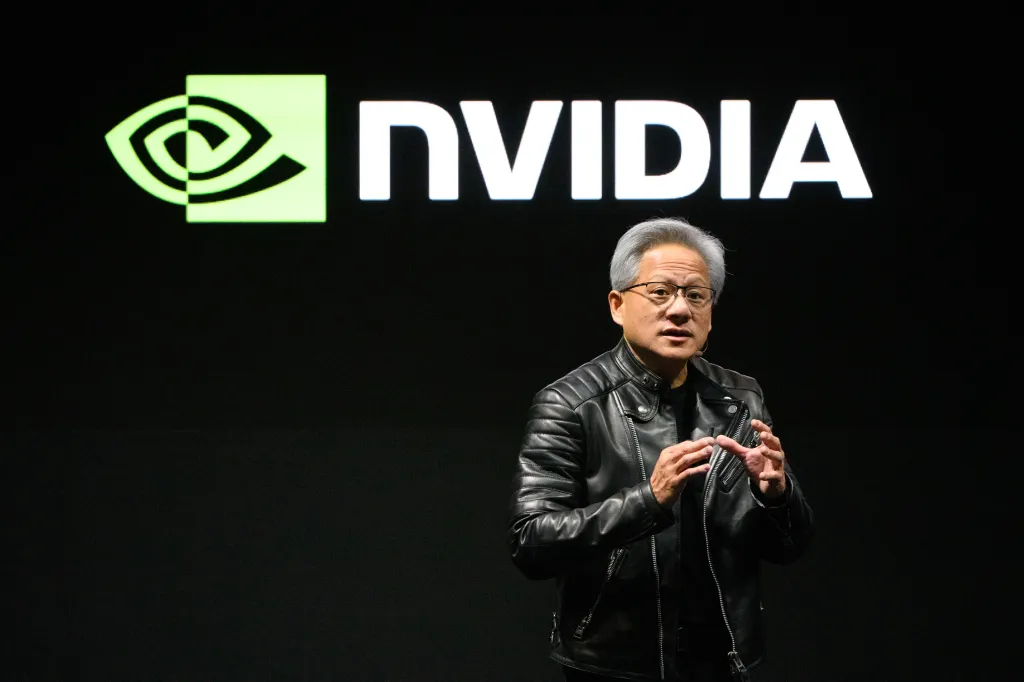
While Nvidia remains the global leader, China’s expanding roster of AI chipmakers suggests that competition is no longer theoretical. Instead, it is evolving into a long-term, state-backed effort that could steadily erode Nvidia’s dominance within the world’s second-largest economy.

Popular articles


Subscribe to unlock premium content
The New Wave of Superyacht Ownership

Micro-Experience Convenience Stores Are Reinventing Quick Stops

Custom Vans for Digital Nomads Redefine Mobility

The New Wave of Superyacht Ownership
Micro-Experience Convenience Stores Are Reinventing Quick Stops
The New Wave of Superyacht Ownership