China Reinvents the Silicon Valley Playbook Through Hong Kong’s Surging IPO Boom

China Reinvents the Silicon Valley Playbook Through Hong Kong’s Surging IPO Boom
By
Leah Rosenfeld
Last updated:
May 5, 2026
First Published:
May 5, 2026

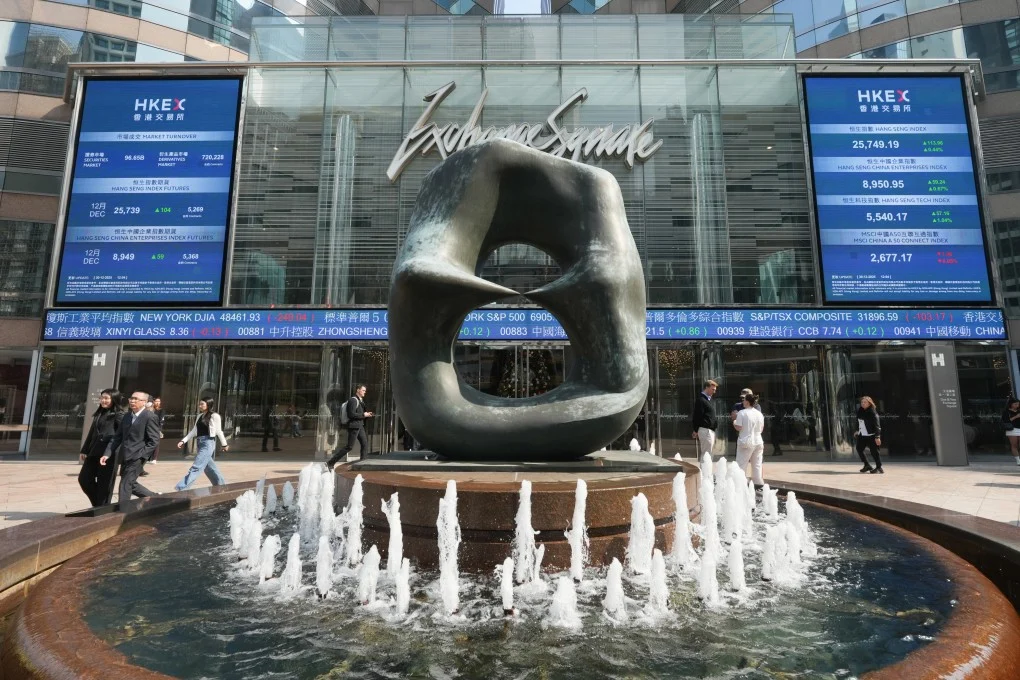
Photo: South China Morning Post
China is rapidly building a new innovation and funding ecosystem that challenges the traditional Silicon Valley model, with Hong Kong emerging as the central hub for capital, listings, and global investor access. A surge in initial public offerings and a shift in how startups raise and deploy capital are signaling a structural transformation in how China scales its technology sector.
At the heart of this shift is Hong Kong’s stock market, which has staged a powerful comeback. Over the past year, it has become the world’s leading destination for IPO fundraising, surpassing other global exchanges in total capital raised. Momentum continues to build, with more than 400 Chinese companies currently in the pipeline to go public, and some market participants suggesting the real number could be significantly higher due to confidential filing mechanisms.
A Historic Surge in Listings
The scale of activity unfolding in Hong Kong is unprecedented. Market insiders describe the current IPO wave as the largest in decades, driven by a combination of regulatory adjustments, geopolitical shifts, and a renewed focus on domestic capital markets.
So far this year, over 40 companies have successfully listed on the Hong Kong exchange, with sectors ranging from artificial intelligence and semiconductors to advanced manufacturing and biotech. Analysts expect total IPO proceeds to reach around $60 billion in 2026, nearly doubling the $36 billion raised the previous year.
This surge is not a short-term spike. Industry experts anticipate that strong listing activity will continue for several years, fueled by sustained demand from both issuers and investors.
Global Capital Flows Shift Toward Hong Kong
One of the most notable developments has been the influx of international capital into Hong Kong. In recent months, global investors have increasingly routed funds through Hong Kong’s financial system to gain exposure to Chinese technology and growth companies.
At the same time, tightening scrutiny from the United States on investments into sensitive Chinese sectors — including defense-related technologies and advanced computing — has accelerated the shift toward Hong Kong as a more accessible and strategically neutral listing venue.
Despite concerns about regulatory tightening from Beijing, only a relatively small portion of companies in the IPO pipeline — estimated at around 15% — are expected to face significant hurdles. This has helped maintain confidence among institutional investors and advisory firms.
Domestic Capital Gains Ground
Another defining feature of this transformation is the growing dominance of domestic capital. Chinese venture capital firms and institutional investors are playing a larger role in funding startups, reducing reliance on foreign capital sources.
This shift is reshaping deal dynamics. Local investors often move faster, offer competitive valuations, and operate with a deeper understanding of regulatory frameworks. As a result, founders are increasingly choosing domestic funding routes over traditional global investors.
Firms such as Puhua Capital are heavily focused on “hard tech” sectors, including AI, semiconductor development, and aerospace innovation. Approximately 60% of their investments are concentrated in these high-impact areas, reflecting China’s broader push toward technological self-reliance.
A New Exit Strategy for Founders
China’s startup ecosystem is also evolving in how founders approach growth and exits. In the past, entrepreneurs often sought to maintain majority control for as long as possible, favoring IPOs as the primary exit strategy.
Today, a new generation of founders is adopting a more flexible approach. Mergers and acquisitions, partial exits, and strategic partnerships are becoming more common, creating multiple pathways for investors to realize returns. This diversification is helping to deepen the venture capital ecosystem and increase liquidity across the market.
Tech Ambitions Shift Toward Global Competitiveness
The nature of innovation in China is also changing. Historically, many Chinese tech companies focused on practical, industry-specific applications designed to deliver immediate commercial value.
Now, there is a growing emphasis on long-term vision and globally competitive technologies. Investors are increasingly backing entrepreneurs who are not only building scalable solutions but also positioning their companies within the broader future of AI, robotics, and next-generation infrastructure.
This shift is bringing China closer to the innovation mindset traditionally associated with Silicon Valley, while still maintaining a distinct strategic focus.
International Interest Remains Strong
Despite geopolitical tensions and regulatory uncertainties, global interest in China’s tech ecosystem remains robust. International delegations from countries such as India, Spain, and Belgium are actively exploring partnerships and investment opportunities.
In particular, collaborations in robotics, manufacturing, and industrial automation are gaining traction. Large multinational firms and institutional investors continue to view China as a critical player in the future of global technology supply chains.
At the same time, some venture capital firms are positioning themselves to bridge the gap between foreign capital and domestic opportunities by securing licenses that allow them to invest directly in Chinese yuan while accepting overseas funding.
A Distinct Model Emerges
While comparisons to Silicon Valley are inevitable, China’s evolving ecosystem is not a direct replica. Instead, it represents a hybrid model shaped by government policy, domestic capital strength, and strategic industrial priorities.
Regulatory intervention remains a key variable. Policy changes can significantly impact market dynamics, making adaptability essential for investors and companies operating in this environment.
Bottom Line
China’s push to redefine the global tech and venture capital landscape is accelerating, with Hong Kong at the center of this transformation. Record IPO activity, rising domestic investment power, and a new generation of founders are collectively building a system that rivals traditional Western models. While risks remain, particularly around regulation and geopolitics, the scale and speed of this shift suggest that the future of global innovation and capital formation will be increasingly shaped by China’s evolving ecosystem.
.webp)
Popular articles



Subscribe to unlock premium content
From Forest Floors to Global Markets The Rise of Luxury Mushroom Cultivation in Europe

Frozen Frontiers of Innovation Private Investment and Climate Tech in Antarctica

Corporate Castles in Central Europe

From Forest Floors to Global Markets The Rise of Luxury Mushroom Cultivation in Europe
Frozen Frontiers of Innovation Private Investment and Climate Tech in Antarctica
From Forest Floors to Global Markets The Rise of Luxury Mushroom Cultivation in Europe