China Holds Key Lending Rates Steady as Economic Momentum Softens

China Holds Key Lending Rates Steady as Economic Momentum Softens
By
David Goldfarb
Last updated:
December 22, 2025
First Published:
December 22, 2025

Getty Images
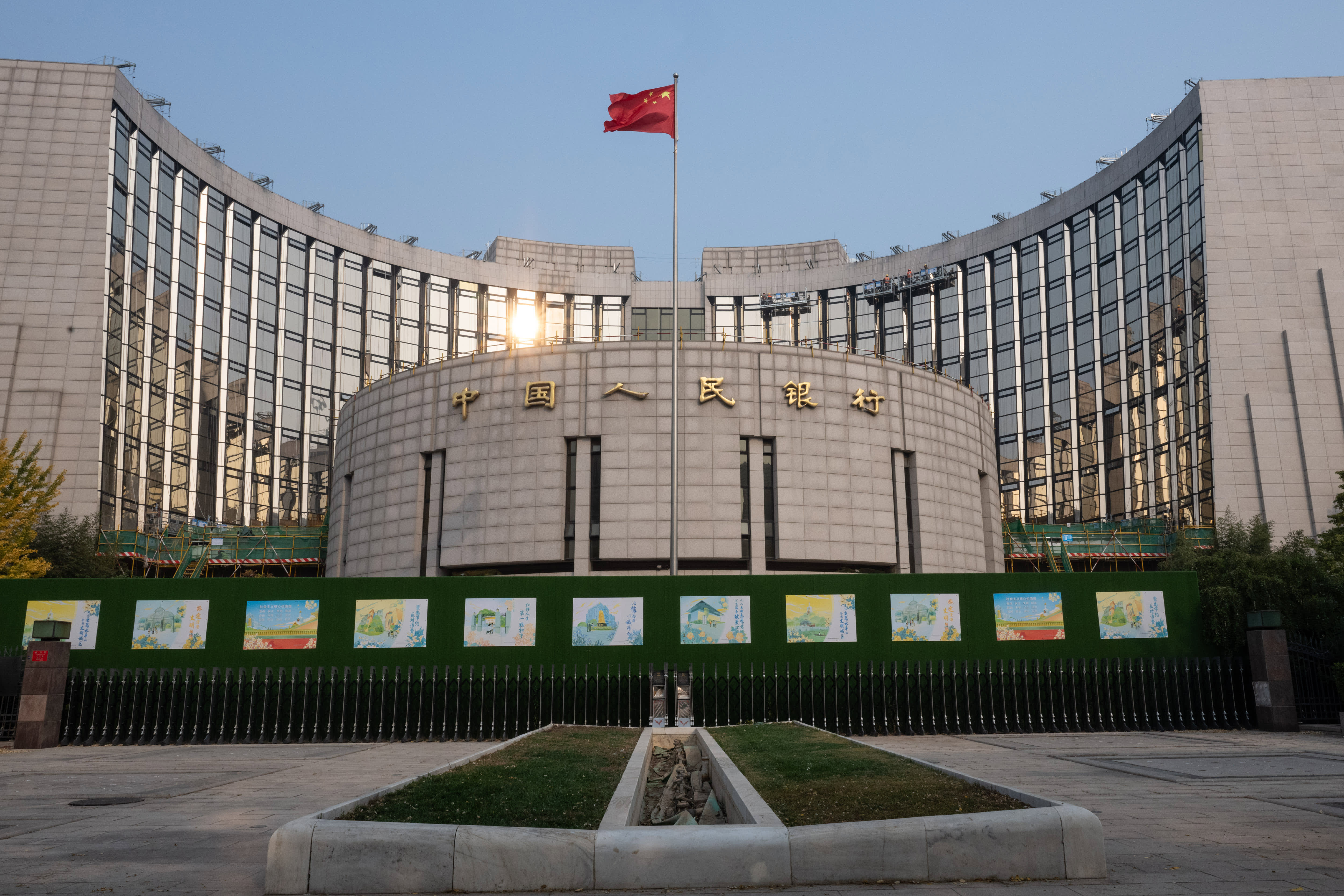
China’s central bank has opted for continuity over stimulus, keeping its key benchmark lending rates unchanged for the seventh consecutive month, even as fresh economic data points to slowing momentum across consumption, industry, and real estate.
On Monday, the People’s Bank of China left the 1 year loan prime rate at 3 percent and the 5 year loan prime rate at 3.5 percent, matching market expectations. The decision aligned with a broad consensus among economists that policymakers would avoid immediate rate cuts while relying on more targeted measures to support growth.
The 1 year loan prime rate serves as the reference point for most new corporate and household loans, while the 5 year rate is closely tied to mortgage pricing. Together, they form the backbone of China’s interest rate framework and play a central role in shaping credit demand across the economy.
Weak November data adds pressure on policymakers
The rate decision comes against a backdrop of softer-than-expected economic indicators released for November, reinforcing concerns that China’s post-pandemic recovery remains uneven.
Retail sales rose just 1.3 percent year on year, sharply below expectations of nearly 3 percent growth and down from 2.9 percent in October. The slowdown suggests that consumer confidence remains fragile, weighed down by job uncertainty, weak income growth, and falling property values.
Industrial production also underperformed. Output grew 4.8 percent compared with the same period last year, missing forecasts for a 5 percent expansion and marking the slowest pace of growth since August 2024. Analysts note that while manufacturing activity remains resilient in certain export-oriented sectors, domestic demand has yet to show a convincing rebound.
Property sector remains a major drag
China’s prolonged real estate downturn continues to be one of the biggest constraints on economic growth. Fixed asset investment, which includes property development and infrastructure spending, fell 2.6 percent in the January to November period from a year earlier. That contraction was steeper than economists had anticipated and highlights ongoing caution among developers and local governments.
Housing prices showed no sign of stabilization. In November, new home prices in tier one cities such as Beijing, Shanghai, Guangzhou, and Shenzhen fell 1.2 percent from a year earlier, while resale home prices dropped a much sharper 5.8 percent. These declines reflect persistent oversupply, weak buyer sentiment, and limited access to financing in parts of the property market.
Why the PBOC is holding back on rate cuts
Despite mounting economic headwinds, policymakers appear reluctant to deploy broad monetary easing. Economists argue that lower interest rates alone may not be enough to revive confidence, particularly in the private sector.
Eswar Prasad, professor of trade policy and economics at Cornell University, has noted that while additional stimulus could help, monetary policy is unlikely to gain much traction on its own amid structural challenges. With businesses cautious about investing and households hesitant to spend, rate cuts may have diminishing returns unless paired with broader reforms.
This cautious stance reflects concerns about financial stability, capital outflows, and pressure on the yuan, which has already been trading near multi-year lows against the U.S. dollar.
Fiscal support and targeted measures take center stage
Instead of aggressive rate cuts, Beijing has been signaling a greater reliance on fiscal tools and targeted support. Earlier this month, the Ministry of Finance announced plans to issue ultra-long-term special government bonds next year to fund major infrastructure and strategic projects, a move aimed at supporting growth without overstimulating the housing market.
Policymakers have also pledged to step up efforts to boost consumption, including special initiatives designed to counter deflationary pressures that have weighed on prices and corporate profits throughout the year.
At the same time, authorities continue to fine-tune support for the property sector through selective easing of purchase restrictions, lower down payment requirements in some cities, and measures to ensure the completion of unfinished housing projects.
Trade outlook offers a potential lift
External factors could still provide some relief. An interim trade arrangement with the United States that suspended the most punitive tariffs on Chinese exports has improved the outlook for shipments to overseas markets. Economists say stronger exports could help China work toward its official growth target of around 5 percent in 2025, even as domestic demand remains under pressure.
Markets react calmly to the decision
Financial markets showed a muted response to the rate hold. The CSI 300 index edged up 0.43 percent, reflecting cautious optimism that policymakers still have room to act if conditions worsen. The onshore yuan was little changed at around 7.04 per dollar, while the offshore yuan weakened slightly to about 7.03, underscoring ongoing sensitivity to policy signals and global interest rate trends.
For now, China’s central bank appears content to stay on hold, balancing the need to support growth with concerns over financial stability. Whether that stance can be maintained will depend on how quickly domestic demand, confidence, and the property sector begin to show signs of genuine recovery.

Popular articles


Subscribe to unlock premium content
The New Wave of Superyacht Ownership

Micro-Experience Convenience Stores Are Reinventing Quick Stops

Custom Vans for Digital Nomads Redefine Mobility

The New Wave of Superyacht Ownership
Micro-Experience Convenience Stores Are Reinventing Quick Stops
The New Wave of Superyacht Ownership