
China Holds Fire as Trump Escalates Tariff Rhetoric, Betting on Patience Ahead of April Leaders Summit

China Holds Fire as Trump Escalates Tariff Rhetoric, Betting on Patience Ahead of April Leaders Summit
By
David Goldfarb
Last updated:
January 27, 2026
First Published:
April 25, 2026

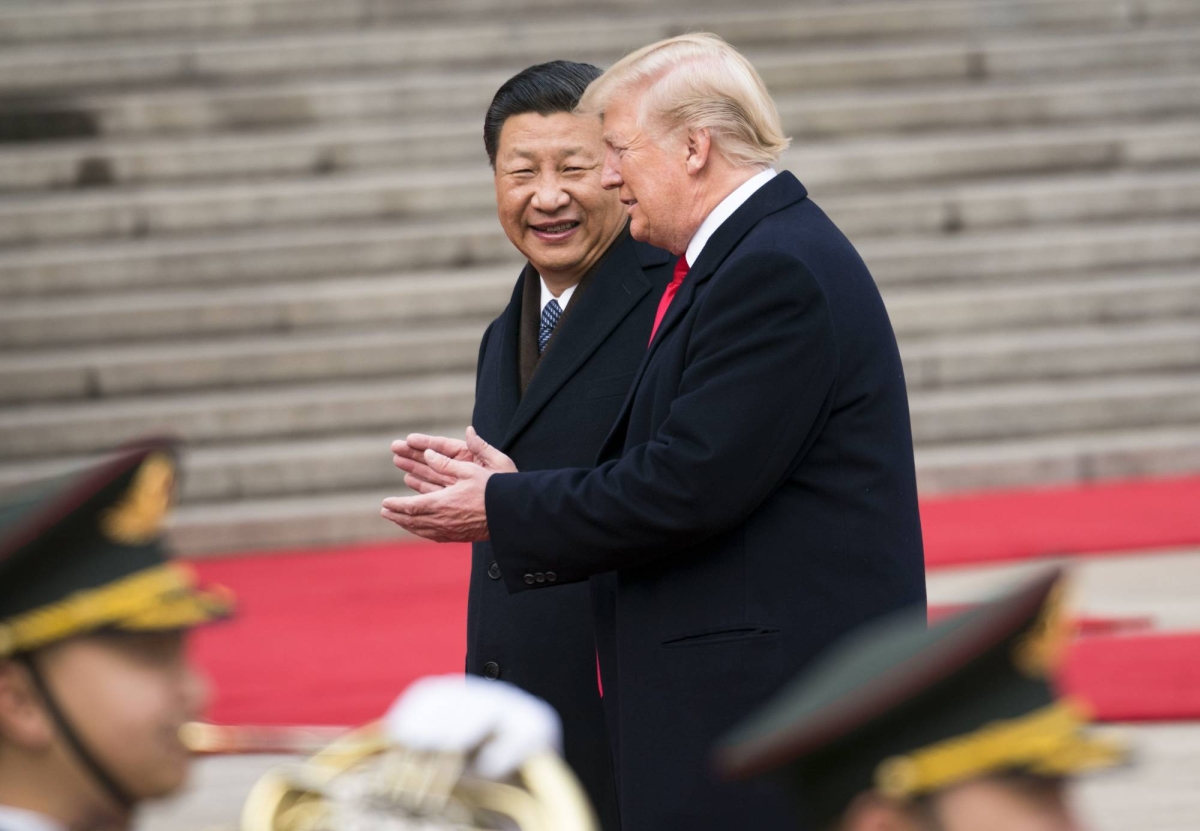
Photo: The Japan Times
As U.S. President Donald Trump ramps up tariff threats and broadens his economic pressure campaign across multiple fronts, Beijing is choosing restraint over retaliation.
Chinese policymakers appear to be guided by a familiar strategic maxim: never disrupt an opponent while they are undermining themselves.
Despite a wave of warnings from Washington touching everything from energy flows to third-country trade deals, China has avoided any sharp countermeasures. Instead, officials are signaling stability, keeping communication channels open, and staying focused on a planned April meeting between Trump and Chinese President Xi Jinping, which both sides view as critical to preserving their fragile trade truce.
Market analysts widely expect the current U.S.-China détente to hold at least until that summit, with Beijing betting that many of Trump’s most dramatic threats will not ultimately translate into policies that materially damage China’s economy.
Why Beijing is staying calm
Chinese officials believe the White House’s recent moves are more about leverage and optics than immediate escalation. Deborah Elms, head of trade policy at the Hinrich Foundation, said Beijing is closely monitoring developments but sees little incentive to provoke Washington while preparations are underway for the April leaders meeting.
Trump has floated extreme measures in recent weeks, including hypothetical 100% tariffs on Canadian goods and sweeping penalties on countries trading with Iran. Yet past experience suggests many of these threats soften after pushback from financial markets and U.S. businesses.
Gabriel Wildau, managing director at consultancy Teneo, noted that Chinese leaders remember how earlier tariff proposals were scaled back following market volatility and corporate pressure. That history reinforces Beijing’s view that patience may be more effective than confrontation.
For now, China’s approach is simple: wait, watch, and avoid giving Washington a pretext to escalate.
Both governments are prioritizing continuity through April, aware that any sharp deterioration could derail high-level diplomacy and unsettle already fragile global markets.
Trump’s expanding tariff and pressure playbook
Over the past month alone, the Trump administration has widened its economic toolkit well beyond direct tariffs on Chinese goods.
Washington moved to assert control over Venezuelan oil flows, a critical source of crude for China, and threatened a 25% tariff on countries doing business with Iran. Given that China is Tehran’s largest oil customer, such a policy would have indirect but meaningful implications for Beijing’s energy security.
Trump also raised alarms in Beijing by reviving rhetoric about Greenland, a strategically important Arctic territory with rare-earth resources and potential shipping routes that China has long viewed as part of its future trade ambitions. Although the U.S. president later walked back threats of force or tariffs, he hinted at “the framework of a future deal,” keeping uncertainty alive.
Canada has now become the latest flashpoint.
Trump warned that the U.S. could impose tariffs as high as 100% on Canadian goods if Ottawa deepened trade ties with China. This marked a sharp reversal from earlier comments suggesting a Canada-China deal could be constructive.
Earlier this month, Canadian Prime Minister Mark Carney finalized a limited trade arrangement with Beijing, Canada’s second-largest trading partner after the United States. Under the agreement, Canada agreed to roll back 100% tariffs on Chinese electric vehicles, while China lifted retaliatory duties on Canadian canola seeds and meal. Agricultural exports alone represent billions of dollars annually for Canada, making the breakthrough economically significant.
Trump’s tone hardened after Carney called on middle powers at Davos to coordinate against coercive tactics by major economies. Carney later clarified that Canada has no plans for a full free trade agreement with China, framing the deal as narrowly focused.
From Beijing’s perspective, the episode underscores both opportunity and constraint: while countries like Canada may seek diversification, their deep integration with the U.S. limits how far they can pivot.
Beijing’s broader diplomatic strategy
Against this backdrop, Chinese leaders are working to present an image of stability and global engagement.
Vice Commerce Minister Dong Yan confirmed this week that Beijing and Washington have maintained regular communication since Trump and Xi last met in South Korea in October. China, he said, remains open to managing differences and expanding cooperation, provided the relationship is built on mutual respect and shared benefit.
At the same time, Beijing is accelerating outreach to other capitals.
China has hosted a steady stream of foreign leaders in recent months, including Ireland’s Prime Minister Michael Martin and South Korean President Lee Jae Myung. President Xi met Finnish Prime Minister Petteri Orpo this week, while UK Prime Minister Keir Starmer is expected to visit China shortly, marking the first trip by a British leader in eight years. Xi also held talks with Indian President Droupadi Murmu, emphasizing closer cooperation between Asia’s two largest economies.
These engagements are not symbolic. China is actively positioning itself as a predictable partner at a time when many countries feel caught between U.S. pressure and their own economic interests.
So far, there have been no concrete signs that Beijing plans retaliatory steps such as sanctions, new trade restrictions, or military posturing in response to Trump’s latest statements.
Instead, China is leaning into messaging that highlights multilateralism, free trade, and what it calls win-win cooperation, while allowing Washington’s aggressive rhetoric to speak for itself.
What comes next for U.S.-China trade
Despite the noise, both sides appear determined to keep the April leaders meeting on track. Analysts say this reflects a shared understanding that further destabilizing the world’s two largest economies would carry steep costs, not just politically but financially.
The U.S. and China together account for more than 40% of global GDP, and their bilateral trade exceeded $575 billion last year. Any renewed escalation would ripple across supply chains, commodity markets, and investor sentiment worldwide.
For Beijing, restraint serves multiple purposes. It avoids spooking global partners, strengthens China’s image as a steady actor, and preserves room for negotiation with Washington. For Trump, maintaining the truce keeps markets calmer while preserving leverage ahead of high-level talks.
In the meantime, China is content to let events unfold.
By staying quiet while Washington widens its tariff threats and geopolitical pressure, Beijing is betting that time, market forces, and international opinion may ultimately work in its favor, at least until leaders from both countries sit down face to face this April.
.webp)
Popular articles



Subscribe to unlock premium content
Crypto in the Arctic

Iceland’s Seaweed Revolution

Private Island Rentals for Corporate Retreats Hit $1 Billion

Crypto in the Arctic
Iceland’s Seaweed Revolution
Crypto in the Arctic


