
Canada Rules Out China Free Trade Pact as Trump Warns of Sweeping 100 Percent Tariffs

Canada Rules Out China Free Trade Pact as Trump Warns of Sweeping 100 Percent Tariffs
By
David Goldfarb
Last updated:
January 26, 2026
First Published:
April 25, 2026

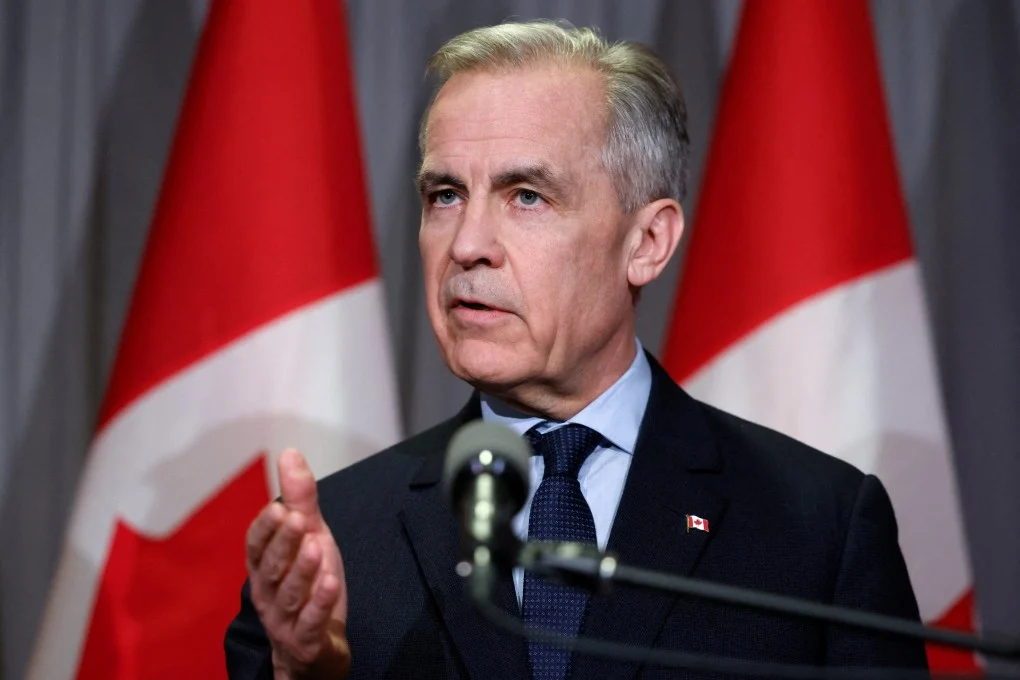
Photo: South China Morning Post
Canada has firmly ruled out pursuing a free trade agreement with China, as tensions with Washington intensify following a fresh warning from U.S. President Donald Trump that Canadian exports could face tariffs as high as 100 percent if Ottawa deepens trade ties with Beijing.
Speaking to reporters on Sunday, Prime Minister Mark Carney made it clear that Canada has no intention of negotiating a standalone free trade deal with China. He emphasized that any major trade initiative must comply with the Canada U.S. Mexico Agreement, known as CUSMA in Canada and USMCA in the United States.
Under the terms of the trilateral pact, Canada is required to notify both the U.S. and Mexico before entering into free trade negotiations with a non market economy. Carney said Ottawa fully respects those obligations and will not move forward without consulting its North American partners.
His comments came just days after Trump issued a sharp warning on Truth Social, stating that if Canada “makes a deal” with China, the United States would respond with punitive tariffs that could reach 100 percent on Canadian goods.
Washington Draws a Hard Line on China Trade
Trump framed the issue as a matter of national economic security, arguing that Canada must not become a transit point for Chinese products entering the U.S. market.
“If Governor Carney thinks he is going to make Canada a drop off port for China to send goods and products into the United States, he is sorely mistaken,” Trump wrote, signaling that Washington is prepared to take aggressive action to prevent what it views as trade circumvention.
Treasury Secretary Scott Bessent reinforced that position in a weekend interview, saying the U.S. cannot allow Canada to become an “opening” for low cost Chinese imports to flow south of the border. According to U.S. officials, such a scenario could undermine American manufacturers and weaken the effectiveness of existing tariffs on Chinese goods.
These remarks highlight Washington’s broader strategy of tightening trade enforcement across North America, particularly as the U.S. maintains steep duties on a wide range of Chinese products, including electric vehicles, batteries, steel, and advanced technology components.
Recent Canada China Agreement Sparks Political Backlash
The latest dispute follows a preliminary agreement reached on Jan. 16 between Ottawa and Beijing aimed at easing trade friction on select goods.
Under the arrangement, Canada agreed to allow up to 49,000 Chinese electric vehicles into its market each year at a reduced tariff rate of 6.1 percent. This marked a significant shift after Canada raised tariffs on Chinese EVs to 100 percent in October 2024, aligning with similar measures taken by the United States.
In exchange, China committed to sharply lowering duties on several Canadian agricultural exports. Tariffs on canola seed oil are set to fall to 15 percent starting March 1, down from a punitive 85 percent. Additional products including canola meal, lobsters, crabs, and peas will be exempt from Chinese anti discrimination tariffs until at least the end of 2026.
Canadian officials estimate the agriculture concessions alone could restore hundreds of millions of dollars in annual export revenue, particularly benefiting farmers in Saskatchewan and Alberta who have struggled with restricted access to the Chinese market over the past two years.
Carney characterized the agreement as a targeted effort to resolve outstanding trade issues rather than a step toward broader economic integration.
“What we have done with China is to rectify some issues that have developed in the last couple of years,” he said, adding that the deal is fully consistent with CUSMA.
Rising U.S. Canada Tensions Add Pressure
The trade dispute is unfolding amid growing political friction between Ottawa and Washington. Last week, Trump withdrew Canada’s invitation to join his proposed “Board of Peace,” shortly after Carney warned at the World Economic Forum in Davos about the dangers of economic coercion by major powers.
Although Carney did not name any country in his Davos remarks, Trump responded directly on the sidelines of the forum, saying, “Canada lives because of the United States. Remember that, Mark, the next time you make your statements.”
The exchange underscored how quickly rhetoric has escalated, even as both countries remain deeply economically intertwined. The U.S. is Canada’s largest trading partner by far, accounting for roughly 75 percent of Canadian exports and nearly $900 billion in two way trade annually.
Earlier this year, Trump appeared more conciliatory following the Canada China agreement, saying it was “a good thing” for Carney to pursue trade opportunities. That tone has since shifted dramatically as Washington reassesses the broader implications for North American supply chains.
Tariffs Already Climbing on Key Canadian Goods
Trade pressures are not theoretical. In August 2025, the Trump administration raised tariffs on certain Canadian goods to 35 percent, up from 25 percent. While most Canadian exports continue to move tariff free under CUSMA, several strategically important sectors remain affected.
Steel, copper, and select automobiles and auto parts are currently subject to U.S. duties, impacting billions of dollars in cross border commerce. Industry groups warn that further escalation could disrupt integrated manufacturing networks, particularly in automotive corridors stretching from Ontario to Michigan.
Economists estimate that a blanket 100 percent tariff on Canadian exports would severely impact GDP growth on both sides of the border, potentially cutting Canada’s annual output by more than 2 percent while also raising costs for U.S. consumers and manufacturers.
Canada Signals Alignment with North American Partners
For now, Carney is emphasizing cooperation over confrontation. By ruling out a free trade agreement with China, Ottawa is signaling that it intends to keep its economic strategy aligned with its North American partners, even as it seeks limited, pragmatic arrangements to support key domestic industries.
The message from Canada is one of balance: maintaining access to global markets while honoring commitments under CUSMA and avoiding actions that could trigger a damaging trade war with its largest economic ally.
As geopolitical competition intensifies and supply chains are increasingly shaped by politics, Canada finds itself navigating a narrow path between economic opportunity and strategic loyalty, with the stakes rising on every new tariff threat.
.webp)
Popular articles



Subscribe to unlock premium content
Crypto in the Arctic

Iceland’s Seaweed Revolution

Private Island Rentals for Corporate Retreats Hit $1 Billion

Crypto in the Arctic
Iceland’s Seaweed Revolution
Crypto in the Arctic


