California Judge Finds Tesla Misled Consumers on Autopilot Claims

California Judge Finds Tesla Misled Consumers on Autopilot Claims
By
Leah Rosenfeld
Last updated:
December 17, 2025
First Published:
December 17, 2025

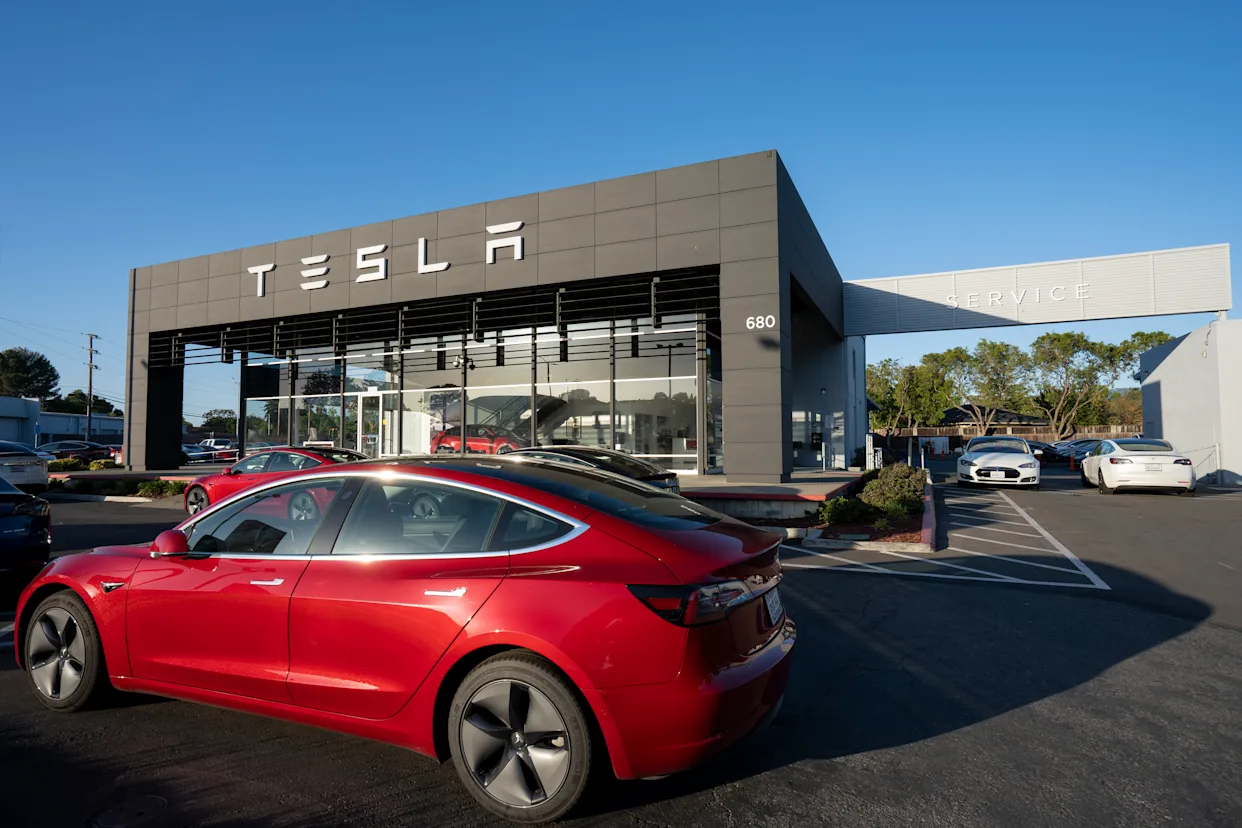
Photo: Yahoo News
A California administrative law judge has ruled that Tesla engaged in deceptive marketing practices related to its Autopilot and Full Self-Driving systems, concluding that the company’s messaging overstated the actual capabilities of its driver assistance technology. The decision could result in a temporary suspension of Tesla’s license to sell vehicles in California if corrective action is not taken.
The ruling stems from a case brought by the California Department of Motor Vehicles, which accused Tesla in 2022 of falsely advertising its advanced driver assistance features. According to the judge, Tesla’s marketing implied that its vehicles were capable of fully autonomous driving, when in reality they require a fully attentive human driver at all times.
Potential Penalties and Regulatory Timeline
Under the judge’s original order, Tesla would face a 30-day suspension of both its vehicle sales license and its manufacturing license in California. However, the DMV announced that it has modified the penalty framework.
The agency will now grant Tesla a 60-day window to revise any misleading or confusing claims related to Autopilot and Full Self-Driving. If Tesla fails to adequately address the concerns within that period, the DMV will proceed with a 30-day suspension of the company’s license to sell vehicles in the state.
Importantly, the DMV confirmed it will stay any suspension of Tesla’s manufacturing license, meaning factory operations in California would continue without disruption even if sales privileges were temporarily halted.
Why the Marketing Was Deemed Misleading
At the heart of the ruling is the language Tesla used to describe its technology. The judge stated that a reasonable consumer could conclude that a vehicle marketed with “Full Self-Driving Capability” can operate safely without constant human oversight. That assumption, the ruling emphasized, is incorrect both technologically and legally.
Despite ongoing software updates, Tesla’s systems remain classified as advanced driver assistance features, not autonomous driving solutions. Drivers must keep their hands on the wheel and be prepared to take control at any moment.
Since the DMV’s initial accusations, Tesla has adjusted its branding by renaming its premium software package to “Full Self-Driving (Supervised),” a change regulators view as a step toward greater clarity but not necessarily a complete fix.
Tesla’s Response and Legal Exposure
In a statement issued through public relations firm FGS Global, Tesla characterized the decision as a consumer protection matter focused solely on terminology. The company noted that no individual consumer complaints were cited in the case and emphasized that vehicle sales in California will continue during the remediation period.
The DMV also acknowledged that its action was not triggered by specific customer complaints. However, Tesla is currently facing a separate class action lawsuit in California’s Northern District, where plaintiffs allege they were misled for years about the real-world capabilities of Tesla’s self-driving features.
Market Reaction and Broader Industry Impact
Despite the regulatory setback, Tesla’s stock closed at a record high on the same day the ruling was announced. Investor enthusiasm has been fueled by renewed optimism around the company’s long-term ambitions, including its plans for robotaxis and fully autonomous transportation networks.
The case underscores growing scrutiny of how automakers market driver assistance technologies, particularly as competition intensifies and regulators seek to draw clearer lines between assisted driving and true autonomy. For Tesla, the outcome will hinge on whether it can recalibrate its messaging without undermining the bold vision that has helped define its brand.

Popular articles


Subscribe to unlock premium content
Haute Power in the Boardroom

Tapping Into Seasonal Markets for Global Growth
The Secret Billion-Dollar Market of Corporate Carbon Credit Trading

Haute Power in the Boardroom
Tapping Into Seasonal Markets for Global Growth
Haute Power in the Boardroom
.png)