BYD Takes Washington to Court Over Trump-Era Auto Tariffs

BYD Takes Washington to Court Over Trump-Era Auto Tariffs
By
Alina Sinclair
Last updated:
February 10, 2026
First Published:
February 10, 2026

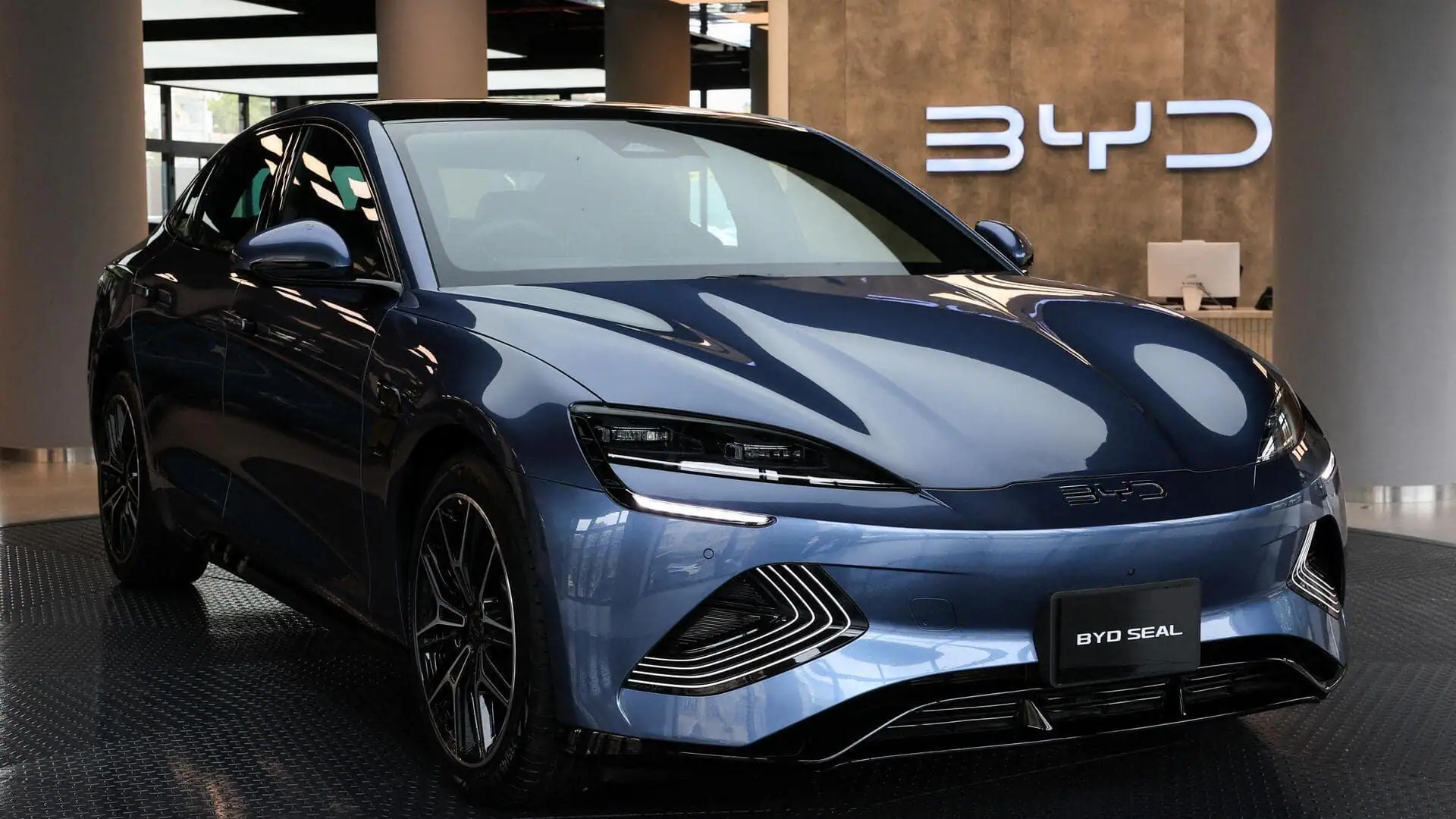
Photo: NewsBytes
BYD launches first Chinese automaker challenge to U.S. tariffs
Chinese electric vehicle and battery powerhouse BYD has filed a lawsuit against the U.S. government, directly challenging former President Donald Trump’s use of emergency powers to impose sweeping tariffs. The company is also seeking a full refund of all tariff payments it has made since April, according to court filings.
The case marks the first time a Chinese automaker has formally sued the U.S. government over trade tariffs, adding a new dimension to the broader legal pushback against Trump-era trade policies that have reshaped global supply chains.
Legal challenge centers on emergency powers law
The lawsuit was filed on January 26 at the U.S. Court of International Trade. Four U.S.-based BYD subsidiaries argue that the administration overstepped its authority by using the International Emergency Economic Powers Act to justify border taxes.
According to BYD, the law was never designed to authorize tariffs. The company’s filing emphasizes that the text of IEEPA does not mention tariffs or any equivalent mechanism, and therefore cannot legally support the levies imposed on imported goods.
This argument mirrors claims brought by thousands of multinational companies operating in the U.S., many of which have challenged the same legal foundation in recent months as courts increasingly scrutinize the scope of executive trade powers.
Why BYD says it had to sue separately
BYD said it pursued its own lawsuit to preserve its right to reclaim money already paid under the tariff regime. Without filing an independent claim, the company argued, it could lose the ability to seek refunds even if the broader tariff framework is later ruled unlawful.
Tariffs imposed under the policy have applied across a wide range of goods and industries, with many importers paying double-digit percentage levies that significantly increased costs. For companies with long-term U.S. operations, those payments now total hundreds of millions of dollars collectively.
Supreme Court case looms over tariff policy
The lawsuit comes as the U.S. Supreme Court prepares to weigh in on the legality of the same tariffs in a separate, high-stakes case. A ruling could have far-reaching implications for U.S. trade policy, executive authority, and global commerce.
U.S. Trade Representative Jamieson Greer said last week that the court is moving deliberately due to the enormous economic and political stakes involved. A decision against the government could trigger widespread refund claims and force a major reset of U.S. tariff strategy.
BYD’s U.S. footprint goes beyond passenger cars
While BYD does not sell consumer passenger vehicles in the U.S., it maintains a significant commercial presence. Its American operations include electric buses, commercial trucks, battery systems, energy storage solutions, and solar technology.
BYD North America employs around 750 workers at its manufacturing facility in Lancaster, California, where it produces electric trucks and buses for municipal and commercial clients. These operations have made the company directly subject to U.S. import tariffs on components and materials.
Political tension around Chinese automakers
Trump has repeatedly argued that Chinese vehicles pose a threat to the future of the U.S. auto industry, citing concerns over pricing, subsidies, and national security. At the same time, he has also suggested that Chinese automakers could be welcomed if they commit to building vehicles on U.S. soil and creating American jobs.
BYD’s lawsuit underscores the growing tension between protectionist trade policies and the realities of globalized manufacturing, especially as electric vehicles and clean energy technologies become central to industrial strategy.
What comes next
The case, filed as No. 26-00847 in the U.S. Court of International Trade in New York, could take months or longer to resolve. Its outcome will be closely watched by automakers, manufacturers, and policymakers worldwide.
If BYD succeeds, it could open the door for additional lawsuits from foreign and domestic companies seeking refunds and clearer limits on presidential trade authority. If it fails, it may reinforce the government’s ability to use emergency powers as a tool in future trade disputes.
Either way, the case highlights how deeply trade policy, geopolitics, and industrial competition are now intertwined.
.webp)
Popular articles



Subscribe to unlock premium content
Soaring Above Luxury

A Taste of Italy Redefined

Designing the World, One Market at a Time

Soaring Above Luxury
A Taste of Italy Redefined
Soaring Above Luxury