Bond Markets React as UK Political Turmoil Overshadows King Charles’ Legislative Agenda

Bond Markets React as UK Political Turmoil Overshadows King Charles’ Legislative Agenda
By
Leah Rosenfeld
Last updated:
May 14, 2026
First Published:
May 14, 2026

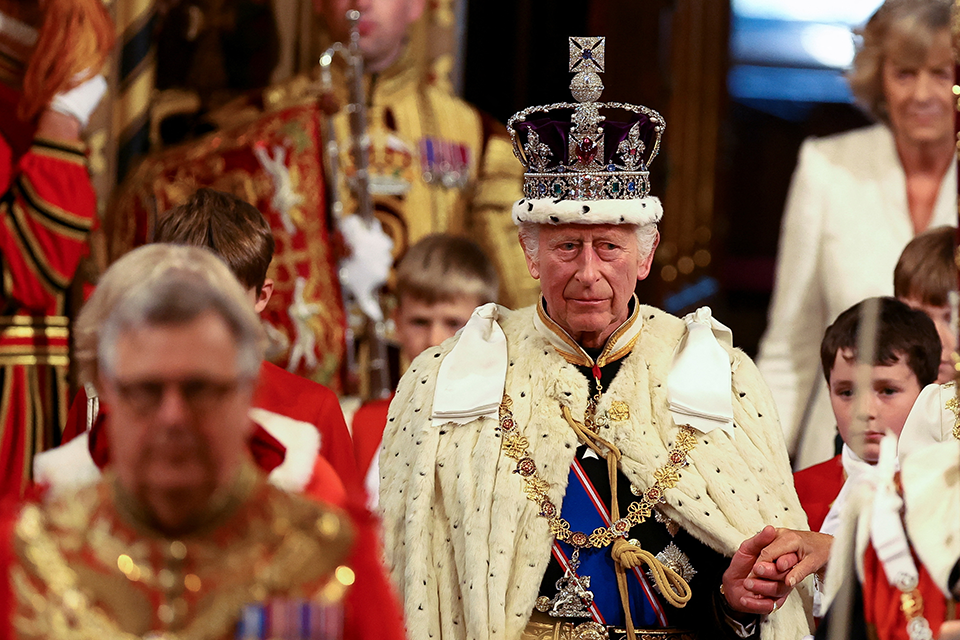
Photo: GOV.UK
King Charles III formally presented the UK government’s legislative agenda on Wednesday during the State Opening of Parliament, as financial markets closely monitored escalating political tensions surrounding Prime Minister Keir Starmer and growing concerns over fiscal stability.
The ceremony, known as the King’s Speech, is traditionally a constitutional event outlining government priorities for the parliamentary year. However, this year’s address took place against a backdrop of intense political uncertainty, internal party divisions, and sharp movements in UK government bond markets.
The fragile political environment has triggered heightened volatility in gilts, with investors increasingly sensitive to any signs of weakened fiscal discipline or potential leadership change.
Political Uncertainty Dominates Westminster
The Labour government has faced mounting pressure following disappointing local election results last week, which intensified speculation about Keir Starmer’s leadership position.
While Starmer has managed to avoid an immediate leadership challenge, political tensions remain elevated within the party. Reports indicate that he held a brief 17-minute meeting with Health Secretary Wes Streeting at Downing Street, amid growing speculation about internal leadership ambitions.
The meeting followed a tense cabinet discussion in which Starmer reportedly reaffirmed his intention to remain in office despite calls for resignation from a significant number of Labour lawmakers.
Current estimates suggest that more than 90 Labour MPs have expressed support for Starmer’s resignation, while a larger bloc of approximately 150-plus MPs continue to back his leadership. However, no unified alternative candidate has emerged, leaving the party in a politically fragmented position.
Potential leadership alternatives mentioned in political circles include senior cabinet figures and regional leaders, but none currently command enough consolidated support to mount a formal challenge.
Bond Markets Signal Rising Concern Over Stability
Financial markets responded sharply to the political uncertainty earlier in the week.
UK government bonds (gilts) experienced noticeable volatility, with yields rising by double digits on Tuesday as investors reacted to fears that a potential leadership change could weaken fiscal discipline under Chancellor Rachel Reeves.
Markets interpreted the political instability as a potential risk to the government’s spending and borrowing framework, particularly if internal party pressure leads to policy shifts or fiscal loosening.
However, sentiment improved slightly on Wednesday following signs that Starmer had temporarily consolidated his position. As a result, gilt yields eased by approximately 2 to 6 basis points, with the benchmark 10-year gilt hovering near 5.067%.
Despite the modest recovery, traders remain cautious, noting that UK bond markets have been particularly sensitive in recent months due to persistent inflation pressures, high debt issuance, and global macroeconomic uncertainty.
Economic Commentary Highlights Institutional Concerns
Market analysts and policymakers have increasingly voiced concern about the UK’s political volatility and its impact on financial credibility.
Former Goldman Sachs executive and ex-UK Treasury minister Jim O’Neill said the country needs greater political stability and a more disciplined approach to governance.
He warned that frequent leadership instability risks undermining investor confidence at a time when economic growth remains weak and fiscal pressures are elevated.
His comments reflect broader concerns among economists that repeated leadership challenges could increase borrowing costs and reduce policy predictability, particularly in a high-interest-rate environment.
King’s Speech Used as a Political Reset Attempt
The King’s Speech is traditionally written by the government and delivered by the monarch as a formal outline of legislative priorities.
This year’s agenda is widely seen as an attempt by Downing Street to reset the political narrative and shift focus away from internal Labour Party tensions.
The government framed its programme as an effort to build a “stronger, fairer country” while addressing long-term structural challenges in public services, economic growth, and national security.
More than 35 bills and draft proposals are expected to be introduced, covering areas such as:
- Economic reform and productivity measures
- Energy security and transition policies
- Public service restructuring
- Immigration and border control frameworks
- Strengthening trade and international relationships
- National security and infrastructure investment
Officials have argued that many of the UK’s economic pressures are tied to global factors, including inflationary spillovers from geopolitical conflicts and disruptions linked to international energy markets. However, domestic policy execution has also come under scrutiny amid slower-than-expected improvements in living standards.
Leadership Pressure Continues Behind the Scenes
Despite the formal presentation of the government’s agenda, political uncertainty has not fully subsided.
Reports suggest that internal Labour Party discussions remain active, with different factions backing alternative leadership figures. However, no single candidate has yet consolidated enough support to trigger an official leadership contest.
Political strategists note that while Starmer currently retains control, the situation remains fragile and could shift quickly depending on future electoral performance or parliamentary developments.
Some allies of potential challengers have suggested that leadership moves could intensify in the coming days, although no formal challenge has yet materialised.
Markets Watching for Fiscal Signals
Investors are now closely focused on whether the government’s legislative programme translates into credible fiscal discipline and economic growth measures.
The UK continues to face a challenging macroeconomic environment, including:
- Elevated borrowing costs
- Sluggish GDP growth
- Persistent inflation pressures
- High public debt levels
- Weak business investment sentiment
Against this backdrop, even small shifts in political stability can have an outsized impact on bond markets, particularly given the sensitivity of gilt yields to fiscal credibility.
Analysts warn that continued uncertainty could keep UK borrowing costs elevated, complicating the government’s fiscal planning and increasing pressure on future spending decisions.
Outlook Remains Highly Uncertain
While the King’s Speech provided a formal reset moment for the government, it has not fully resolved underlying political tensions or market concerns.
Bond traders remain cautious, political uncertainty persists within the governing party, and economic growth remains fragile.
For now, both Westminster and financial markets appear to be in a holding pattern, awaiting clearer signals on leadership stability, fiscal direction, and the government’s ability to execute its legislative agenda without further internal disruption.
.webp)
Popular articles



Subscribe to unlock premium content
Why Madagascar’s Baobab Forests Are Becoming Exclusive Eco-Luxury Retreat Destinations

The Secret Market of Iceberg Water Bottling in Newfoundland, Canada

Why Seychelles’ Private Island Hopping Experiences Are Becoming a Billion-Dollar Niche

Why Madagascar’s Baobab Forests Are Becoming Exclusive Eco-Luxury Retreat Destinations
The Secret Market of Iceberg Water Bottling in Newfoundland, Canada
Why Madagascar’s Baobab Forests Are Becoming Exclusive Eco-Luxury Retreat Destinations