Blue Origin Enters Satellite Internet Race With Ambitious TeraWave Network

Blue Origin Enters Satellite Internet Race With Ambitious TeraWave Network
By
Junia Wells
Last updated:
January 22, 2026
First Published:
January 22, 2026

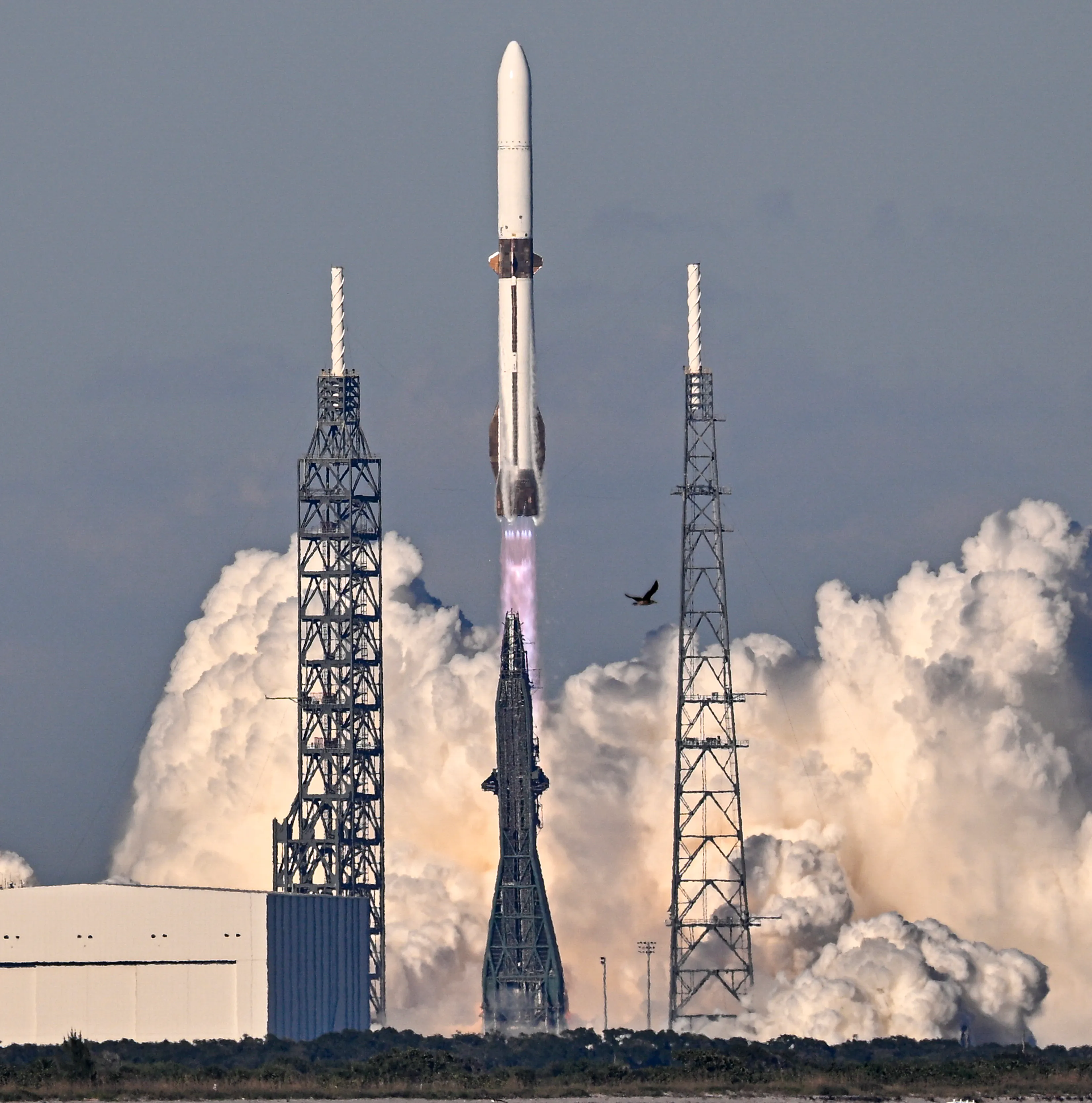
Photo: The Verge
Blue Origin steps into the satellite broadband arena
Blue Origin, the space company founded and backed by Jeff Bezos, is preparing to launch its own satellite-based internet service, marking a major expansion beyond rocket launches and space tourism. The new network, called TeraWave, is designed to deliver high-capacity connectivity to enterprise customers, data centers, and government agencies, placing Blue Origin directly into competition with SpaceX’s Starlink and Amazon’s satellite internet business.
The company announced that it plans to deploy a total of 5,408 satellites, with the first launches expected to begin in the fourth quarter of 2027.
What TeraWave is offering
TeraWave will operate using satellites positioned in both low Earth orbit and medium Earth orbit, covering altitudes ranging from roughly 100 miles to 21,000 miles above the Earth’s surface. Blue Origin said the architecture is designed to balance low-latency communications with broad coverage and high throughput.
According to the company, the network will be capable of delivering data speeds of up to 6 terabits per second, a level of capacity aimed squarely at large-scale commercial and institutional users rather than individual consumers. Target customers include cloud providers, defense agencies, national governments, and operators of large data centers that require secure, resilient global connectivity.
A crowded and fast-growing market
Blue Origin is entering a satellite internet market that has rapidly become one of the most competitive segments of the space industry. SpaceX’s Starlink currently dominates the sector, with more than 9,000 satellites already in orbit and an estimated 9 million customers worldwide, spanning residential, commercial, aviation, and maritime users.
Amazon, which Bezos founded in 1994, is also building out its own satellite broadband network. Formerly known as Project Kuiper, the service was recently rebranded as Leo and has accelerated deployments over the past year. Amazon has launched 180 satellites since April, using rockets from partners including United Launch Alliance and SpaceX, and plans to rely on Blue Origin for several future launches.
Amazon’s long-term goal is a 3,236-satellite low Earth orbit constellation, with services aimed at businesses, governments, and consumers. In November, the company opened an enterprise preview program for select customers ahead of a broader commercial rollout.
Bezos’ long-term vision for Blue Origin
Bezos has repeatedly said that Blue Origin is a long-term bet rather than a quick-return venture. Founded in 2000, the company has spent more than two decades developing launch systems, engines, and space infrastructure largely out of the public spotlight.
In a 2024 interview, Bezos said he believes Blue Origin could eventually surpass Amazon in scale and importance. He described it as potentially “the best business” he has ever worked on, while cautioning that meaningful returns would take time.
Blue Origin is currently led by Dave Limp, the former head of Amazon’s devices division, signaling deeper operational and strategic ties between Bezos’ ventures.
From rockets to full-space infrastructure
Historically, Blue Origin has focused on launch services and suborbital spaceflight. Its New Shepard vehicle regularly carries tourists and research payloads to the edge of space. More recently, the company achieved a major milestone with the debut of its heavy-lift New Glenn rocket.
The first New Glenn launch took place last January, successfully reaching orbit but failing to recover the booster. The company later achieved a successful booster landing last November following the launch of two NASA spacecraft, a key step toward reusability and cost reduction.
These launch capabilities are expected to play a critical role in deploying the TeraWave constellation, allowing Blue Origin to vertically integrate satellite manufacturing, launch, and network operations.
Strategic implications for the space economy
With TeraWave, Blue Origin is positioning itself as a full-spectrum space infrastructure provider rather than just a launch company. The move reflects broader trends in the commercial space industry, where companies are increasingly pairing launch services with downstream businesses such as communications, data services, and national security contracts.
If successful, TeraWave would add another powerful competitor to the satellite broadband market and deepen Jeff Bezos’ footprint across both the space and global connectivity industries. As governments and enterprises demand faster, more secure, and more resilient communications, Blue Origin’s entry raises the stakes in what is shaping up to be one of the most consequential technology battles of the next decade.

Popular articles


Subscribe to unlock premium content
Healing from Afar in Brazil

The Culinary Revolution Delivered to Your Door

Paws of Prestige in Singapore

Healing from Afar in Brazil
The Culinary Revolution Delivered to Your Door
Healing from Afar in Brazil