Australia’s Economic Growth Slows as Weak Consumer Spending and Weather Disruptions Take a Toll

Australia’s Economic Growth Slows as Weak Consumer Spending and Weather Disruptions Take a Toll
By
Augusta Parker
Last updated:
June 3, 2026
First Published:
June 3, 2026

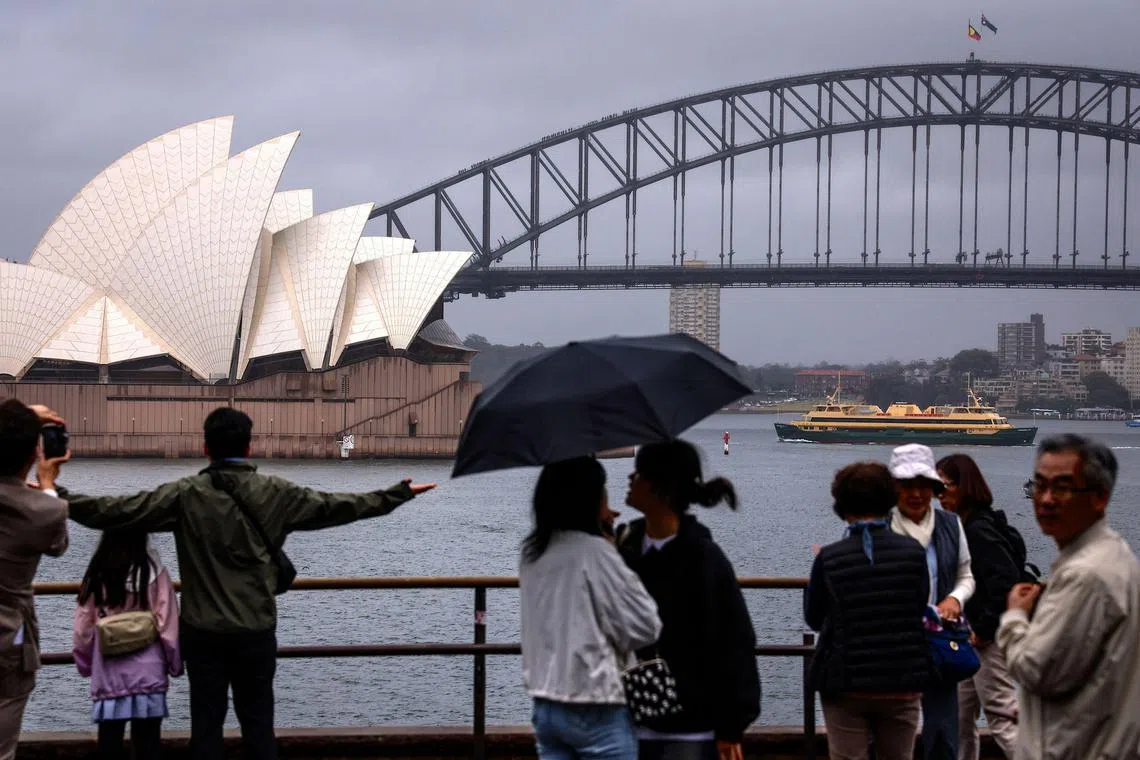
Photo: The Straits Times
Australia's economy delivered weaker-than-expected growth in the first quarter of the year, highlighting growing challenges for policymakers as consumers remain cautious, government spending eases, and weather-related disruptions impact key industries.
Fresh data showed that Australia's gross domestic product expanded by 2.5% year-over-year during the first three months of the year. While the economy continued to grow, the result came in below market expectations of 2.6% and marked a slight slowdown from the 2.6% annual growth recorded in the previous quarter.
On a quarterly basis, growth was even more subdued. GDP increased by just 0.3% compared with economists' forecasts of 0.5%, while slowing significantly from the 0.8% expansion seen in the final quarter of last year.
The figures suggest that Australia's economy is losing some of the momentum that previously helped it outperform many developed economies despite elevated interest rates and global uncertainty.
Consumer Spending Remains Under Pressure
One of the biggest drags on economic growth continues to be weak household spending.
Australian consumers are facing a challenging environment marked by higher borrowing costs, persistent living expenses, elevated mortgage repayments, and lingering inflation pressures. Although inflation has moderated from its peak levels, many households remain cautious about discretionary spending.
Consumer expenditure accounts for a substantial share of Australia's economic activity, making any slowdown particularly significant for overall growth.
Retail spending, hospitality activity, and discretionary purchases have all shown signs of moderation as households prioritize essential expenses and debt repayments.
Economists note that consumer confidence remains sensitive to interest rate movements and labor market conditions, both of which are likely to play a major role in shaping economic performance over the remainder of the year.
Severe Weather Hit Mining and Export Activity
Beyond weaker domestic demand, Australia's economy was also affected by severe weather disruptions during the quarter.
Extreme weather events interrupted mining operations and export activity, reducing output from some of the country's most important industries. Australia remains one of the world's largest exporters of iron ore, coal, natural gas, and other commodities, making weather-related disruptions particularly impactful on national economic performance.
Temporary interruptions to production, transportation networks, and shipping activity contributed to slower growth during the period.
The effects were especially noticeable in sectors that rely heavily on stable operating conditions and global supply chains.
While many of these disruptions may prove temporary, they highlight the increasing economic risks posed by extreme weather events and climate-related challenges.
Data Center Investment Provides a Bright Spot
Despite broader weakness, one sector continued to demonstrate strong momentum: technology infrastructure.
According to official data, robust investment in data center machinery, equipment, and related infrastructure helped support economic activity during the quarter.
Australia is increasingly benefiting from the global artificial intelligence boom, which is driving substantial investment into cloud computing facilities, digital infrastructure, and high-performance data centers.
The expansion reflects growing demand for computing power as businesses adopt AI tools, automation technologies, and advanced digital services.
Industry analysts expect technology-related investment to remain a key source of economic growth over the coming years as companies modernize operations and governments prioritize digital transformation initiatives.
Interest Rates Continue to Shape the Economic Outlook
The weaker GDP report arrives after an aggressive period of monetary tightening by the Reserve Bank of Australia (RBA).
Earlier this year, Australia became the first major developed economy to resume raising interest rates as policymakers responded to signs of economic resilience and concerns about inflation remaining above target levels.
The central bank delivered its third rate increase of the year in May, lifting the official cash rate by 25 basis points to 4.35%.
Policymakers argued that stronger-than-expected economic activity and persistent inflation pressures warranted additional action to maintain price stability.
However, the latest growth figures may complicate future policy decisions by highlighting signs of slowing momentum within the broader economy.
The RBA now faces the delicate challenge of balancing inflation control with the need to avoid unnecessarily weakening economic activity.
Financial Markets React to the Growth Data
Investors responded cautiously to the latest economic figures.
Australia's 10-year government bond yield edged higher following the release, reflecting ongoing concerns about inflation risks and future monetary policy decisions.
The bond market has experienced heightened volatility in recent months amid rising geopolitical tensions and shifting expectations surrounding global interest rates.
Meanwhile, Australia's benchmark S&P/ASX 200 index advanced modestly, supported by gains in selected sectors despite the softer growth data.
The Australian dollar remained relatively stable against the U.S. dollar, suggesting investors are still assessing the broader implications of the GDP report and future policy outlook.
Global Risks Cloud the Outlook
Australia's economic prospects are also being influenced by developments beyond its borders.
The ongoing conflict in the Middle East has created additional uncertainty for global markets, particularly through its impact on energy supplies and commodity prices.
Disruptions affecting oil transportation routes have pushed energy prices higher, increasing concerns about inflation and global growth.
Although Australia benefits from being a major exporter of energy and natural resources, prolonged increases in global commodity costs could eventually weigh on domestic consumers and businesses.
Higher fuel prices often translate into increased transportation, manufacturing, and household expenses, potentially reducing consumer purchasing power over time.
Many economists believe the full economic impact of these geopolitical developments may not become visible until later quarters.
Household Consumption Could Weaken Further
Several analysts expect consumer spending to remain under pressure in the months ahead.
Higher interest rates continue to affect household budgets, while slowing income growth and elevated living costs may further discourage discretionary spending.
Private demand is expected to become an increasingly important indicator for policymakers as they assess whether the economy can sustain growth without additional support.
If households continue reducing spending, broader economic activity could slow further despite ongoing investment in technology and infrastructure projects.
This dynamic is likely to be closely monitored by both investors and the central bank.
Inflation Remains a Key Concern
Despite signs of slower growth, inflation risks have not disappeared.
The Reserve Bank continues to face concerns about weak productivity growth, rising labor costs, and persistent service-sector inflation.
Wage pressures, higher operating expenses, and supply-side challenges could continue feeding inflation even as overall economic growth moderates.
This creates a difficult environment for policymakers, who must simultaneously support growth and maintain progress toward inflation targets.
The challenge is particularly complex because slower growth does not automatically guarantee lower inflation, especially when structural cost pressures remain present.
RBA Forecasts Point to Further Moderation
Looking ahead, the Reserve Bank expects Australia's economic growth to slow further by the end of the year.
Current projections suggest annual growth could ease to around 1.3%, reflecting the combined effects of higher interest rates, softer consumer demand, and global economic uncertainty.
While Australia continues to avoid recession and maintains relatively strong labor market conditions compared with many developed economies, the latest GDP figures indicate that the economy is entering a more challenging phase.
The coming quarters will likely determine whether the slowdown remains manageable or evolves into a broader period of weaker economic activity.
For now, Australia's economy continues to expand, but the latest data shows that growth is becoming increasingly difficult to sustain as households, businesses, and policymakers navigate a complex mix of domestic and global pressures.
.webp)
Popular articles



Subscribe to unlock premium content
The Rise of Indoor Vertical Gardening

Esports Tournaments Are Becoming the New Spectator Sport

Minimalism in Motion

The Rise of Indoor Vertical Gardening
Esports Tournaments Are Becoming the New Spectator Sport
The Rise of Indoor Vertical Gardening