American Girl at 40 Faces a Reinvention Moment as Mattel Reimagines a Legacy Brand

American Girl at 40 Faces a Reinvention Moment as Mattel Reimagines a Legacy Brand
By
Rachel Steinberg
Last updated:
February 23, 2026
First Published:
February 23, 2026

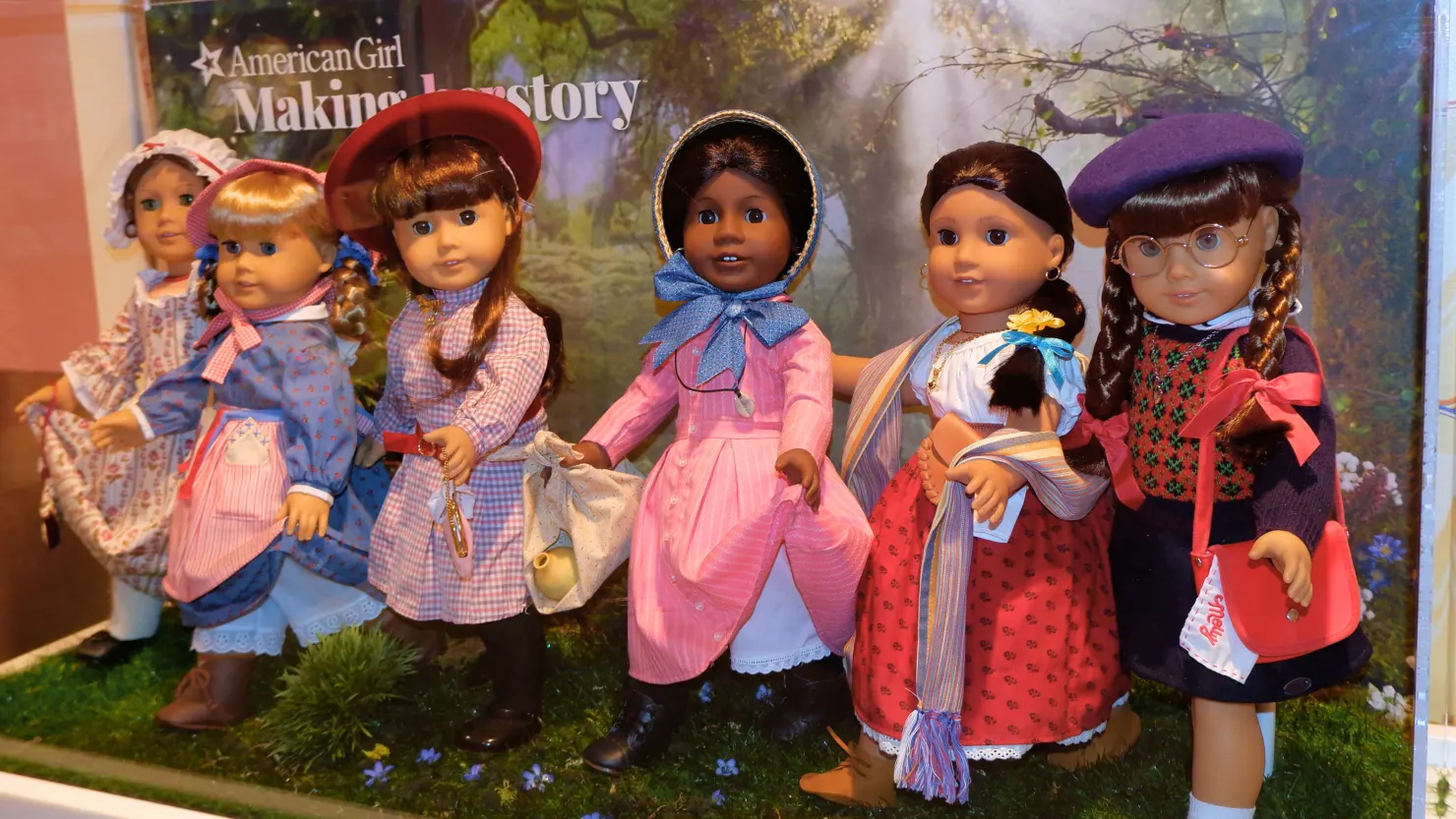
The original six American Girl historical characters — Kirsten Larson, Samantha Parkington, Molly McIntire, Felicity Merriman, Addy Walker and Josefina Montoya — are displayed at the brand’s flagship store,
Luke Fountain
A Milestone Anniversary With High Stakes
As the American Girl brand marks four decades since its launch, parent company Mattel is confronting a familiar challenge: how to preserve nostalgia while adapting to a rapidly changing toy landscape.
The anniversary arrives at a transitional point for the doll segment, where physical toys now compete directly with digital entertainment, gaming platforms, and subscription-based content. While American Girl has recently recorded five consecutive quarters of revenue growth, the brand remains far below its historical peak, highlighting both resilience and structural pressure.
From Peak Popularity to a Smaller but Stable Business
At its height in the mid-2010s, American Girl generated more than $600 million in annual revenue. By 2023, that figure had fallen to roughly $200 million, reflecting a contraction of nearly two-thirds over the past decade.
Despite the decline, recent performance indicates stabilization rather than a full rebound. The brand has emerged as one of the steadier contributors within Mattel’s portfolio, even as the broader dolls category faces uneven demand.
Mattel’s latest earnings underscored the broader context. Quarterly revenue came in at about $1.77 billion, below expectations, as softer holiday demand and higher promotional activity weighed on margins. The company also issued a cautious profit outlook, reinforcing investor concerns about near-term growth.
Structural Challenges Across the Doll Market
American Girl’s trajectory mirrors wider industry shifts. Over the past several years, toy makers including Hasbro have grappled with declining engagement in traditional categories as children spend more time on tablets, gaming consoles, and streaming platforms.
Premium pricing has also narrowed the addressable audience. A standard 18-inch American Girl doll typically starts around $135, while large accessories and playsets can push total purchases above $300. In an environment shaped by inflation and cautious consumer spending, families are increasingly selective about discretionary purchases.
Retail dynamics have added further pressure. The brand reduced its U.S. store footprint from roughly 15 locations in 2019 to seven today, reflecting a shift toward e-commerce and experiential retail rather than large physical networks.
Why Emotional Connection Still Matters
Despite the financial headwinds, American Girl continues to command a uniquely loyal customer base. Since its founding in 1986, the brand differentiated itself by pairing dolls with historical narratives and books that explored themes such as identity, resilience, and social change.
That storytelling approach fostered multigenerational attachment. Many original customers from the 1990s and early 2000s are now adults introducing the brand to their own children or returning as collectors.
The experiential retail model—complete with doll salons, cafes, and the signature Doll Hospital—remains a powerful driver of brand affinity, turning purchases into memory-driven experiences rather than purely transactional sales.
The Rise of the Kidult Economy
One of the most important shifts shaping American Girl’s strategy is the rapid growth of adult toy buyers. Industry data shows spending by consumers aged 18 and older has surpassed purchases for preschool-aged children in certain categories, making “kidults” a critical revenue driver.
Mattel has leaned into this trend by expanding collectibles, publishing, and nostalgia-driven releases. Anniversary initiatives include refreshed versions of the original six characters and new storytelling formats aimed at longtime fans.
However, balancing adult demand with relevance for younger audiences remains delicate. Over-indexing on collectors risks aging the brand, while aggressive modernization could dilute the heritage that differentiates it.
Digital Expansion and IP Monetization
To bridge that gap, Mattel is investing in digital extensions of the franchise. American Girl content now spans social platforms, online video, and virtual environments, including experiences on Roblox designed to introduce the brand to digitally native consumers.
The company is also pursuing broader intellectual property monetization, following the playbook that powered the success of the Barbie film. Mobile games, interactive storytelling, and entertainment partnerships are expected to become increasingly important revenue streams over the next several years.
Investors Watch Strategic Relevance
For shareholders, the central question is not brand recognition but strategic importance. American Girl represents a relatively small portion of Mattel’s total revenue, yet its profitability and growth trajectory influence perceptions of management’s ability to modernize legacy franchises.
Activist investors have previously pushed the company to streamline operations and improve returns, highlighting underperforming segments such as American Girl and Fisher-Price. While a sale is not currently on the table, the pressure underscores the need for sustained performance improvement.
The Road Ahead
American Girl’s 40th anniversary is less a celebration of past dominance than a test of its future positioning. The brand’s core strengths—storytelling, emotional resonance, and premium positioning—remain intact, but long-term growth will depend on how effectively Mattel integrates digital experiences, expands its adult fan base, and keeps younger consumers engaged.
If the company can translate nostalgia into scalable revenue while maintaining cultural relevance, American Girl could evolve from a legacy toy line into a broader lifestyle and entertainment property. If not, it risks remaining a beloved but niche brand in an increasingly competitive play ecosystem.

Popular articles


Subscribe to unlock premium content
Africa’s Leap into Cashless Economies

The Rise of Livestream Shopping in Southeast Asia

The Niche Market for Upcycled Automotive Parts in Classic Car Restoration

Africa’s Leap into Cashless Economies
The Rise of Livestream Shopping in Southeast Asia
Africa’s Leap into Cashless Economies