Amazon’s Ring Scraps Flock Safety Integration After Super Bowl AI Ad Sparks Privacy Debate

Amazon’s Ring Scraps Flock Safety Integration After Super Bowl AI Ad Sparks Privacy Debate
By
Rachel Steinberg
Last updated:
February 13, 2026
First Published:
February 13, 2026

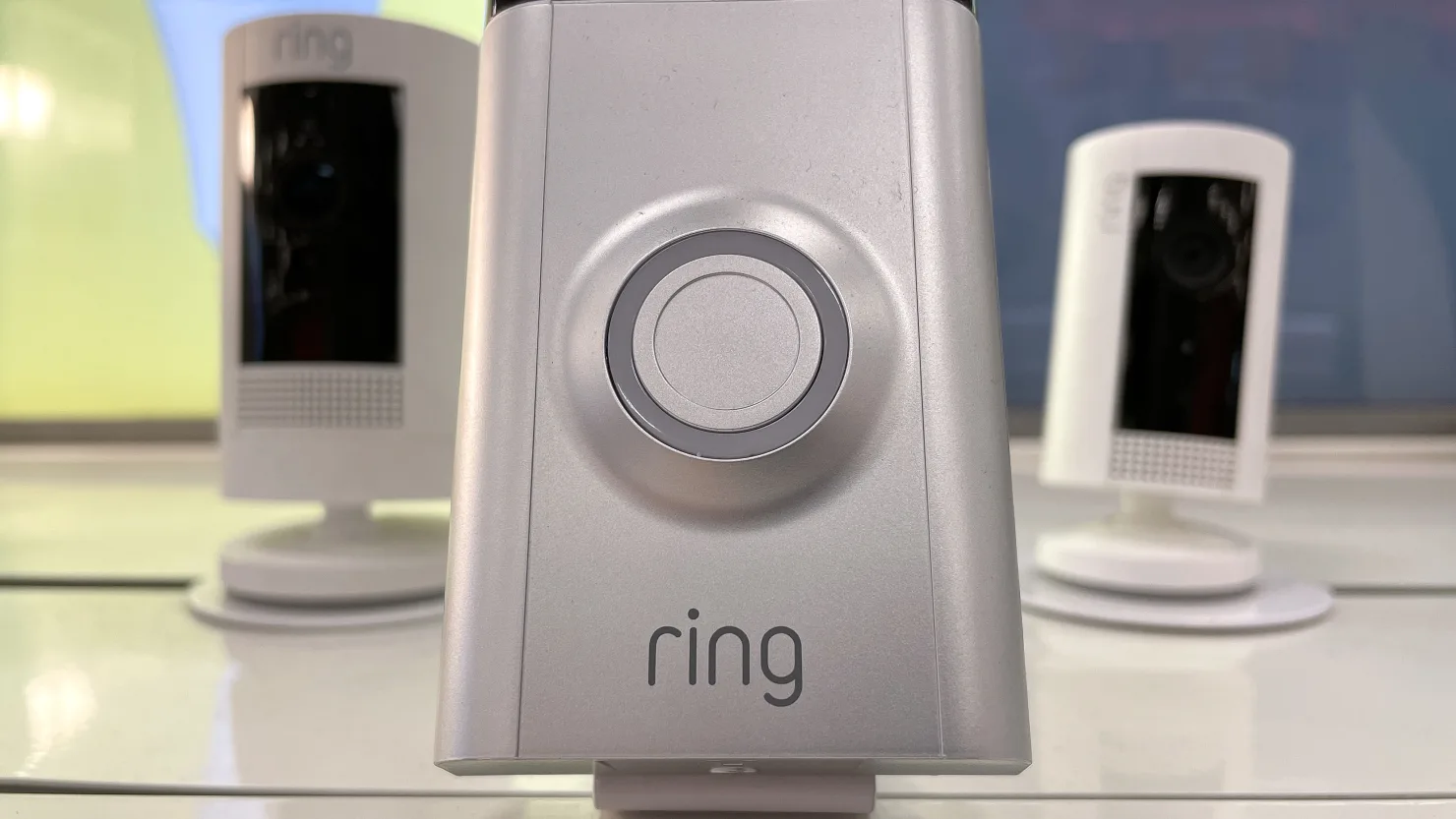
Ring security cameras are displayed on a shelf at a Target store on June 01, 2023 in Novato, California.
Justin Sullivan | Getty Images
Amazon’s home security unit Ring has officially ended its planned partnership with law enforcement technology firm Flock Safety, following mounting criticism triggered by a high-profile Super Bowl advertisement promoting an AI-driven “Search Party” feature.
The decision marks a significant shift for Ring, which has long faced controversy over its relationships with police agencies and data-sharing practices. It also reflects broader pressure on major technology companies to reassess collaborations involving surveillance tools and federal enforcement bodies.
How a Super Bowl Ad Sparked Renewed Scrutiny
The controversy escalated after Ring aired a Super Bowl commercial promoting its new “Search Party” feature. The AI-powered tool allows users to activate a coordinated search for lost pets by tapping into a network of participating Ring cameras in a designated area.
Once initiated, the system scans video feeds for images resembling the missing animal, notifying participants if a potential match is detected. Ring says participation is voluntary and users must opt in on a case-by-case basis before sharing footage.
Privacy advocates, however, raised concerns about the implications of networked AI scanning across residential neighborhoods. Critics argued that such technology could blur the line between community assistance and mass surveillance. Civil liberties organizations described the feature as an expansion of already controversial neighborhood monitoring systems.
The backlash reignited questions about Ring’s planned integration with Flock Safety — a company best known for operating automated license plate reader (ALPR) networks used by thousands of law enforcement agencies across the United States.
What the Flock Partnership Would Have Done
Ring first announced its planned integration with Flock in October, positioning it as a way for users to voluntarily share video footage with law enforcement agencies that utilize Flock’s investigative tools.
Flock’s technology captures and analyzes vehicle license plates through a distributed camera network, helping agencies track stolen cars, locate suspects, and gather investigative leads. The company reports that its systems are deployed in more than 4,000 communities nationwide.
The proposed integration would have given Ring users the option to coordinate footage sharing within investigations that involved Flock’s platform. According to Ring, the integration never went live, no launch date was finalized, and no video data was ever exchanged between the systems.
After what Ring described as a “comprehensive review,” the company concluded that the partnership would require more time and resources than anticipated, leading both sides to mutually cancel the effort.
Growing Pressure on Tech Companies Over Federal Ties
Ring’s decision comes amid heightened scrutiny of technology companies working with federal agencies, including Immigration and Customs Enforcement and U.S. Customs and Border Protection.
Employee activism has surged across Silicon Valley. At Salesforce, workers have publicly urged leadership to reconsider business ties with immigration enforcement agencies. Similarly, employees at Google have petitioned executives to divest from contracts involving federal border authorities.
Flock Safety has reportedly been used by local and federal law enforcement entities, though the company has denied directly sharing data with immigration enforcement or sub-agencies within the Department of Homeland Security.
Advocacy groups had organized protests outside Amazon’s Seattle headquarters calling on the company to cut ties not only with Flock but also with federal immigration agencies.
Ring’s Complicated Relationship With Law Enforcement
Amazon acquired Ring in 2018 for approximately $839 million, expanding its footprint in smart home security and surveillance technology. The company built its brand around internet-connected doorbells and cameras that allow homeowners to monitor activity in real time.
Over the years, Ring established formal partnerships with hundreds of police departments, allowing law enforcement to request footage from users through the app. Although users retain control over whether to share footage, critics argued that the arrangements normalized widespread residential surveillance.
In recent years, Ring sought to soften its image, highlighting features aimed at everyday concerns such as package theft prevention and neighborhood safety. However, after founder Jamie Siminoff returned as CEO last year, the company signaled a renewed emphasis on crime prevention.
The Super Bowl ad — one of the most expensive advertising platforms in the world, where 30-second spots can cost upwards of $7 million — brought Ring back into the national spotlight, amplifying both its innovation narrative and its privacy controversies.
AI, Surveillance and the Future of Smart Security
The debate surrounding Ring’s “Search Party” feature reflects a larger tension in the tech industry: how artificial intelligence should be deployed in consumer-facing products that intersect with public safety.
AI-powered object recognition and image scanning technologies are advancing rapidly, enabling tools that can identify vehicles, faces, pets, and behavioral patterns with increasing accuracy. Yet each technological leap raises new ethical and regulatory questions.
Ring maintains that its pet-finding feature includes strong privacy safeguards and that users maintain full control over data sharing decisions. The company says footage is only shared when individuals explicitly choose to participate in a search.
Still, critics argue that large-scale interconnected camera networks — even when opt-in — create infrastructure that could be repurposed in unintended ways.
Strategic Reset Amid Industry Scrutiny
By canceling the Flock integration before it became operational, Ring appears to be attempting a strategic reset. The move allows the company to limit reputational risk while continuing to develop AI-enhanced home security tools on its own platform.
For Amazon, the decision also reduces exposure at a time when regulators, lawmakers, and consumers are closely examining how technology companies handle surveillance data, AI deployment, and partnerships with government entities.
While the cancellation does not end debate over Ring’s broader business model, it signals that public pressure and employee activism can influence corporate direction — particularly when national advertising campaigns thrust controversial features into mainstream conversation.
As AI-driven home security tools continue evolving, companies like Ring will face increasing scrutiny over where innovation ends and surveillance begins.

Popular articles


Subscribe to unlock premium content
The New Wave of Superyacht Ownership

Micro-Experience Convenience Stores Are Reinventing Quick Stops

Custom Vans for Digital Nomads Redefine Mobility

The New Wave of Superyacht Ownership
Micro-Experience Convenience Stores Are Reinventing Quick Stops
The New Wave of Superyacht Ownership