Amazon Doubles Down on AI With $200 Billion Investment Push as CEO Bets Big on Cloud Returns

Amazon Doubles Down on AI With $200 Billion Investment Push as CEO Bets Big on Cloud Returns
By
Rachel Steinberg
Last updated:
February 6, 2026
First Published:
February 6, 2026

Getty Images
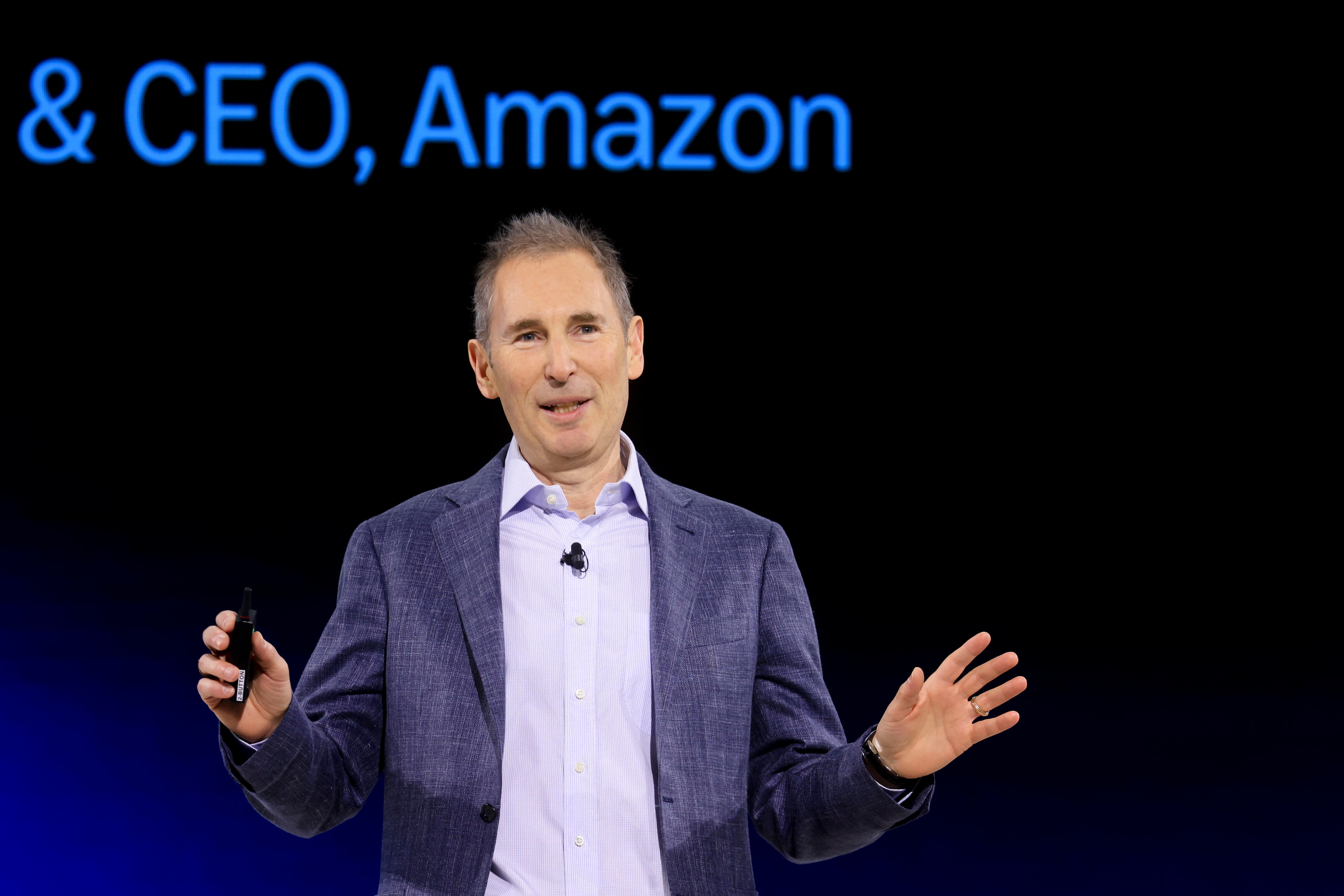
Amazon is preparing for its most aggressive investment cycle ever, committing up to $200 billion in capital expenditures in 2026, largely aimed at expanding artificial intelligence infrastructure and data center capacity. The announcement rattled investors, sending Amazon shares down 11% in extended trading, as markets reacted to the sheer scale of the spending plan.
CEO Andy Jassy, however, struck a confident tone, telling investors he expects strong long-term returns from the company’s AI push, particularly through Amazon Web Services. He framed the strategy as a necessary response to soaring customer demand rather than an attempt to chase growth at any cost.
“This isn’t some sort of quixotic, top-line grab,” Jassy said during the company’s earnings call. “We have confidence that these investments will yield strong returns on invested capital.”
A Record Capex Plan That Surprised Wall Street
Amazon’s $200 billion forecast represents a dramatic increase from prior years and exceeded analyst expectations by more than $50 billion.
In 2025, the company spent approximately $131 billion on property and equipment, already a steep jump from about $83 billion in 2024. The new projection signals an even faster acceleration, making Amazon the biggest spender among megacap technology companies heading into 2026.
The announcement comes as Big Tech continues to pour unprecedented sums into AI infrastructure following the breakout success of generative AI tools since late 2022.
Amazon is not alone in this race. Alphabet recently said it could spend up to $185 billion in 2026, while Meta projected capital expenditures between $115 billion and $135 billion, nearly double its prior-year levels. Together, these figures highlight how intensely the industry is competing to secure computing power, data centers, and specialized chips.
Investors Demand Clarity on Returns
On the earnings call, analysts pressed Amazon’s leadership for more specifics on when such massive investments might translate into financial gains.
Mark Mahaney, Evercore ISI’s head of internet research, challenged Jassy to explain what underpins his confidence in achieving strong long-term returns.
Jassy responded that the company is racing to keep up with what he described as “very high demand” for AI compute, which requires rapid deployment of data centers, advanced semiconductors, and networking equipment. He emphasized that Amazon has successfully navigated similar capital-intensive phases before, most notably during the buildout of AWS.
He said he expects the same pattern to repeat, with heavy upfront spending followed by sustained profitability once capacity catches up with customer needs.
AWS Growth Accelerates as Capacity Becomes the Bottleneck
Much of Amazon’s confidence rests on the performance of Amazon Web Services.
In the most recent quarter, AWS revenue climbed 24% year over year to $35.6 billion, beating analyst expectations and marking its fastest growth rate in 13 quarters. Jassy noted that AWS could have grown even faster if Amazon had more infrastructure online to support demand.
To close that gap, AWS added nearly 4 gigawatts of computing capacity in 2025 alone. Jassy said the company plans to double that power footprint by the end of 2027, underscoring just how aggressively Amazon is expanding its global data center network.
These facilities are critical for training and running large AI models, hosting enterprise applications, and supporting cloud-based services used by millions of businesses worldwide.
How Amazon Sees the AI Market Evolving
Beyond raw infrastructure, Jassy also shared his view of how the AI ecosystem is taking shape.
He described the market as increasingly resembling a “barbell.” On one end are AI-native labs and startups building foundational models. On the other are large enterprises adopting AI to boost productivity, automate workflows, and reduce costs. Between those poles sits a broad group of companies experimenting with and gradually integrating AI into their operations.
Jassy believes this middle segment could ultimately become the largest and most durable source of demand, as businesses across industries move from pilots to full-scale deployment of AI applications.
For Amazon, that translates into long-term opportunities across cloud services, custom AI chips, managed platforms, and enterprise software.
Why Amazon Is Willing to Spend So Much, So Fast
Amazon’s leadership argues that delaying investment would risk falling behind competitors in a market where scale, speed, and capacity are decisive.
The company sees AI as a foundational technology on par with cloud computing and mobile, with the potential to reshape everything from logistics and advertising to customer service and software development.
By committing $200 billion now, Amazon aims to secure prime locations for data centers, lock in supply of critical components, and position AWS as the default infrastructure provider for the next wave of AI-driven enterprise transformation.
While near-term margins may come under pressure, Jassy maintains that the payoff will come through higher utilization, long-term contracts, and deeper customer relationships.
The Bottom Line
Amazon’s $200 billion spending plan marks a defining moment in the global AI arms race. The scale of the investment has unsettled investors, but management is betting that today’s capital outlays will power tomorrow’s growth.
With AWS already accelerating and enterprise demand for AI continuing to rise, Amazon is wagering that building capacity ahead of the curve will ultimately deliver strong returns on invested capital. Whether Wall Street shares that confidence will depend on how quickly these massive investments begin to translate into sustained revenue growth and profitability over the coming years.

Popular articles


Subscribe to unlock premium content
Defying Gravity in Billionaire Gyms
Skiing Above the Skyline

A World of Secrets Behind Closed Doors

Defying Gravity in Billionaire Gyms
Skiing Above the Skyline
Defying Gravity in Billionaire Gyms