Zhipu Rockets Higher as Global AI Investors Pivot Toward China Amid New U.S. Restrictions

Zhipu Rockets Higher as Global AI Investors Pivot Toward China Amid New U.S. Restrictions
By
David Goldfarb
Last updated:
June 15, 2026
First Published:
June 15, 2026

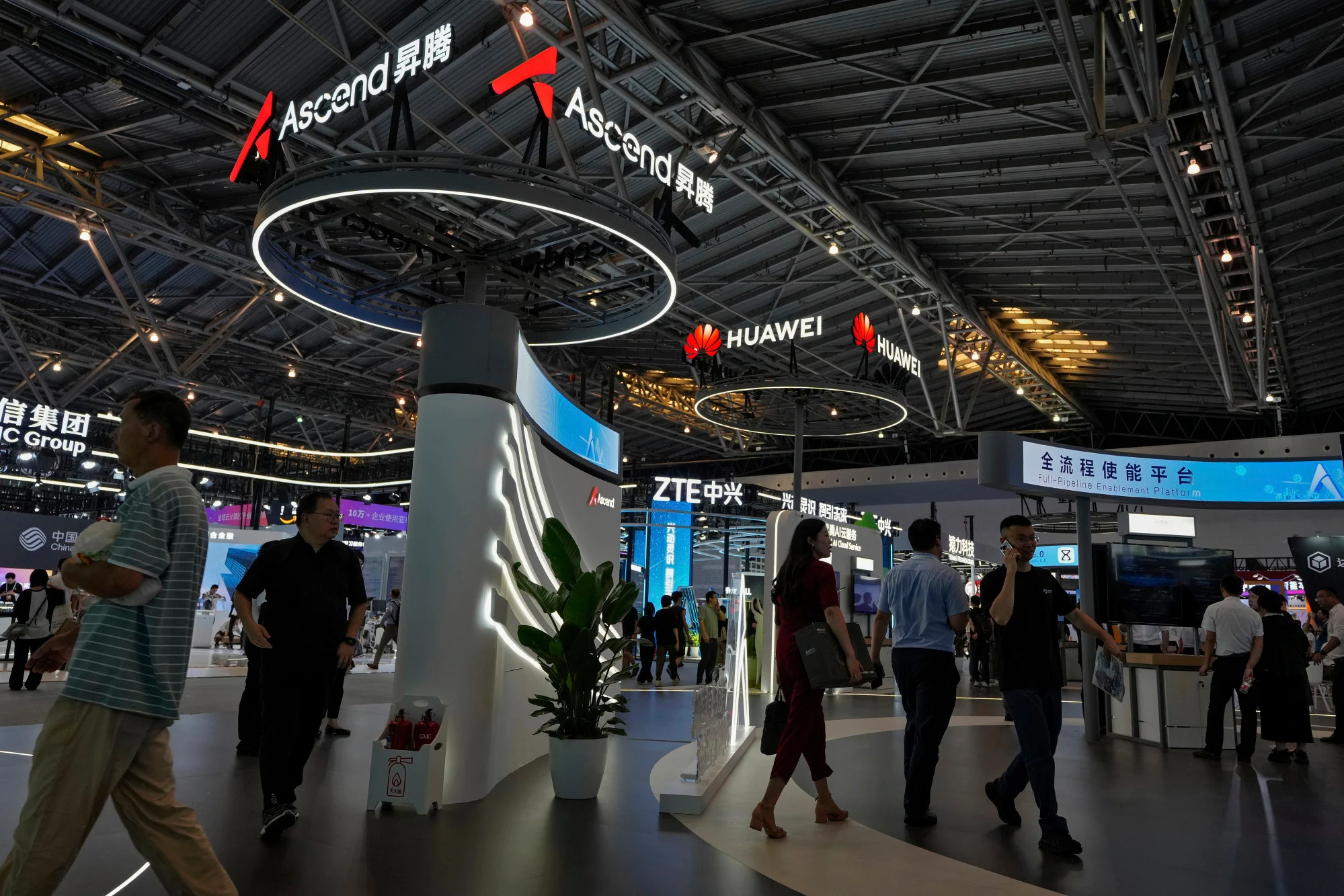
Photo: South China Morning Post
Chinese artificial intelligence developer Zhipu delivered another stunning performance in the stock market on Monday, with investors rushing into the stock after several major Wall Street firms expressed growing confidence in the company's long-term growth prospects. The rally came at a time when the United States is tightening access to advanced AI technologies, creating what many analysts believe could be a significant opportunity for China's leading AI firms.
Shares of Knowledge Atlas Technology, the Hong Kong-listed company associated with Zhipu, surged as much as 48% during trading before settling back. By the close of trading, the stock was still up approximately 33%, changing hands near HK$1,461 and extending one of the most remarkable runs in the global AI sector this year.
The latest gains underscore how investors are increasingly betting that Chinese AI companies can capitalize on rising global demand for affordable, high-performance artificial intelligence solutions, particularly as geopolitical tensions reshape the competitive landscape.
Wall Street Raises Its Expectations for Zhipu
Investor enthusiasm accelerated after reports indicated that JPMorgan maintained its bullish outlook on Zhipu and significantly increased its price target from HK$950 to HK$1,400.
The investment bank cited stronger visibility into the company's AI model development roadmap, growing enterprise adoption, and improving pricing power despite fierce competition across China's AI industry.
At the same time, JPMorgan reportedly downgraded rival Chinese AI startup MiniMax, signaling a preference for Zhipu's business model and growth trajectory.
Despite the downgrade, MiniMax shares still climbed 7.4% on Monday, reflecting broader optimism surrounding China's AI ecosystem.
Adding further momentum, analysts at Bank of America initiated coverage of both companies with Buy ratings. The bank assigned a target price of HK$1,250 for Zhipu and HK$500 for MiniMax, highlighting strong growth potential across the sector while maintaining a more favorable outlook for Zhipu.
U.S. AI Restrictions Create New Competitive Dynamics
The rally coincided with a significant policy development in the United States.
The Trump administration recently instructed AI company Anthropic to suspend access to its most advanced AI systems, known as Fable 5 and Mythos 5, for foreign nationals, including non-U.S. citizens employed by the company. The decision was reportedly driven by national security concerns and reflects Washington's increasingly restrictive approach toward advanced AI technologies.
The move has intensified discussions about whether U.S. restrictions could inadvertently strengthen Chinese competitors by limiting global access to American frontier AI systems.
Many analysts believe these measures could accelerate demand for alternative AI models developed outside the United States, particularly among international developers, enterprises, and research organizations seeking fewer access limitations.
Zhipu Responds With a New Open-Source AI Model
On the same day the U.S. restrictions gained attention, Zhipu announced plans to release GLM-5.2, its newest large language model, as open-source software.
Unlike many leading Western AI platforms, the company said the model would be released without usage restrictions, reinforcing China's growing commitment to open AI development.
The announcement appeared strategically timed. In its statement, Zhipu emphasized that advanced AI capabilities should remain accessible to developers worldwide rather than being controlled by a small number of organizations.
The message resonated strongly with investors who view open-source AI as a major growth catalyst, particularly among businesses seeking lower-cost alternatives to premium U.S. AI platforms.
Industry observers noted that early community testing suggested GLM-5.2 could perform competitively in coding tasks, software development workflows, and complex multi-step reasoning applications.
Open-Source Strategy Strengthens Revenue Potential
According to analysts covering the company, the launch of GLM-5.2 could further strengthen Zhipu's commercial position.
The company's growing reputation among developers has already translated into stronger demand for cloud-based AI services. Earlier this year, Zhipu increased API pricing by between 8% and 17%, marking its second price increase of the year.
The ability to raise prices while maintaining customer demand is viewed as a positive sign that the company possesses meaningful pricing power in a highly competitive market.
Analysts expect future subscription offerings and enterprise AI solutions to become increasingly important revenue drivers as businesses integrate generative AI into customer service, software development, data analysis, and operational automation.
With global AI spending projected to reach hundreds of billions of dollars over the next decade, investors are paying close attention to companies capable of balancing technological innovation with sustainable monetization.
China's AI Industry Targets the Value Segment
A growing number of analysts believe China is well positioned to dominate a large portion of the global AI market by focusing on affordability and accessibility.
While leading U.S. AI providers continue investing heavily in frontier models that often come with premium pricing, Chinese firms are increasingly targeting customers looking for cost-effective solutions without sacrificing performance.
This approach has gained traction among startups, mid-sized businesses, educational institutions, and enterprises operating under tighter budgets.
Bank of America analysts noted that Chinese AI developers are becoming increasingly competitive as "high-performance, low-cost" alternatives, particularly in international markets where pricing remains a key purchasing factor.
As AI adoption expands globally, this value-focused strategy could allow Chinese firms to capture significant market share across emerging and developed economies alike.
Talent Competition Between the U.S. and China Intensifies
The latest developments have also reignited debate over the global competition for AI talent.
Industry experts point out that a substantial portion of AI researchers and engineers working in the United States were originally educated or born in China.
Some analysts argue that stricter access controls may create unintended consequences by encouraging highly skilled researchers to pursue opportunities with Chinese AI firms instead.
According to industry estimates, roughly 40% of AI engineers working in the United States were born in China. Critics of the new restrictions argue that limiting access to advanced AI systems could accelerate talent migration toward companies such as Zhipu, DeepSeek, and Moonshot AI.
As artificial intelligence becomes a strategic national priority for both Washington and Beijing, attracting and retaining top technical talent is increasingly viewed as a decisive competitive advantage.
Zhipu's Extraordinary Market Rise
Since its public market debut in January, Zhipu has become one of the standout performers in the global technology sector.
The company's shares have climbed more than tenfold, fueled by investor enthusiasm surrounding China's AI ambitions, strong product releases, and growing commercial adoption.
The scale of that growth is reflected in its market value. As of Monday, Zhipu's market capitalization stood at approximately HK$489 billion, nearly four times larger than MiniMax's HK$124.2 billion valuation.
Both companies are also preparing for potential listings on Shanghai's STAR Market, China's equivalent of the Nasdaq, which could further increase investor exposure to the country's rapidly expanding AI sector.
Why Investors Are Paying a Premium for Zhipu
Analysts believe Zhipu's premium valuation reflects several competitive strengths.
The company is generating faster annual recurring revenue growth, maintains a strong concentration of AI talent, enjoys significant institutional support, and has established a larger presence in enterprise AI services than many of its domestic rivals.
These factors have helped differentiate Zhipu from competitors despite increasing competition across China's AI landscape.
At the same time, some analysts argue that MiniMax could still offer upside potential if it successfully narrows the gap, given its broader product portfolio and comparatively lower valuation metrics.
For now, however, investor sentiment clearly favors Zhipu as one of the leading beneficiaries of the global AI race.
The Bigger Picture
Zhipu's latest rally highlights a broader shift taking place in the artificial intelligence industry. As geopolitical tensions reshape technology access and competition, investors are increasingly looking beyond Silicon Valley for the next generation of AI winners.
With Wall Street becoming more optimistic about China's AI capabilities, new open-source models entering the market, and global demand for affordable AI solutions accelerating, companies like Zhipu are emerging as key players in an industry that could define the next decade of technological growth.
The company's rapid ascent also illustrates how quickly the balance of power in artificial intelligence can evolve when innovation, policy decisions, investor sentiment, and global demand intersect.
.webp)
Popular articles



Subscribe to unlock premium content
The Secret Life of Pop-Up Luxury Restaurants in Paris

Speed, Luxury, and Adrenaline
From Wax to Wealth: Creative Candle-Making in the City

The Secret Life of Pop-Up Luxury Restaurants in Paris
Speed, Luxury, and Adrenaline
The Secret Life of Pop-Up Luxury Restaurants in Paris