Xi Jinping Calls for Stronger Asian Unity to Safeguard Supply Chains Amid Global Turmoil

Xi Jinping Calls for Stronger Asian Unity to Safeguard Supply Chains Amid Global Turmoil
By
Calder Monroe
Last updated:
October 31, 2025
First Published:
November 30, 2025

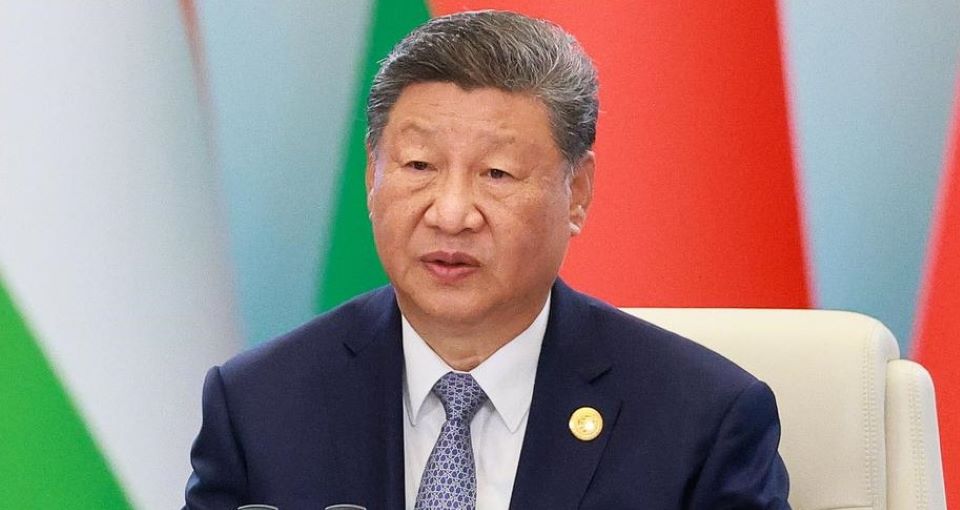
Photo: The Asia Live
A Call for Cooperation in a Shifting World
At the Asia-Pacific Economic Cooperation (APEC) Economic Leaders’ Meeting held in Seoul on Friday, Chinese President Xi Jinping emphasized the need for unity and collaboration among Asian nations to maintain stable and resilient supply chains during what he described as “turbulent times.”
“The more turbulent the times, the more we must work together,” Xi said during his address, according to Chinese state media. His remarks came just a day after China and the United States reached a preliminary agreement to roll back certain tariffs and ease export restrictions, signaling a rare thaw in trade tensions between the world’s two largest economies.
Xi’s message centered on partnership and interdependence — a reminder that Asia remains at the heart of global manufacturing and trade, accounting for nearly 40% of the world’s GDP and 45% of total trade volume, according to the Asian Development Bank.
Strengthening Supply Chains, Not Fragmenting Them
Xi underscored the importance of “extending” rather than “disconnecting” supply chains, a pointed reference to rising protectionist trends in global trade. His comments came as several countries, including the United States, have promoted “reshoring” policies aimed at bringing production back home and reducing reliance on Chinese manufacturing.
Despite these shifts, China continues to play a dominant role in regional supply networks. The country still represents about 27% of global manufacturing output, a figure that has held steady even as labor costs rise and production diversifies into Southeast Asia.
Xi outlined five key priorities for cooperation at the summit: defending the multilateral trading system, maintaining open markets, ensuring supply chain stability, advancing green and digital trade, and promoting inclusive development across Asia-Pacific economies.
“Decoupling and fragmentation only create new risks,” Xi warned, highlighting how interconnected industries like semiconductors, electric vehicles, and energy storage rely on regional collaboration.
A Thaw in U.S.–China Relations
Xi’s call for cooperation followed a significant diplomatic breakthrough. During his meeting with U.S. President Donald Trump on Thursday — their first since 2019 — both sides agreed to one-year concessions involving tariff reductions, export controls, and access to critical materials. The United States will reportedly reduce tariffs on Chinese imports by 10 percentage points, while Beijing agreed to expand exports of rare earth materials, essential for the U.S. tech and defense industries.
This development could help stabilize trade flows between the two economic superpowers, whose ongoing tariff disputes since 2018 have impacted over $500 billion in annual bilateral trade.
Regional Shifts and China’s Expanding Economic Influence
Over the past decade, China has increasingly shifted its trade focus toward Asia. The Association of Southeast Asian Nations (ASEAN) has now surpassed the European Union as China’s largest trading partner, representing more than 15% of China’s total trade volume.
China’s outward investment also continues to grow. According to a recent report by Rhodium Group, Chinese companies announced $15.4 billion in new investments across Asia in the third quarter of this year — the highest quarterly total since the pandemic. Key projects include data centers in Singapore, lithium battery plants in Indonesia, and renewable energy infrastructure across Southeast Asia.
Xi reaffirmed China’s intention to “open its market wider” to foreign investors, promising new business opportunities not just for Asia, but for global partners as well.
Looking Ahead: A Shared Economic Future
In his closing remarks at APEC, Xi reiterated his belief that cooperation, not confrontation, will define Asia’s future. He urged member countries to deepen partnerships in digital transformation, climate innovation, and cross-border trade to navigate what he called “a century of profound global changes.”
For many observers, Xi’s message reflects Beijing’s strategy to position China as a stabilizing force amid rising geopolitical tensions and fragmented global supply systems.
As the APEC summit concludes, one thing remains clear: Asia’s collective strength will determine the stability of global trade in the decade ahead.

Popular articles


Subscribe to unlock premium content
London’s Gourmet Playgrounds

From Bean to Buzz in Thailand

The Secret Life of Pop-Up Luxury Restaurants in Paris

London’s Gourmet Playgrounds
From Bean to Buzz in Thailand
London’s Gourmet Playgrounds