Xi Draws Firm Taiwan Line as Trump Presses Trade in High-Stakes Call

Xi Draws Firm Taiwan Line as Trump Presses Trade in High-Stakes Call
By
Alina Sinclair
Last updated:
February 5, 2026
First Published:
February 5, 2026

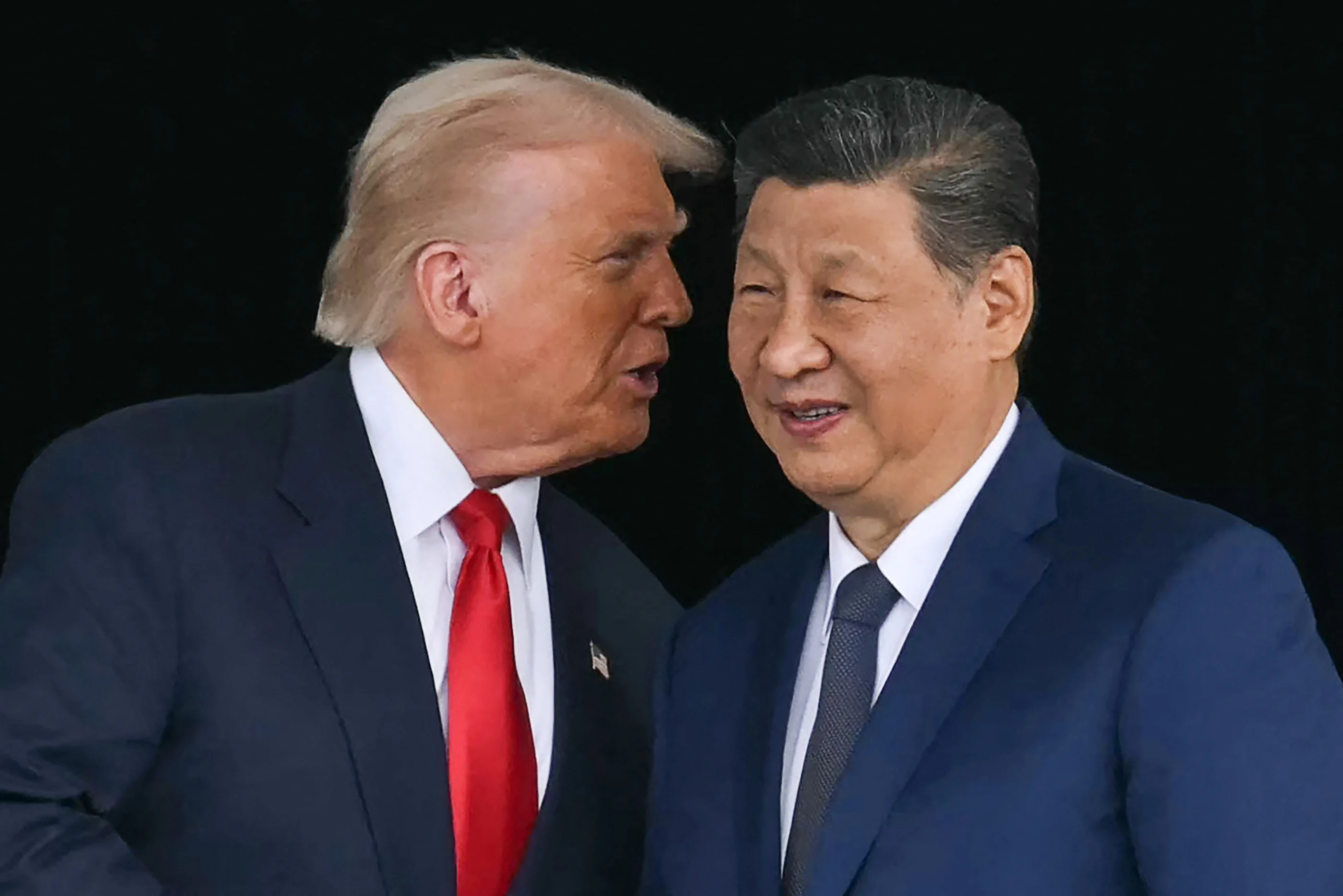
Photo: South China Morning Post
U.S. President Donald Trump and Chinese President Xi Jinping held what Trump described as a “long and thorough” phone call this week, underscoring both the fragile tensions and massive economic stakes shaping the world’s most important bilateral relationship. While Trump emphasized trade, energy, and commercial cooperation, Beijing used the moment to reassert its position on Taiwan, signaling clearly where China’s red lines remain.
The conversation arrives at a pivotal moment, just weeks before Trump’s planned visit to China in April, which is increasingly being framed by analysts as a potential reset point for U.S.–China relations, blending hard geopolitical realities with transactional deal-making.
Taiwan Takes Center Stage in Beijing’s Readout
Although Trump highlighted discussions around Iran, Russia’s war in Ukraine, China’s energy purchases, and upcoming diplomatic engagements, China’s official statement zeroed in on Taiwan, calling it “the most important issue” in bilateral ties.
Beijing urged Washington to handle arms sales to Taiwan with caution, reiterating its long-standing claim that the self-governed island is part of Chinese territory, a position firmly rejected by Taiwan’s democratically elected government.
The warning follows Washington’s approval of up to $11.15 billion in arms sales to Taiwan in December, one of the largest packages in recent years. The deal includes advanced missile systems, radar upgrades, and air defense equipment designed to strengthen Taiwan’s deterrence capabilities amid rising military pressure from Beijing.
According to David Meale, China practice head at Eurasia Group, Beijing appears to be reminding Washington “where the red lines are,” while carefully avoiding actions that could derail Trump’s upcoming visit. The balancing act reflects China’s desire to protect its core interests on sovereignty while keeping economic negotiations on track.
Trump Leans Into Commerce and Energy
Trump, for his part, focused heavily on trade and commercial flows, emphasizing China’s purchases of U.S. oil and gas, agricultural products, and aviation equipment. He announced that Beijing has agreed to significantly ramp up soybean imports, targeting 20 million metric tons for the current season and 25 million tons for the next, a substantial boost for American farmers after years of volatility in agricultural exports.
China had been the largest buyer of U.S. soybeans prior to the trade tensions of recent years, with annual purchases once exceeding $14 billion. The renewed commitments signal a meaningful step toward stabilizing that relationship.
Neo Wang, lead China macro analyst at Evercore ISI, noted that Trump’s transaction-focused approach plays to Beijing’s strengths. Rather than ideology-driven diplomacy, Trump’s emphasis on tangible wins and bilateral deals gives China clear pathways to ease pressure through large-scale purchases and investment commitments.
Boeing Mega-Deal Could Anchor April Summit
A major commercial agreement may headline Trump’s April visit. U.S. Ambassador to China David Purdue reportedly told a closed-door meeting in Hong Kong last month that Boeing is deeply involved in ongoing negotiations.
Wang expects a potential signing ceremony covering as many as 500 Boeing aircraft, a deal that could be worth well over $60 billion at list prices, even before customary discounts. Such an agreement would provide a powerful boost to the U.S. aerospace sector and reinforce China’s efforts to modernize its rapidly expanding aviation market, which is projected to require more than 8,000 new commercial planes over the next two decades.
With a large aircraft order serving as the centerpiece, Wang added that Trump could move to lift the remaining 10% fentanyl-related tariffs on Chinese exports during or shortly after the Beijing meeting, offering further relief to Chinese manufacturers and exporters.
Different Tones, Same Strategic Dance
Trump characterized the call as “excellent” and emphasized his personal rapport with Xi, calling their relationship “extremely good.” Xi, however, struck a more measured note, acknowledging that both countries have their own concerns and stressing that progress depends on reciprocity.
The contrast reflects a broader dynamic: Trump publicly highlights momentum and deal-making, while Beijing emphasizes mutual respect and core interests, especially on sovereignty-related issues like Taiwan.
Notably Absent: Rare Earths and Venezuela
One striking feature of the official readouts was what they did not include.
Neither side mentioned rare earth minerals, a sensitive topic after China leveraged its dominance in critical minerals last year to gain negotiating power as tariff threats intensified. China controls roughly 60% of global rare earth production and an even larger share of processing capacity, making these materials essential for everything from electric vehicles to defense systems.
Analysts believe the omission suggests current supplies to the U.S. are flowing smoothly. Meanwhile, Washington has launched a domestic initiative known as “Project Vault” to expand strategic stockpiles of critical minerals and strengthen supply chains outside China.
Also absent was Venezuela. Earlier this year, the U.S. carried out a dramatic operation capturing Venezuelan President Nicolás Maduro and his wife and seizing control of key parts of the country’s oil industry. Following the move, Trump initially urged Venezuela to cut economic ties with China, before later softening his stance and welcoming Chinese investment.
The silence on Venezuela suggests both sides are deliberately keeping that volatile issue off the front burner as they prioritize broader strategic and economic goals.
Iran Emerges as a Growing Flashpoint
The Trump–Xi call came just hours after Xi held a video conference with Russian President Vladimir Putin, during which the two leaders discussed major geopolitical pressure points, including Iran, Venezuela, and Cuba. Putin’s foreign policy adviser said Moscow and Beijing aimed to align their positions, projecting a united front amid rising global instability.
Iran featured prominently in Trump’s conversation with Xi as well, especially ahead of critical talks between Washington and Tehran scheduled for later this week. The U.S. has recently deployed a naval task force, including aircraft carriers, to the region following heightened tensions, while Trump has openly threatened strikes after Tehran’s violent crackdowns on protesters.
China, meanwhile, remains Iran’s largest oil buyer, giving Beijing significant influence over Tehran’s economic lifelines.
David Meale noted that the call highlights how both Washington and Beijing are seeking cooperation, or at least restraint, on third-country issues. Middle East tensions are expected to remain central in the run-up to Trump’s April visit.
Reva Goujon, director at Rhodium Group, described Trump’s strategy as a classic carrot-and-stick approach: offering China economic incentives while pressing Beijing to help curb Russian energy exports and encourage Moscow to engage in negotiations aimed at ending the war in Ukraine.
A Relationship Defined by Deals and Red Lines
The breadth of topics covered, from Taiwan and trade to Iran and Ukraine, illustrates how tightly intertwined geopolitics and commerce have become between the U.S. and China. Beijing is making clear that Taiwan remains non-negotiable, while Trump is pushing for measurable economic wins that can be showcased at home.
As April approaches, both sides appear to be laying the groundwork for a summit that could reshape the near-term trajectory of global trade and diplomacy. Whether the upcoming visit delivers lasting stability or merely temporary calm will depend on how effectively Washington and Beijing manage the delicate balance between strategic rivalry and economic interdependence.
.webp)
Popular articles



Subscribe to unlock premium content
Soaring Above Luxury

A Taste of Italy Redefined

Designing the World, One Market at a Time

Soaring Above Luxury
A Taste of Italy Redefined
Soaring Above Luxury