Xbox Is Falling Behind in Consoles but Microsoft Is Redefining the Game

Xbox Is Falling Behind in Consoles but Microsoft Is Redefining the Game
By
Rachel Steinberg
Last updated:
December 22, 2025
First Published:
December 22, 2025

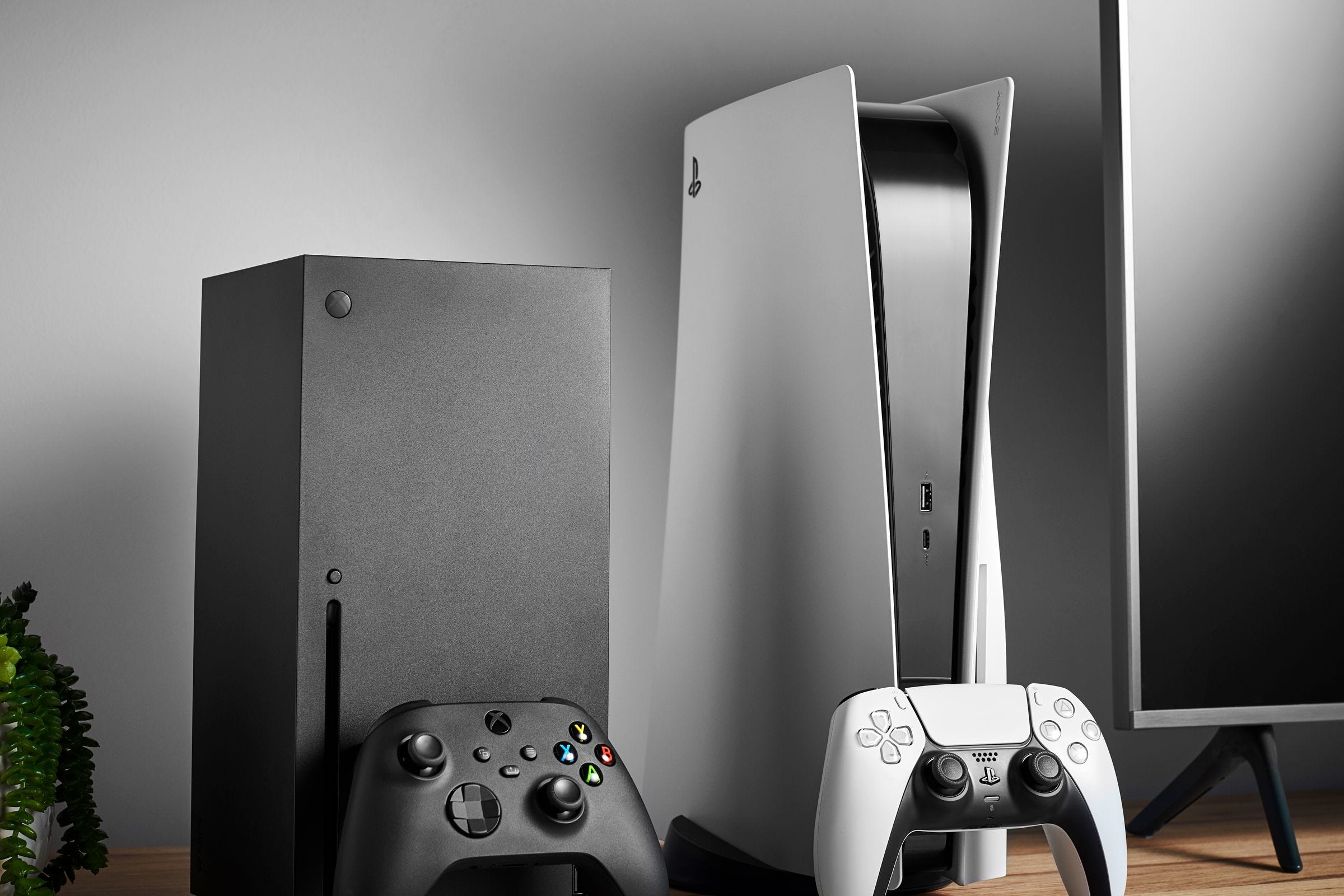
Microsoft’s Xbox is no longer competing head to head in the traditional console race, and the company appears increasingly comfortable with that reality. After years of lagging hardware sales behind Sony’s PlayStation and Nintendo’s Switch, Microsoft is reshaping Xbox into something broader than a console brand, signaling a fundamental shift in how it views the future of gaming.
The past year has been particularly turbulent for the Xbox division. Layoffs, studio shutdowns, rising console prices, and declining hardware sales have fueled speculation that Microsoft is slowly stepping away from the console wars altogether. Yet behind the noise, a deliberate strategy is emerging, one that prioritizes access, services, and content over boxes under the TV.
Hardware sales continue to slide
Xbox’s struggles are most visible in the numbers. Microsoft reported a 2 percent year over year decline in overall gaming revenue in its fiscal 2026 first quarter, driven largely by a steep 29 percent drop in Xbox hardware sales.
The broader console market has also been under pressure. Research firm Circana reported that U.S. hardware spending fell 27 percent year over year in November, traditionally one of the industry’s strongest months. IGN described it as the weakest November for console sales in nearly 20 years.
Even within that downturn, Xbox was hit hardest. Sales of Xbox Series X and Series S consoles dropped an estimated 70 percent during the month, far worse than declines seen by competitors. Combined sales of Nintendo’s Switch and Switch 2 fell just over 10 percent, while PlayStation 5 sales declined more than 40 percent.
In absolute terms, the gap is stark. Nintendo said its Switch 2 has sold 10.36 million units since launching in June. Sony reported 9.2 million PS5 units sold in 2025 alone. By comparison, Xbox Series X and S sales were estimated at just 1.7 million units this year, trailing even the original Nintendo Switch, which launched in 2017 and still managed an estimated 3.4 million units sold.
Microsoft no longer discloses console shipment figures, having stopped in 2015 as the gap with PlayStation widened.
Industry voices question Xbox’s direction
Criticism of Xbox’s strategy has grown louder. Laura Fryer, a former executive producer at Microsoft Game Studios, said earlier this year that the company appears unable or unwilling to ship compelling hardware anymore. Former Microsoft executive and ex Blizzard Entertainment president Mike Ybarra described Xbox’s direction as confusing and warned of a slow decline driven by scattered priorities.
The skepticism intensified after Valve unveiled its next generation Steam Machine, a console PC hybrid that can run thousands of PC games through SteamOS. The device generated significant buzz, with some commentators suggesting Valve had built the kind of flexible gaming system Microsoft once envisioned for Xbox.
Yet Microsoft executives insist that losing the hardware race was never the point.
Microsoft’s long term pivot away from console dominance
Microsoft Gaming CEO Phil Spencer has repeatedly said the company is not trying to out console Sony or Nintendo. Instead, Microsoft is targeting the much larger audience of people who want to play games across multiple devices.
CEO Satya Nadella reinforced that vision recently, saying Microsoft wants its gaming ecosystem to exist everywhere, across consoles, PCs, TVs, and mobile devices. He also hinted that future Xbox hardware may function more like a PC, blurring the line between traditional consoles and computers.
Xbox President Sarah Bond echoed this view, noting that Microsoft’s next generation hardware will reflect lessons learned from its recent handheld devices developed with Asus. Those handhelds support PC game stores like Steam, Epic Games, and CD Projekt, a clear signal that Microsoft is embracing openness rather than exclusivity.
A source familiar with Xbox strategy said the company is exploring an open system that allows users to move seamlessly between console, PC, cloud gaming, and other forms of entertainment.
Cloud gaming and Game Pass take center stage
The clearest expression of Microsoft’s pivot is Xbox Game Pass. The subscription service has become the cornerstone of the company’s gaming business, offering access to hundreds of titles across devices.
Game Pass now has 34 million subscribers, and Microsoft generated nearly $5 billion in Game Pass revenue in the last fiscal year. The service’s most basic tier has grown from 36 games at launch in 2023 to more than 50 today, while the Ultimate tier offers access to over 500 titles.
Cloud gaming usage is accelerating. Microsoft said cloud gaming hours among Game Pass subscribers rose 45 percent year over year. Console players are spending 45 percent more time cloud streaming on console and 24 percent more time on other devices.
Xbox Cloud Gaming is now available in 30 countries, including India, which Microsoft describes as the fastest growing gaming market globally, with more than 500 million gamers.
Despite criticism over a 50 percent price hike for the Game Pass Ultimate tier, Microsoft is reportedly testing an ad supported version of cloud gaming to attract users who have never owned a console.
Analysts caution that cloud gaming remains expensive to scale, requiring dedicated server hardware for each active user. Still, Microsoft appears committed to pushing gaming deeper into the cloud, mirroring its broader evolution into a cloud services company.
From exclusives to everywhere gaming
Microsoft’s approach to exclusive games has also shifted dramatically. After years of acquiring studios to build a strong lineup of Xbox exclusives, the company is now bringing many of those titles to rival platforms.
In a landmark move, Microsoft confirmed that an upcoming Halo title will launch on PlayStation 5, the first time the franchise has appeared on a competing console. Several formerly exclusive Xbox games were also released on other platforms in 2024.
Spencer has said the company no longer wants to build walls around its content, emphasizing that putting games first has produced better outcomes than chasing exclusivity battles.
Layoffs, closures, and rising prices
The pivot has not come without pain. Microsoft cut roughly 1,900 gaming jobs in January and another 650 roles in September. Several Bethesda studios were shut down, and long running projects like Perfect Dark and Everwild were shelved after years in development.
At the same time, Microsoft raised prices on its aging console lineup twice in the past year, following similar moves by Sony and Nintendo. The PS5 now starts at $549.99, while Nintendo’s Switch models range from $399.99 to $499.99. Microsoft’s latest handheld offerings stretch as high as $999.99, underscoring how expensive dedicated gaming hardware has become.
A slow decline or a reinvention
Xbox is undeniably losing the traditional console race, and by a wide margin. But Microsoft appears less concerned with winning that battle than with redefining it entirely. By betting on cloud gaming, subscriptions, cross platform access, and an open ecosystem, the company is positioning Xbox as a service rather than a device.
After a decade of predictions about Xbox’s demise, what comes next may not be an ending, but a transformation. Whether this gamble pays off will depend on how quickly players embrace a future where gaming is no longer tied to a single box in the living room.
.webp)
Popular articles



Subscribe to unlock premium content
Iceland’s Geothermal Revolution

Bali’s Digital Detox Revolution

Step Into the Future of Art

Iceland’s Geothermal Revolution
Bali’s Digital Detox Revolution
Iceland’s Geothermal Revolution