White House Warns Key October Jobs and Inflation Data Could Be Lost Forever

White House Warns Key October Jobs and Inflation Data Could Be Lost Forever
By
Junia Wells
Last updated:
November 13, 2025
First Published:
November 30, 2025

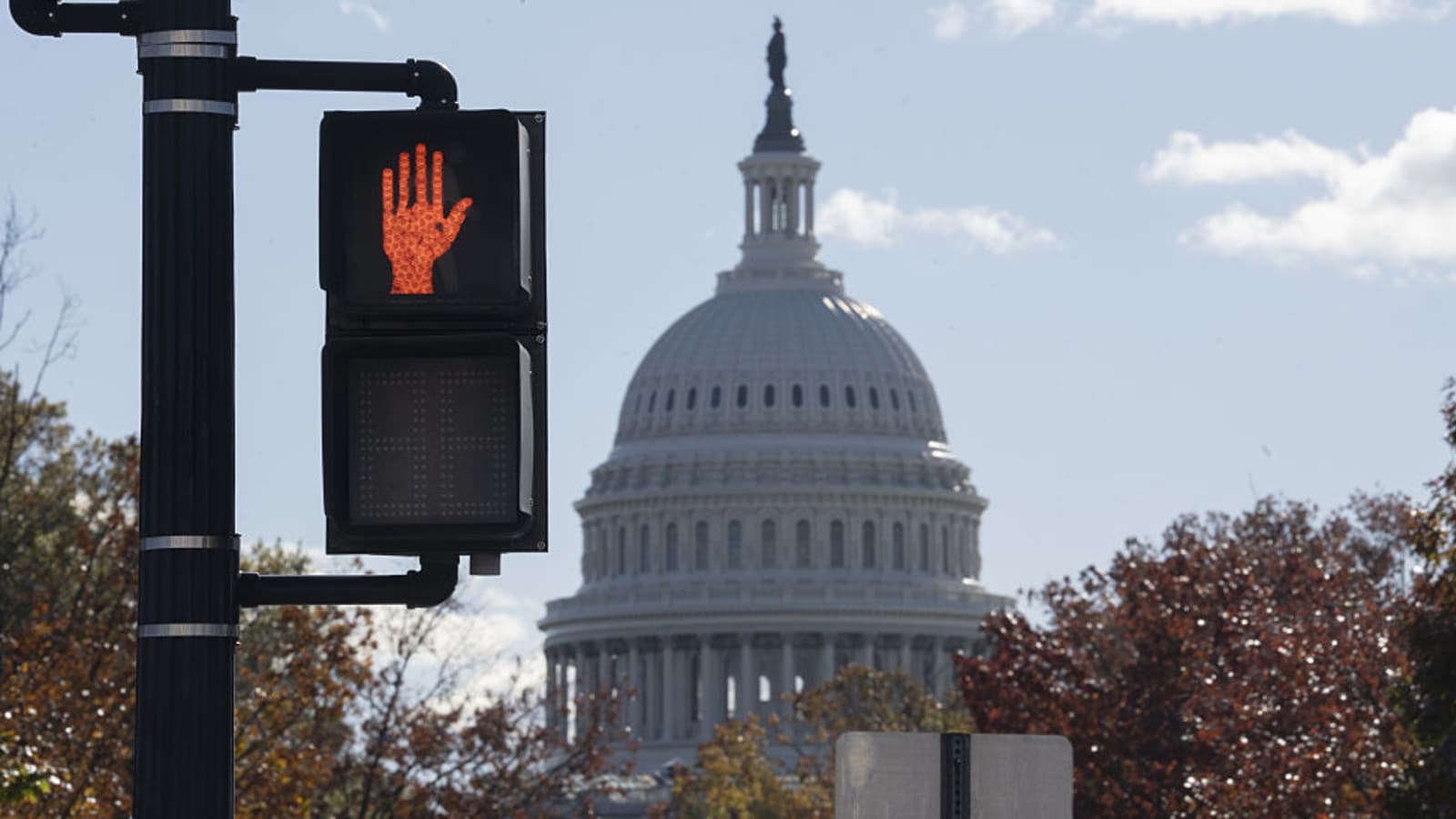
Getty Images
Economic Data at Risk Amid Record-Breaking Shutdown
The White House has warned that crucial U.S. economic reports, including October’s jobs and inflation data, may never be released due to the record-long government shutdown that has now stretched beyond six weeks. Speaking on Wednesday, Press Secretary Karoline Leavitt said the prolonged closure has severely damaged the nation’s statistical infrastructure, potentially creating a permanent gap in America’s economic record.
“The Democrats may have permanently damaged the Federal Statistical System, with October CPI and jobs reports likely never being released,” Leavitt said. “This means policymakers at the Federal Reserve could be flying blind during one of the most sensitive periods for monetary decision-making.”
The shutdown, which has become the longest in U.S. history, halted operations across multiple agencies, including the Labor Department and the Bureau of Economic Analysis—institutions responsible for collecting and processing core economic indicators like the Consumer Price Index (CPI), Nonfarm Payrolls (NFP), and Personal Income and Spending data.
Wall Street and Economists Brace for Data Blackout
The potential disappearance of this data has sent ripples through Wall Street. Investors, economists, and policymakers rely on these monthly reports to assess inflation trends, employment health, and overall economic performance. Without them, forecasting becomes guesswork.
Among the most closely watched metrics now in jeopardy are the Nonfarm Payrolls report, which tracks job creation across sectors, and the CPI, which measures inflation across the U.S. economy. Other delayed or potentially lost data includes retail sales, import and export figures, and consumer spending patterns—all vital for assessing GDP growth.
Most market analysts had expected a simple delay, not a total loss. But Leavitt’s statement changed that outlook, introducing a new level of uncertainty. “The Democrat shutdown made it extraordinarily difficult for economists, investors, and policymakers to access critical government data,” she added.
Economic Impact: Growth Could Take a Hit
The White House estimates that the shutdown could reduce fourth-quarter GDP growth by up to 2 percentage points. Kevin Hassett, Director of the National Economic Council, echoed that concern, suggesting the impasse might already have shaved 1.5 percentage points from current-quarter economic activity.
“For sure, it’s going to have an impact on this quarter,” Hassett said during an appearance at the Economic Club of Washington, D.C. “The longer this continues, the more lasting the economic damage becomes.”
Despite the grim outlook, some private-sector analysts remain cautiously optimistic. Goldman Sachs recently raised its third-quarter GDP projection to 3.7% and its full-year growth forecast to 1.3%, citing resilient consumer spending and corporate activity. However, Goldman economists warned that the quality of future economic data could be compromised if government agencies miss critical collection windows.
Why Missing Data Matters
The absence of reliable government statistics doesn’t just hinder Wall Street—it affects the entire policy ecosystem. Without fresh data, the Federal Reserve cannot accurately gauge inflationary pressures or labor market weakness, making it harder to set appropriate interest rates.
Citigroup economists suggested that while September’s job report might still be released soon, October’s figures could be delayed until December—or possibly lost entirely. LPL Financial Chief Economist Jeffrey Roach noted that while some business data can be recovered later, surveys that rely on household responses may be permanently incomplete.
“It’s just the more nuanced qualitative surveys that cannot be replicated,” Roach explained. “The water has gone under that bridge already.”
Previous shutdowns typically caused delays but not data loss. This time, however, the closure has lasted long enough to disrupt actual data collection periods. As a result, entire datasets for October could be missing, creating long-term challenges for historians, analysts, and government agencies attempting to reconstruct the economic picture of late 2025.
A Nation Operating Without Its Dashboard
The potential loss of core economic indicators highlights how deeply intertwined government operations are with the private economy. With Wall Street volatility rising and inflation still hovering above 2.8%, investors are navigating without the very metrics that guide decisions worth billions of dollars.
For policymakers, it’s an even greater concern. The Federal Reserve’s next moves on interest rates—critical for everything from mortgage rates to stock valuations—depend heavily on reliable data. Without it, the U.S. economy could be steering through uncertainty, guided more by instinct than insight.
As the shutdown’s ripple effects unfold, one truth remains clear: America’s economic dashboard may be dark for longer than anyone expected.

Popular articles


Subscribe to unlock premium content
London’s Gourmet Playgrounds

From Bean to Buzz in Thailand

The Secret Life of Pop-Up Luxury Restaurants in Paris

London’s Gourmet Playgrounds
From Bean to Buzz in Thailand
London’s Gourmet Playgrounds