Western Magnet Makers Step Into the Spotlight as China’s Rare Earth Grip Tightens

Western Magnet Makers Step Into the Spotlight as China’s Rare Earth Grip Tightens
By
Calder Monroe
Last updated:
December 25, 2025
First Published:
December 25, 2025

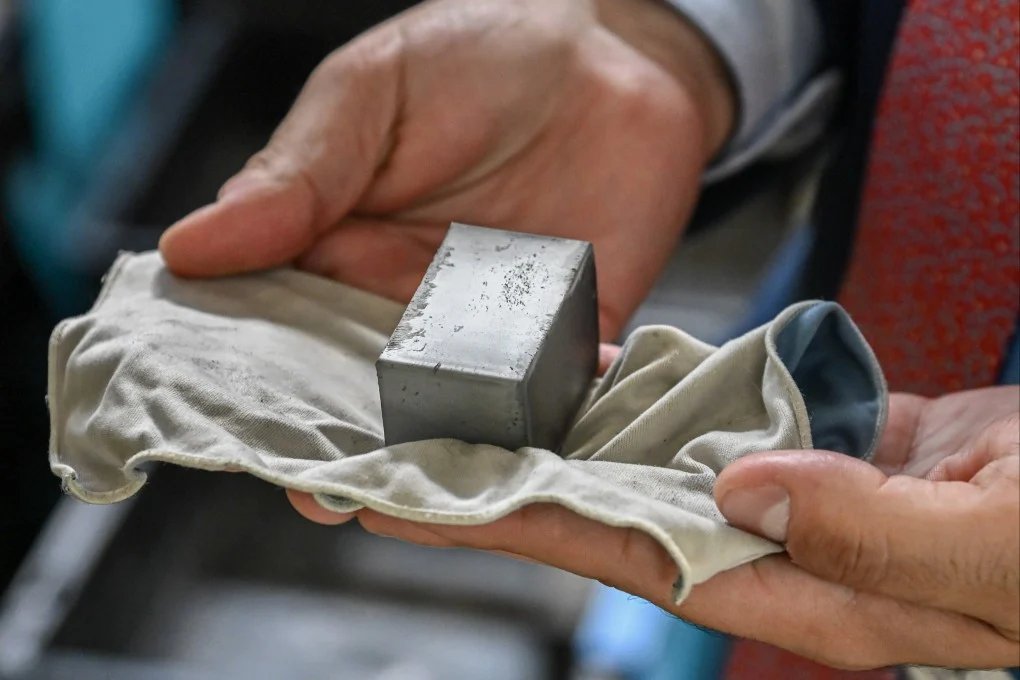
Photo: South China Morning Post
A Strategic Industry Comes Into Focus
A year marked by export restrictions, tariff threats, and escalating geopolitical tension has pushed an often overlooked industry into the global spotlight. Rare earth magnet manufacturers are suddenly central to economic security discussions as governments and corporations confront the risks of overreliance on China for critical materials.
Rare earth magnets are not niche components. They are essential to modern life, powering electric vehicles, wind turbines, smartphones, medical imaging systems, artificial intelligence hardware, industrial robotics, and advanced defense systems. As clean energy adoption accelerates and automation expands, demand for these high performance magnets is rising at a pace few policymakers anticipated a decade ago.
Industry leaders argue that magnet makers have quietly become a bottleneck in the global technology supply chain. As Neo Performance Materials CEO Rahim Suleman put it, Western producers are now addressing a problem the world did not fully recognize until supply risks became impossible to ignore.
The Push to Break China’s Dominance
China’s control over the rare earth ecosystem remains overwhelming. The country accounts for close to 60 percent of global rare earth mining and more than 90 percent of magnet manufacturing capacity, giving Beijing significant leverage over industries that underpin energy transition and national security.
In response, the United States, the European Union, and Australia are investing heavily in domestic mine to magnet supply chains. These efforts include funding new processing plants, expanding magnet manufacturing facilities, and supporting early stage mining and refining projects outside China.
The goal is not just diversification, but resilience. Governments want supply chains that can withstand political shocks, trade disputes, and export controls. However, analysts caution that reversing decades of concentration will take time, capital, and sustained policy support.
Europe’s Bet on Strategic Manufacturing
One of the most closely watched projects in Europe is Neo Performance Materials’ rare earth magnet facility in Narva, Estonia. Located near the Russian border, the plant has become a symbol of Europe’s ambition to regain control over critical industrial inputs.
European officials have framed the project as a milestone in industrial sovereignty. The facility is expected to produce approximately 2,000 metric tons of rare earth magnets this year, with plans to scale output to 5,000 tons annually in the next phase. While modest compared to China’s capacity, the plant represents a foundational step toward a regional supply base.
Suleman notes that global demand for rare earth magnets is expected to grow from roughly 250,000 tons today to around 600,000 tons within the next decade. With more than 90 percent of current production concentrated in a single country, even incremental diversification could have outsized strategic value.
North America Accelerates Investment
In the United States, rare earth magnets have become a national priority, particularly due to their role in defense systems and advanced manufacturing. Federal support has intensified through direct funding, long term contracts, and policy initiatives aimed at rebuilding domestic capabilities.
Vulcan Elements, a North Carolina based magnet producer, recently secured a $620 million federal loan from the Department of Defense to expand U.S. production capacity. Company leadership argues that magnets are fundamental enablers of modern technology, converting electricity into motion across nearly every advanced machine in use today.
From electric and hybrid motors to satellites, semiconductor fabrication equipment, aircraft, and drones, demand is expanding across both civilian and military applications. Industry executives emphasize that without reliable magnet supply chains, innovation itself risks being constrained.
Skyrocketing Demand Meets Structural Challenges
Consulting firms tracking the sector forecast rapid growth in Western magnet capacity. U.S. production is projected to increase nearly sixfold by the mid 2030s, while European output could more than triple over the same period. Much of this expansion is tied to strategic legislation and government backed incentives, including the EU’s Critical Raw Materials Act, which targets meeting 40 percent of regional demand through domestic production by 2030.
Despite this momentum, challenges remain substantial. Building a fully domestic supply chain requires coordination across mining, refining, alloy production, magnet manufacturing, and end users. Industry leaders stress that innovation and collaboration are essential, as magnet producers increasingly need to orchestrate the entire value chain rather than rely on fragmented suppliers.
Executives at companies like Advanced Magnet Lab argue that demand for non China sourced rare earth magnets is accelerating rapidly, but success will depend on whether Western producers can scale fast enough while maintaining cost competitiveness.
A Long Road Ahead for Supply Chain Independence
While the renewed focus on rare earth magnets marks a turning point, few expect China’s dominance to fade quickly. The scale of investment, technical expertise, and infrastructure built over decades cannot be replicated overnight.
Still, the current wave of projects signals a structural shift. Rare earth magnets are no longer treated as obscure industrial components, but as strategic assets tied directly to economic growth, technological leadership, and national security.
As clean energy systems expand and automation reshapes global industries, magnet makers are likely to remain at the center of policy debates and investment strategies for years to come. The spotlight may be new, but the stakes are increasingly clear.
.webp)
Popular articles



Subscribe to unlock premium content
Iceland’s Geothermal Revolution
Bali’s Digital Detox Revolution

Step Into the Future of Art

Iceland’s Geothermal Revolution
Bali’s Digital Detox Revolution
Iceland’s Geothermal Revolution