Waymo Secures $16 Billion Mega Funding Round to Accelerate Global Robotaxi Expansion

Waymo Secures $16 Billion Mega Funding Round to Accelerate Global Robotaxi Expansion
By
Calder Monroe
Last updated:
February 3, 2026
First Published:
February 3, 2026

Waymo Lands One of the Largest Private Tech Rounds in Recent Years
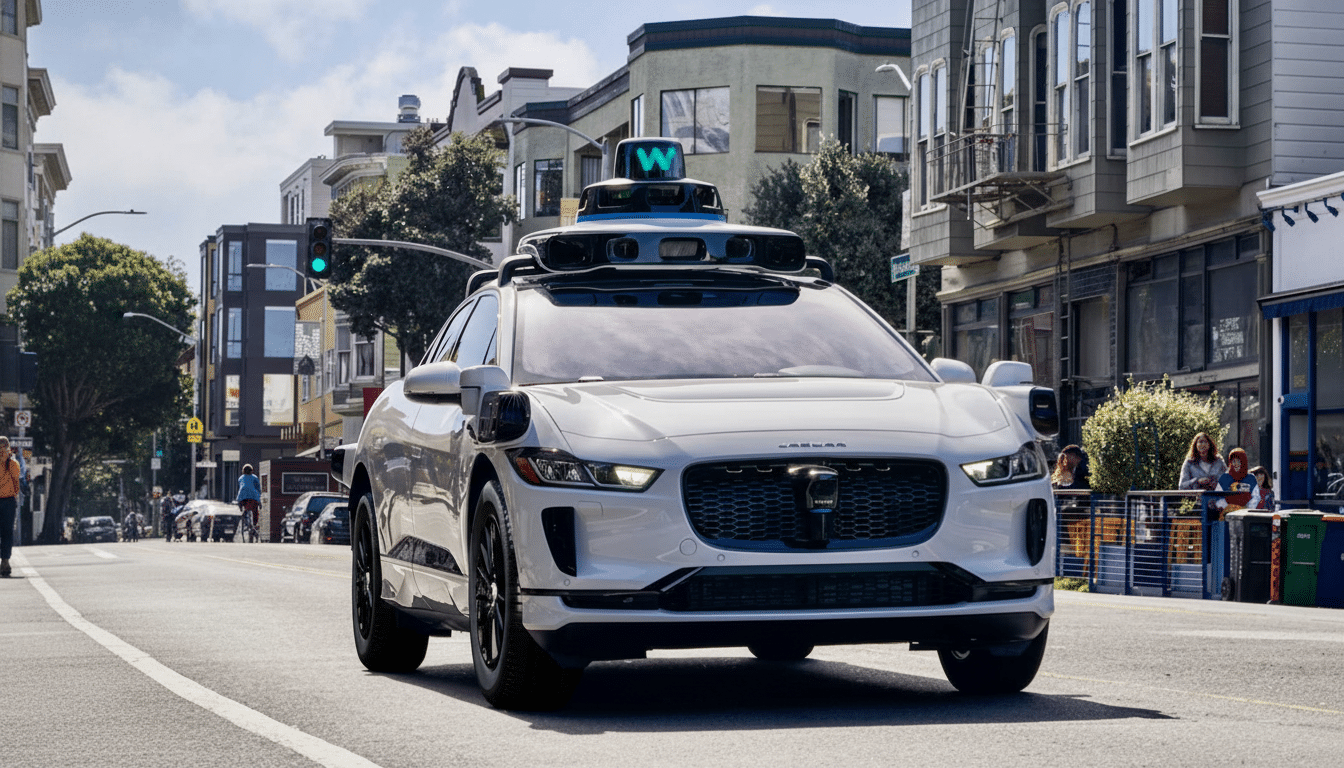
Alphabet’s self driving subsidiary Waymo announced a massive $16 billion funding round, pushing its post money valuation to approximately $126 billion and marking one of the largest private capital raises in the autonomous vehicle sector to date.
The new investment more than doubles Waymo’s valuation compared with its previous Series C round in October 2024, when the company raised $5.6 billion at a $45 billion valuation. At that time, Alphabet also committed an additional $5 billion multi year investment, underscoring its long term confidence in Waymo’s commercial future.
This latest round introduces several new institutional investors while retaining strong backing from existing partners. Alphabet remains the majority investor, joined by returning firms such as Andreessen Horowitz, Fidelity, Perry Creek, Silver Lake, Tiger Global, and T. Rowe Price. New participants include Dragoneer Investment Group, DST Global, Sequoia Capital, Kleiner Perkins, and Alphabet affiliated venture arm GV.
With this infusion of capital, Waymo says it is entering a new phase focused on scaling operations at speed while maintaining its safety first approach.
From Pilot Projects to Commercial Scale
Waymo leadership framed the funding as a turning point for the company’s autonomous driving ambitions.
Co CEOs Tekedra Mawakana and Dmitri Dolgov emphasized that Waymo is no longer in experimentation mode, stating that the company’s autonomous system is now statistically safer than human driving across millions of real world miles. According to the executives, the focus has shifted from proving the technology to expanding a commercially viable transportation network.
Waymo says the capital will allow it to move forward “with unprecedented velocity,” accelerating fleet deployment, expanding geographic coverage, and investing further in artificial intelligence, sensor technology, and next generation vehicle platforms.
The company is also deepening partnerships with automakers and mobility providers to integrate the Waymo Driver into additional vehicle models and ride hailing ecosystems.
Rapid Market Expansion Across the U.S. and Beyond
Waymo’s robotaxi service is already live in Austin, the San Francisco Bay Area, Phoenix, Atlanta, Los Angeles, and Miami, with Miami service launching earlier this year. In 2025 alone, the company reported completing roughly 15 million paid and promotional trips, a sharp increase from prior years as adoption accelerated in mature markets like Phoenix and San Francisco.
Looking ahead to 2026, Waymo plans to launch operations in a wide slate of new U.S. cities, including:
- Dallas
- Denver
- Detroit
- Houston
- Las Vegas
- Nashville
- Orlando
- San Antonio
- San Diego
- Washington, D.C.
The company also confirmed plans to enter London, marking its first international commercial deployment and a major step toward global expansion.
If executed on schedule, this rollout would more than triple Waymo’s operational footprint within roughly two years, positioning it as the most geographically diversified autonomous ride hailing provider in the market.
How the New Capital Will Be Used
Waymo says the $16 billion will primarily support:
Fleet growth, including thousands of additional autonomous vehicles
Infrastructure buildout such as depots, charging hubs, and remote operations centers
Continued development of its Waymo Driver software stack
Expansion of mapping, simulation, and AI training capabilities
Regulatory engagement and international market entry preparation
Industry analysts estimate that fully deploying autonomous fleets at scale requires billions in upfront capital due to vehicle costs, specialized hardware, cloud computing, and safety validation. This funding gives Waymo one of the strongest balance sheets in the autonomous driving sector, placing it well ahead of most competitors in terms of available capital.
Earlier reports had suggested Waymo was targeting at least $15 billion at a valuation near $110 billion. The finalized round exceeded both figures.
Growing Pains Accompany Fast Expansion
Despite the momentum, Waymo’s rapid growth has not been without challenges.
In December, the company issued a software recall after reports that some vehicles in Texas had improperly passed stopped school buses on multiple occasions. More recently, a Waymo vehicle struck a child near an elementary school in Santa Monica, California. The incident is currently under review by the National Highway Traffic Safety Administration.
Waymo says it is cooperating fully with regulators and continues to refine its software systems to prevent similar events. The company maintains that safety remains its top priority as deployment accelerates.
These incidents highlight the operational and regulatory complexities facing autonomous vehicle providers as they move from controlled pilots into dense urban environments.
A Defining Moment for Autonomous Mobility
With a $126 billion valuation, deep backing from Alphabet, and aggressive expansion plans across North America and Europe, Waymo is positioning itself as the clear front runner in commercial robotaxi services.
The latest funding round signals strong investor confidence in autonomous transportation as a long term growth market, even amid broader uncertainty in tech valuations. For Alphabet, the investment represents a major bet that Waymo can evolve from a costly research project into a global mobility platform generating meaningful revenue over the next decade.
As Waymo ramps up deployments, enters international markets, and scales its fleet, the coming years will be critical in determining whether autonomous ride hailing can transition from a high tech promise into a mainstream transportation reality.

Popular articles


Subscribe to unlock premium content
Defying Gravity in Style
Lunar Dreams Become Reality
Frozen Fantasies Come Alive
Defying Gravity in Style
Lunar Dreams Become Reality
Defying Gravity in Style