Waymo Restarts San Francisco Robotaxis After Power Outages Trigger Citywide Disruptions

Waymo Restarts San Francisco Robotaxis After Power Outages Trigger Citywide Disruptions
By
Leah Rosenfeld
Last updated:
December 22, 2025
First Published:
December 22, 2025

Getty Images
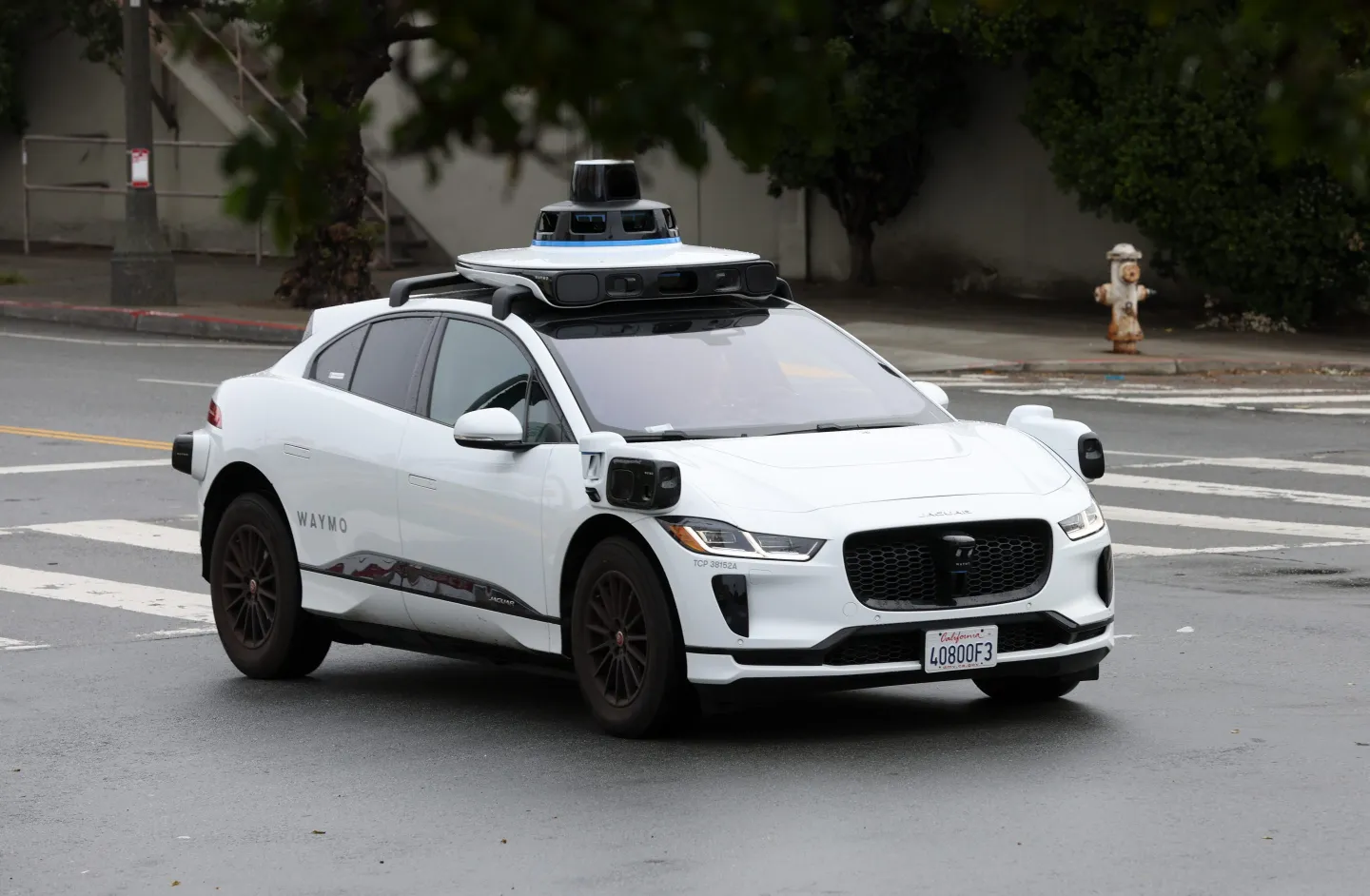
Waymo has resumed its driverless robotaxi operations in the San Francisco Bay Area after temporarily suspending service during widespread power outages that brought parts of the city to a standstill. The incident has renewed debate around how autonomous vehicles perform during real world infrastructure failures and how prepared cities truly are for large scale driverless deployment.
The Alphabet owned company restarted service on Sunday evening after working closely with city officials to navigate the aftermath of a major blackout that began Saturday afternoon. The outage knocked out traffic signals across multiple neighborhoods, creating gridlock and unusual challenges for automated driving systems.
What caused the suspension
According to Waymo, the service pause was a proactive safety decision rather than a technical failure of its vehicles. The company said it temporarily halted rides as traffic congestion worsened and uncertainty around intersections increased.
The power outage began at approximately 1:09 p.m. local time on Saturday and peaked around two hours later. Utility provider Pacific Gas and Electric reported that roughly 130,000 customers were affected at the height of the disruption. By Sunday morning, about 21,000 customers were still without power, primarily in the Presidio, Richmond District, Golden Gate Park, and parts of downtown San Francisco.
PG&E later confirmed the blackout was caused by a fire at a substation, resulting in what it described as significant and extensive damage. The utility said restoration efforts were ongoing and that it could not immediately provide a precise timeline for full recovery.
How Waymo vehicles behaved during the outage
As traffic signals went dark across the city, videos circulating on social media appeared to show multiple Waymo vehicles stopped in the middle of roadways, contributing to congestion. Some residents reported seeing driverless cars halted for extended periods at intersections.
San Francisco resident Matt Schoolfield said he observed at least three Waymo vehicles stopped in traffic around 9:45 p.m. on Saturday, including one on Turk Boulevard near Parker Avenue. He described the vehicles as stationary in active lanes, adding to confusion during an already chaotic evening.
Waymo spokesperson Suzanne Philion explained that the company’s autonomous system is designed to treat non functioning traffic lights as four way stops. However, the unprecedented scale of the outage created conditions where vehicles took longer than usual to verify intersection status.
“This led to some vehicles remaining stationary longer than expected to confirm safety before proceeding,” Philion said, noting that the behavior contributed to traffic friction during peak congestion.
City response and coordination
San Francisco Mayor Daniel Lurie said city authorities mobilized quickly to manage the situation. In an update posted Saturday evening, he confirmed that police officers, fire crews, parking control officers, and city ambassadors were deployed across affected neighborhoods to assist with traffic flow and public safety.
Waymo said it coordinated closely with city officials throughout the blackout. Most active trips were completed before the suspension took effect, and vehicles were either safely returned to depots or pulled over in appropriate locations.
Tesla weighs in but with key differences
Amid the disruption, Tesla CEO Elon Musk posted on social media that Tesla robotaxis were unaffected by the San Francisco power outage. The statement drew attention, but it also highlighted a fundamental difference between Tesla and Waymo’s operations.
Tesla does not currently operate a fully driverless robotaxi service in San Francisco. Its local ride hailing offering relies on vehicles equipped with Full Self Driving Supervised, a driver assistance system that requires a human driver behind the wheel at all times.
State regulators, including the California Department of Motor Vehicles and the California Public Utilities Commission, have confirmed that Tesla does not hold permits to operate driverless commercial services in California without a human safety operator. Even in regions where Tesla is testing advanced autonomy, its vehicles still include human supervision.
While Tesla has ambitions to become a major player in the robotaxi market, its current service model differs significantly from Waymo’s fully autonomous, no driver approach.
A growing industry under scrutiny
Waymo remains the leading commercial robotaxi operator in the United States, offering fully driverless ride hailing to the public in select cities. It competes not only with Tesla’s future plans but also with international players such as Baidu’s Apollo Go in China.
As robotaxi services expand into more urban areas, public skepticism remains high. A recent survey by the American Automobile Association found that nearly two thirds of U.S. drivers said they are fearful of autonomous vehicles, citing safety and reliability concerns.
The San Francisco blackout has added fuel to that debate. Bryan Reimer, a research scientist at the MIT Center for Transportation, said the incident underscores the limits of current autonomous systems when faced with predictable infrastructure failures like power outages.
“Power outages are not rare events,” Reimer said. “In the foreseeable future, we will need a mix of human and machine intelligence, with human backup systems around highly automated technologies, including robotaxis.”
What this means for cities and regulators
The disruption has raised broader questions about how many autonomous vehicles cities can realistically accommodate and what level of redundancy should be required. Reimer argued that regulators should define limits on the concentration of highly automated vehicles in urban environments and hold companies accountable for congestion and gridlock, just as human drivers are.
While Waymo’s swift suspension and restart demonstrate operational caution, the episode highlights the growing pains of autonomous mobility. As robotaxis become more common, incidents like this will likely shape future rules, public trust, and the pace at which cities embrace fully driverless transportation.
.webp)
Popular articles



Subscribe to unlock premium content
Iceland’s Geothermal Revolution
Bali’s Digital Detox Revolution

Step Into the Future of Art
Iceland’s Geothermal Revolution
Bali’s Digital Detox Revolution
Iceland’s Geothermal Revolution