Venezuela’s Oil at a Crossroads After Maduro’s Arrest

Venezuela’s Oil at a Crossroads After Maduro’s Arrest
By
David Goldfarb
Last updated:
January 5, 2026
First Published:
January 5, 2026

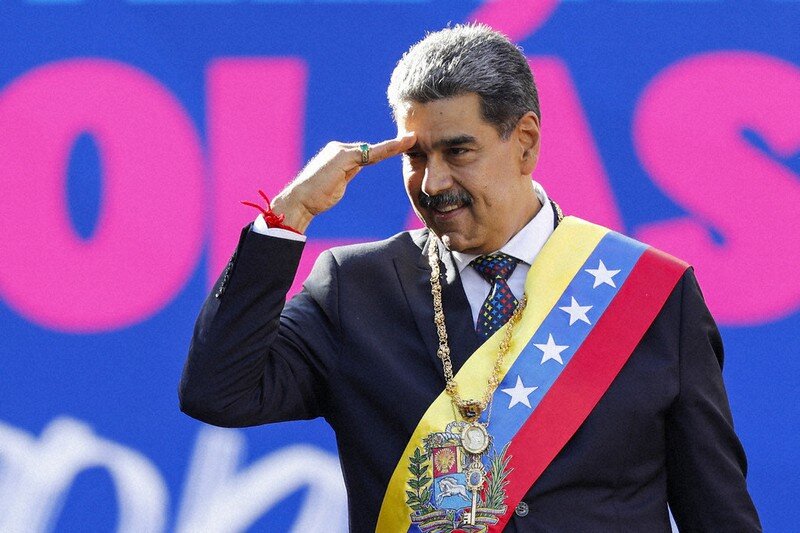
Photo: Tehran Times
A Power Shift That Reopens Old Questions
The arrest of Nicolás Maduro has thrust Venezuela’s oil industry back into the global spotlight, reviving long-standing questions about who truly controls the country’s vast crude reserves and whether meaningful production growth is even possible after years of decline. While Venezuela holds the world’s largest proven oil reserves, political instability and chronic underinvestment have left its energy sector operating far below its potential.
For now, control remains largely unchanged on paper. Petróleos de Venezuela, or PDVSA, the state-owned oil company created after nationalization in the 1970s, continues to oversee most production and reserves. However, the sudden leadership vacuum has injected uncertainty into how exports are managed, who authorizes sales, and where payments are directed.
Who Controls Venezuelan Oil Today
Despite years of sanctions and international isolation, PDVSA still sits at the center of Venezuela’s oil system. Foreign companies operate only through joint ventures or special licenses, with PDVSA retaining majority ownership.
Chevron is the most prominent U.S. company active in the country, operating several joint ventures and exporting Venezuelan crude under limited U.S. licenses. Russian and Chinese firms also maintain partnerships, but none hold controlling stakes. Industry analysts agree that, structurally, PDVSA remains the dominant force even as its operational capacity has eroded.
If a more market-friendly government emerges and sanctions are eased, Chevron is widely viewed as the best-positioned international player to expand its role quickly, given its existing assets, technical expertise, and operational footprint. European firms such as Repsol and Eni could also benefit, as they already have stakes in Venezuelan projects and experience navigating complex regulatory environments.
Production Collapse and Export Reality
Venezuela’s oil output tells a stark story of decline. Production peaked at roughly 3.5 million barrels per day in the late 1990s. Today, output is estimated at around 950,000 barrels per day, with exports closer to 550,000 barrels per day. Years of mismanagement, loss of skilled labor, sanctions, and deteriorating infrastructure have taken a heavy toll.
Even under current conditions, Chevron is expected to continue exporting approximately 150,000 barrels per day, which helps cushion any immediate shock to global supply. As a result, most analysts see limited near-term disruption to oil markets, especially at a time when global supply is relatively comfortable.
What It Means for Global Oil Markets
In the short term, the arrest of Maduro is unlikely to significantly tighten global oil supply. Markets are broadly balanced, and some analysts argue they are even trending toward oversupply. That said, uncertainty alone can move prices. Traders may price in a modest risk premium, estimated at around $3 per barrel, reflecting fears of export interruptions or payment disputes if authority in Caracas remains unclear.
One immediate risk lies in the commercial chain itself. If buyers are unsure who controls PDVSA or who has the legal authority to receive payments, exports could slow or temporarily halt. This risk is amplified by recent U.S. actions against so-called shadow fleets—tankers operating outside standard shipping and insurance systems—that Venezuela has relied on to move crude under sanctions.
Why Venezuelan Oil Still Matters
Venezuela’s long-term importance to global energy markets is less about volume today and more about quality tomorrow. The country produces heavy, sour crude that is difficult to extract but highly valued by complex refineries, particularly in the United States and parts of Asia. These refineries are designed to process dense crude blends and benefit from discounted feedstock.
If Venezuela were ever able to restore production at scale, it could become a strategic supplier once again, especially as heavier crude sources become scarcer globally.
Sanctions, Politics, and the Long Road Back
Any scenario involving a new government, including one led by opposition figures, could eventually open the door to sanctions relief. In such a case, exports might rise modestly in the early stages as stored oil is released to generate cash flow. However, this would likely be a temporary boost rather than a structural recovery.
The physical limits are severe. Infrastructure across the oil sector is deeply degraded, from pipelines and refineries to storage facilities and ports. Experts estimate that it would take at least $10 billion per year in sustained investment to stabilize and rebuild the industry. Even then, meaningful production growth would likely take years, not months.
Security and political stability are equally critical. A chaotic transition of power could derail recovery entirely, as seen in other oil-rich nations that experienced abrupt regime change. Without a stable operating environment, international oil companies are unlikely to commit the capital and personnel required for a turnaround.
The Bottom Line for Investors
Maduro’s arrest reshapes Venezuela’s political landscape but does not immediately transform its oil fundamentals. PDVSA still controls the industry, Chevron remains the most influential foreign operator, and global supply impacts are limited in the near term.
The real question is whether Venezuela can create the political stability, regulatory clarity, and security needed to attract billions in long-term investment. Until those conditions are met, the country’s vast oil wealth will remain largely untapped, more a symbol of potential than a driver of global energy supply.
.webp)
Popular articles



Subscribe to unlock premium content
Iceland’s Geothermal Revolution
Bali’s Digital Detox Revolution

Step Into the Future of Art

Iceland’s Geothermal Revolution
Bali’s Digital Detox Revolution
Iceland’s Geothermal Revolution