Venezuela Power Shift Revives Hopes for U.S. Oil Giants to Reclaim Seized Assets

Venezuela Power Shift Revives Hopes for U.S. Oil Giants to Reclaim Seized Assets
By
Calder Monroe
Last updated:
January 6, 2026
First Published:
January 6, 2026

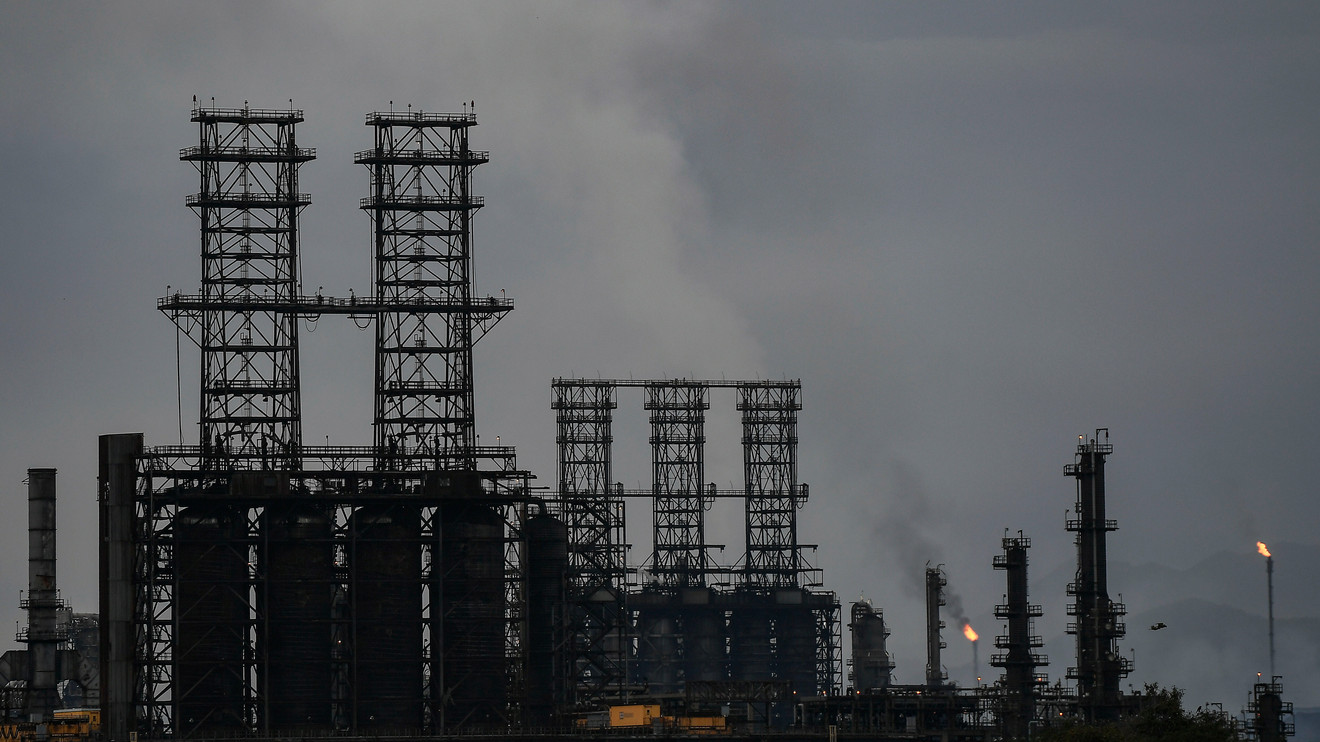
A Turning Point for Venezuela’s Oil Sector
The overthrow of Venezuelan President Nicolás Maduro has opened the door to a dramatic reshaping of the country’s oil industry, raising expectations that major U.S. energy companies could finally recover assets seized nearly two decades ago. Analysts say regime change could reset Venezuela’s relationship with foreign investors, particularly Exxon Mobil and ConocoPhillips, which lost large-scale projects during the 2007 nationalization under former President Hugo Chávez.
The political shift has also fueled speculation that U.S. oil majors may eventually return to a country that holds the largest proven crude oil reserves in the world.
Trump Pushes U.S. Oil Companies to Reengage
President Donald Trump publicly called on American oil companies to commit billions of dollars to rebuild Venezuela’s energy infrastructure shortly after U.S. forces captured Maduro and his wife. Speaking from Mar-a-Lago, Trump described Venezuela’s oil system as “badly broken” and said U.S. firms would be instrumental in restoring production.
Trump sharply criticized the 2007 nationalization, calling it one of the largest seizures of American property in history, and suggested that U.S. companies could ultimately reclaim value that was lost under Chávez-era policies.
Despite the rhetoric, the administration has not yet lifted its embargo on Venezuelan oil, and industry executives remain cautious.
Markets React as Investors Bet on a Reset
Even with uncertainty on the ground, financial markets moved quickly. Shares of Chevron, Exxon Mobil, and ConocoPhillips rose as investors priced in the possibility of renewed access to Venezuelan resources and long-delayed compensation for past losses.
Venezuela controls an estimated 303 billion barrels of crude oil, roughly 17% of global proven reserves, according to U.S. government data. Most of those reserves sit in the Orinoco Belt and consist of extra-heavy crude, which requires advanced technology and long-term capital to develop efficiently.
From Oil Superpower to Collapse
Venezuela’s oil production peaked at roughly 3.5 million barrels per day in the late 1990s, before years of underinvestment, mismanagement, and sanctions triggered a steep decline. Output currently sits near 800,000 barrels per day, a fraction of historic levels.
Restoring production is not simply a matter of reopening wells. Analysts say aging pipelines, deteriorated refineries, power shortages, and skilled labor gaps will take years and tens of billions of dollars to fix.
Chevron’s Strategic Advantage
Chevron is uniquely positioned among U.S. oil majors. It is currently the only American company operating inside Venezuela and maintains joint ventures with state-owned oil company PDVSA that account for roughly 23% of national output.
The company exported approximately 140,000 barrels per day in the fourth quarter of 2025, making it the most active foreign producer in the country. Analysts say Chevron could scale up production faster than competitors if sanctions are eased and a stable government emerges.
Chevron has emphasized that it remains focused on employee safety and compliance with all applicable laws. The company currently operates under a restricted U.S. license that allows production but prevents revenue from flowing to the former Maduro government.
Exxon and Conoco’s Long Road to Recovery
Exxon Mobil and ConocoPhillips exited Venezuela after the 2007 nationalization and have pursued arbitration claims ever since. Conoco’s outstanding claims approach $10 billion, while Exxon’s claims are estimated near $2 billion, making Venezuela one of the most significant unresolved disputes in global energy history.
Both companies participated in Venezuela’s oil liberalization during the 1990s, investing heavily in Orinoco Belt projects before being forced out. Analysts say any return would require not just sanctions relief, but a clear legal framework for compensating past losses and protecting future investments.
Neither company has committed to reentering Venezuela, and executives have stressed that it is too early to speculate on new projects.
Sanctions, Stability, and the Cost of Rebuilding
Analysts caution that lifting sanctions alone will not be enough. Oil producers will need confidence in political stability, contract enforcement, and security conditions before deploying capital at scale.
Energy executives estimate it could cost at least $10 billion per year to rehabilitate Venezuela’s oil sector, including pipelines, export terminals, and refineries. In an orderly transition, production could increase by several hundred thousand barrels per day within a year, but chaotic outcomes could derail progress entirely.
Oil Services Firms See Opportunity
Investors are also looking beyond producers to oilfield services companies that could benefit from a massive rebuild. Shares of SLB, Halliburton, and Baker Hughes climbed sharply as markets anticipated demand for drilling, pipeline repair, and refinery upgrades.
Industry analysts say U.S.-based contractors would likely play a central role if Venezuela’s oil revival moves forward, given their technical expertise and historical footprint in the region.
A High-Stakes Reentry Still Far From Certain
While the fall of Maduro has revived hopes of a U.S. oil comeback in Venezuela, executives and analysts agree that progress will be slow and uncertain. The path forward hinges on security, governance, and whether a new Venezuelan leadership can restore trust with foreign investors.
For now, the opportunity is real but unresolved, with billions of dollars, global energy supply, and decades-old grievances hanging in the balance.
.webp)
Popular articles



Subscribe to unlock premium content
Iceland’s Geothermal Revolution
Bali’s Digital Detox Revolution

Step Into the Future of Art

Iceland’s Geothermal Revolution
Bali’s Digital Detox Revolution
Iceland’s Geothermal Revolution