Vast Secures $500 Million to Compete for NASA’s Next Space Station Contract

Vast Secures $500 Million to Compete for NASA’s Next Space Station Contract
By
Rachel Steinberg
Last updated:
March 9, 2026
First Published:
March 9, 2026

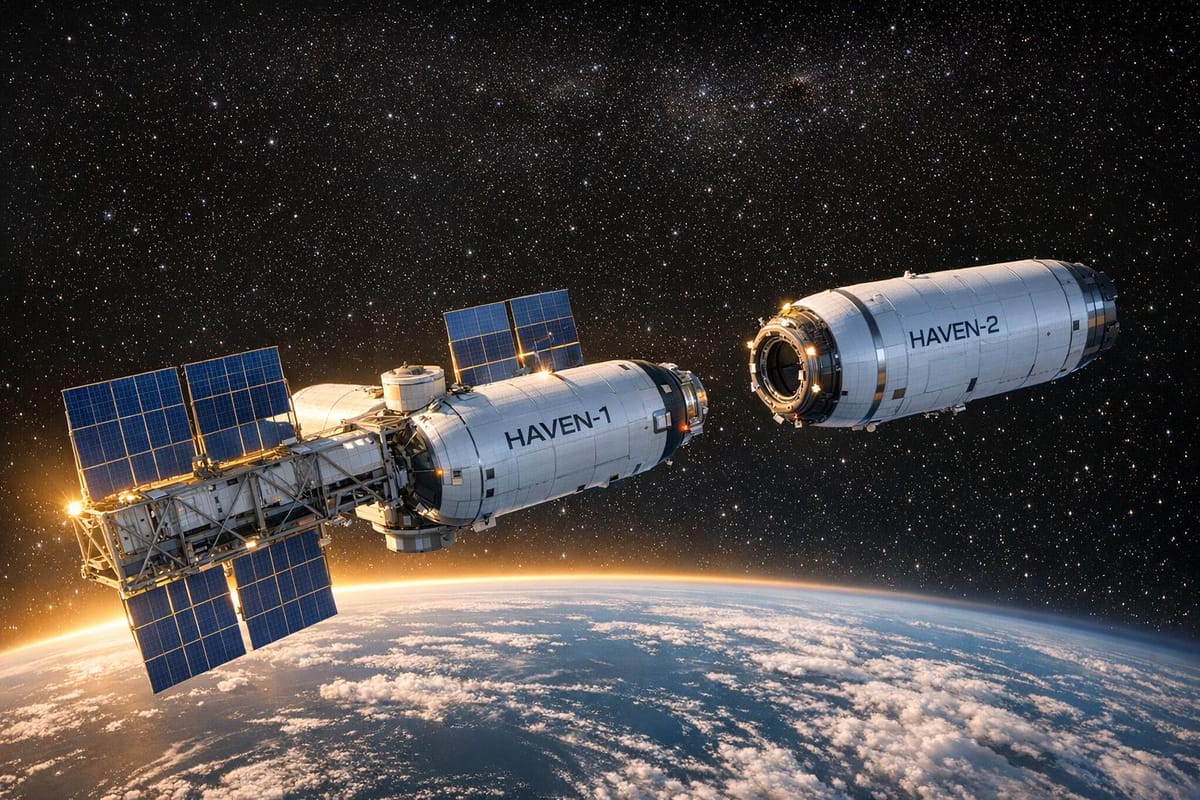
Photo: SpaceX Stock
Betting Big on Stage Two
Vast, the space startup founded in 2023, is making a bold push to enter NASA’s next phase of International Space Station contracts after missing out on the initial awards. The company announced a $500 million funding round Thursday, led by Balerion Space Ventures and joined by Qatar’s sovereign wealth fund, signaling strong investor confidence in the burgeoning commercial space sector.
CEO Max Haot described the company’s approach as a “leapfrog strategy,” aiming to demonstrate cutting-edge hardware and operational readiness that NASA would find hard to ignore. “If we deliver on our plans, or are visibly on the path to do so, NASA will have no choice but to take notice,” Haot said in an interview with CNBC.
Haven-1: A Commercial Milestone
Vast is preparing to launch Haven-1, its first commercial space station, in 2027. This launch is a cornerstone for the company’s bid to secure a NASA contract in phase two of ISS operations, as the agency begins planning for the station’s eventual retirement by 2030 — now potentially extended to 2032 under new congressional guidance.
The company’s momentum comes alongside its selection for NASA’s sixth private astronaut mission to the ISS, marking its growing footprint in human spaceflight. Haot emphasized that strategic partnerships with European and Japanese space agencies will be key to achieving low-cost, scalable human habitats in orbit.
Space Investment Boom
Vast’s funding round coincides with an explosive period for space tech investment. With a possible SpaceX IPO on the horizon, investors are actively backing startups that could shape the next era of orbital infrastructure. Just last month, Sierra Space raised $550 million, while SpaceX and Rocket Lab conducted multiple high-profile launches, underscoring the sector’s rapid growth.
The influx of capital reflects a renewed focus on lunar exploration and orbital assets. President Donald Trump’s space agenda and NASA’s Artemis moon missions — recently overhauled under Administrator Jared Isaacman — have sparked intense competition among private companies aiming to supply or replace ISS capabilities.
NASA Overhaul and Artemis Goals
Isaacman, appointed after months of leadership uncertainty, is spearheading a major restructuring of NASA’s Artemis program, addressing delays and safety challenges in the U.S.’s effort to establish a long-term lunar presence. “Launching missions every three and a half years and taking giant leaps from orbiting the moon to landing will not work without a new approach,” Isaacman said at the a16z American Dynamism summit.
Vast sees an opportunity to position itself as a reliable partner for NASA, offering modular, efficient, and commercially viable space habitats that could support both private and governmental missions in orbit.
A Vision for the Future
Haot aims to transform Vast into a leading provider of human habitats in space, combining affordability, innovation, and strategic international partnerships. “We want to be ready for the call to replace the ISS,” he said. “Success in this arena could open space for many more stations, many more humans, and many more possibilities.”
As the commercial space race accelerates, Vast’s ambitious plans and recent funding round highlight the growing convergence of private investment, government contracts, and human space exploration, positioning the company at the forefront of a new orbital economy.
.webp)
Popular articles



Subscribe to unlock premium content
Gaming Beyond Generations

Step Inside London’s Interactive Theater Phenomenon

The Garage That Defines Status in Dubai

Gaming Beyond Generations
Step Inside London’s Interactive Theater Phenomenon
Gaming Beyond Generations