Value Remains the Menu King as Restaurants Navigate Consumer Spending Pressures

Value Remains the Menu King as Restaurants Navigate Consumer Spending Pressures
By
Rachel Steinberg
Last updated:
December 29, 2025
First Published:
December 29, 2025

Getty Images
Restaurants lean into value to win back diners
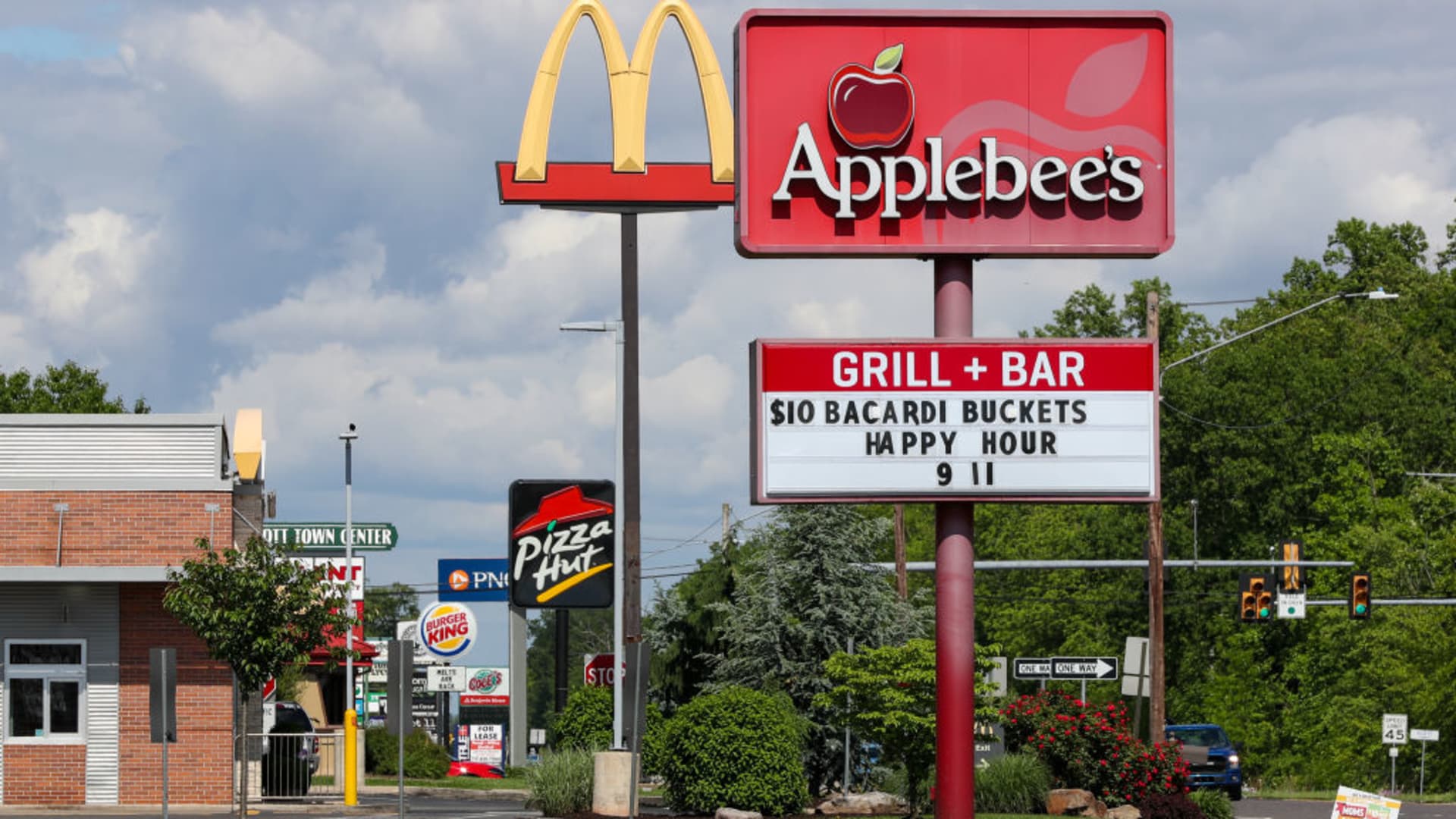
In 2025, value became the dominant theme across the U.S. restaurant industry. Chains like McDonald’s and Taco Bell expanded their value menus and promotions to attract price-sensitive consumers, while casual and fast-casual competitors sought to balance quality with affordability. Research from Technomic shows that diners across income levels are increasingly focused on getting more for their money, making “value” a key factor in dining decisions.
Rising costs—from rent to child care—combined with economic uncertainty, higher tariffs, and layoffs, have prompted consumers earning less than $40,000 annually to eat out less frequently. The EY-Parthenon U.S. Consumer Sentiment Survey indicates nearly 25% of respondents plan to cut spending on restaurants first, ahead of entertainment, travel, or home maintenance.
Fast food chains lead the charge
McDonald’s illustrates the shift toward value. After facing criticism over rising prices, the chain launched $5 value meals and buy-one-get-one-for-$1 promotions, while extending its Extra Value Meals to offer a 15% saving on combos. These moves helped lift U.S. same-store sales by 2.4% in the third quarter, proving that value appeals across income brackets.
Taco Bell followed suit, rolling out $5 and $9 Luxe Cravings boxes, converting many customers to higher-priced combos while maintaining a perception of affordability. Operators rely on value items to drive traffic, supplementing margins with add-ons like McFlurries or premium entrees. McDonald’s supported its franchisees with corporate marketing funds and co-investment in promotions, although this support is set to end in early 2026, transitioning to stricter performance accountability.
Casual and fast-casual chains tread carefully
While fast food chains compete on price, fast-casual operators like Chipotle, Cava, and Sweetgreen largely resisted deep discounts, prioritizing quality and brand positioning. Promotions like buy-one-get-one offers were targeted or seasonal, avoiding a full-scale “value war” that could erode margins.
The strategy has shown mixed results. Sweetgreen offered discounted loyalty meals, Chipotle emphasized relative value compared with competitors, and Panera experimented with a “barbell menu” offering both low- and high-priced options. Still, fast-casual chains face challenges in delivering value without reducing profitability, and some observers warn they risk losing traffic if unable to match lower-priced alternatives.
Casual dining finds a winning formula
Brinker International’s Chili’s has emerged as an early winner. The $10.99 Big Smasher meal and Triple Dipper promotions drove double-digit same-store sales and traffic growth throughout 2025. The chain successfully attracted both high-income diners trading down from fine dining and consumers earning under $60,000, demonstrating the broad appeal of well-positioned value offerings.
Darden Restaurants, which owns Olive Garden and LongHorn Steakhouse, also leveraged promotions and smaller portion options while keeping price increases below inflation, boosting same-store sales by 4.3% in its latest quarter.
Looking ahead to 2026
The value-focused strategy is unlikely to change next year. Rising commodity costs, including beef, and an uncertain labor market mean restaurants will continue balancing prices with customer retention. Technomic anticipates a tougher start to the year, with January and February traffic likely to dip due to seasonal factors and consumer budget constraints.
Even value leaders like Chili’s and Darden must remain vigilant. As underperforming competitors attempt to capture market share, chains will need to refine promotions, manage margins, and deliver clear value propositions to retain their edge.
In today’s market, consumers weigh price, quality, and service equally. The restaurant industry’s ability to navigate this new reality will define winners and losers in 2026 and beyond.
.webp)
Popular articles



Subscribe to unlock premium content
Iceland’s Geothermal Revolution

Bali’s Digital Detox Revolution

Step Into the Future of Art

Iceland’s Geothermal Revolution
Bali’s Digital Detox Revolution
Iceland’s Geothermal Revolution