U.S. Slaps Visa Bans on Ex-EU Digital Chief, Triggering Transatlantic Clash Over Online Speech

U.S. Slaps Visa Bans on Ex-EU Digital Chief, Triggering Transatlantic Clash Over Online Speech
By
Junia Wells
Last updated:
December 25, 2025
First Published:
December 25, 2025

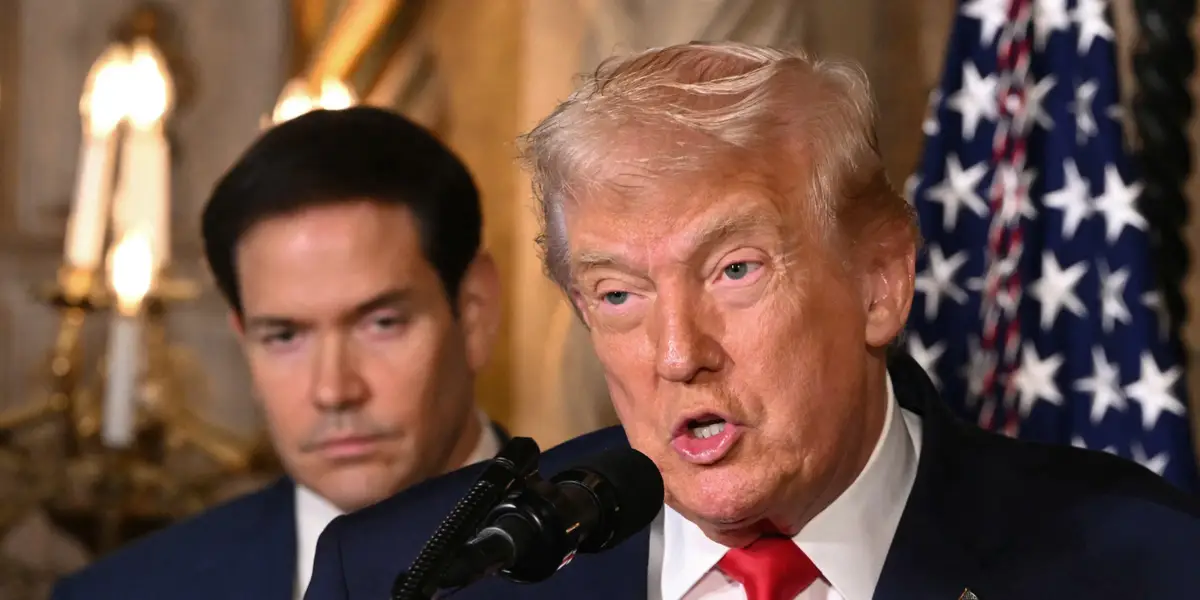
Photo: Business Insider
A New Flashpoint in U.S.–EU Relations
Tensions between Washington and Brussels escalated sharply after the U.S. government imposed visa restrictions on five individuals accused of promoting censorship against American platforms and voices. Among those targeted is Thierry Breton, the former European Union commissioner who played a central role in shaping the bloc’s Digital Services Act, one of the world’s most influential technology regulations.
The decision has ignited a fierce political response across Europe, with senior officials framing the move as an attack on democratic lawmaking and a challenge to Europe’s right to regulate its digital economy.
Why the U.S. Took Action
According to the U.S. State Department, the visa bans are aimed at individuals alleged to have coordinated efforts to pressure American technology companies to restrict, demonetize, or suppress certain viewpoints. Secretary of State Marco Rubio said the measures were intended to counter what he described as a growing global effort to impose foreign censorship standards on U.S. companies and users.
U.S. officials argue that such actions could carry serious foreign policy consequences, particularly when they affect American firms operating abroad. The administration has positioned the bans as part of a broader effort to draw a firm line against what it calls extraterritorial censorship of American speech.
The Role of the Digital Services Act
At the center of the controversy is the EU’s Digital Services Act, which requires major technology platforms such as Google, Meta, and other large online services to more aggressively police illegal content. Companies that fail to comply can face fines reaching up to 6 percent of global annual revenue, a penalty structure that has captured the attention of regulators and executives worldwide.
Supporters of the law say it modernizes digital governance by holding platforms accountable for harmful and illegal activity online. Critics in the U.S., however, argue that the law creates incentives for over moderation and could indirectly affect speech originating outside Europe.
Breton, who served as EU commissioner from 2019 to 2024, rejected the accusations outright. Responding publicly, he questioned whether the U.S. was reviving tactics reminiscent of Cold War era political intimidation and emphasized that the DSA was approved overwhelmingly by the European Parliament and unanimously by all 27 EU member states.
Europe Pushes Back
European leaders reacted swiftly and forcefully. The European Commission issued a statement condemning the visa bans and reaffirming that freedom of expression remains a core value shared by democratic nations on both sides of the Atlantic. Officials stressed that Europe’s digital rules are applied uniformly and are designed to create a fair and safe online marketplace, not to target any specific country.
European Commission President Ursula von der Leyen publicly underscored that freedom of speech is foundational to European democracy and vowed that the bloc would continue to protect it. French President Emmanuel Macron went further, describing the U.S. measures as coercive and an attempt to undermine Europe’s digital sovereignty. He reiterated that the DSA was adopted through a legitimate democratic process and applies equally to all companies operating in the EU.
Who Else Was Targeted
In addition to Breton, four figures linked to anti-disinformation initiatives were also affected by the visa restrictions. Among them are senior leaders associated with HateAid, a Germany based organization involved in combating online harassment and disinformation. U.S. officials later identified the individuals publicly, framing their work as part of broader campaigns that allegedly influenced content moderation policies affecting American speech.
The individuals impacted have not all responded publicly, but the move has raised concerns among civil society groups that international cooperation on digital safety could be chilled by escalating political pressure.
A Broader Debate Over Tech Regulation
The dispute comes as the U.S., EU, and U.K. pursue different approaches to regulating Big Tech. Europe’s Digital Services Act and the U.K.’s Online Safety Act are among the most comprehensive attempts to rein in platform power, improve online safety, and protect children. These laws include measures such as age verification requirements and stricter oversight of harmful content.
U.S. officials have increasingly criticized these frameworks, particularly where they believe domestic laws are being applied beyond national borders. The visa bans signal that disagreements over digital governance are no longer confined to policy debates but are now spilling into diplomatic and travel restrictions.
What Comes Next
The European Commission has formally requested clarification from U.S. authorities, and the issue is expected to feature prominently in upcoming transatlantic discussions. While both sides emphasize shared democratic values, the episode highlights a widening gap in how governments define the balance between free expression, platform responsibility, and state regulation.
As global technology companies navigate overlapping legal regimes, the clash underscores a deeper question facing policymakers worldwide: who ultimately sets the rules for speech and safety in a borderless digital economy.
.webp)
Popular articles



Subscribe to unlock premium content
Iceland’s Geothermal Revolution

Bali’s Digital Detox Revolution

Step Into the Future of Art

Iceland’s Geothermal Revolution
Bali’s Digital Detox Revolution
Iceland’s Geothermal Revolution