U.S. Court Decision Weakens Tariff Pressure, Clearing Path for India’s Continued Russian Oil Imports

U.S. Court Decision Weakens Tariff Pressure, Clearing Path for India’s Continued Russian Oil Imports
By
David Goldfarb
Last updated:
February 25, 2026
First Published:
February 25, 2026

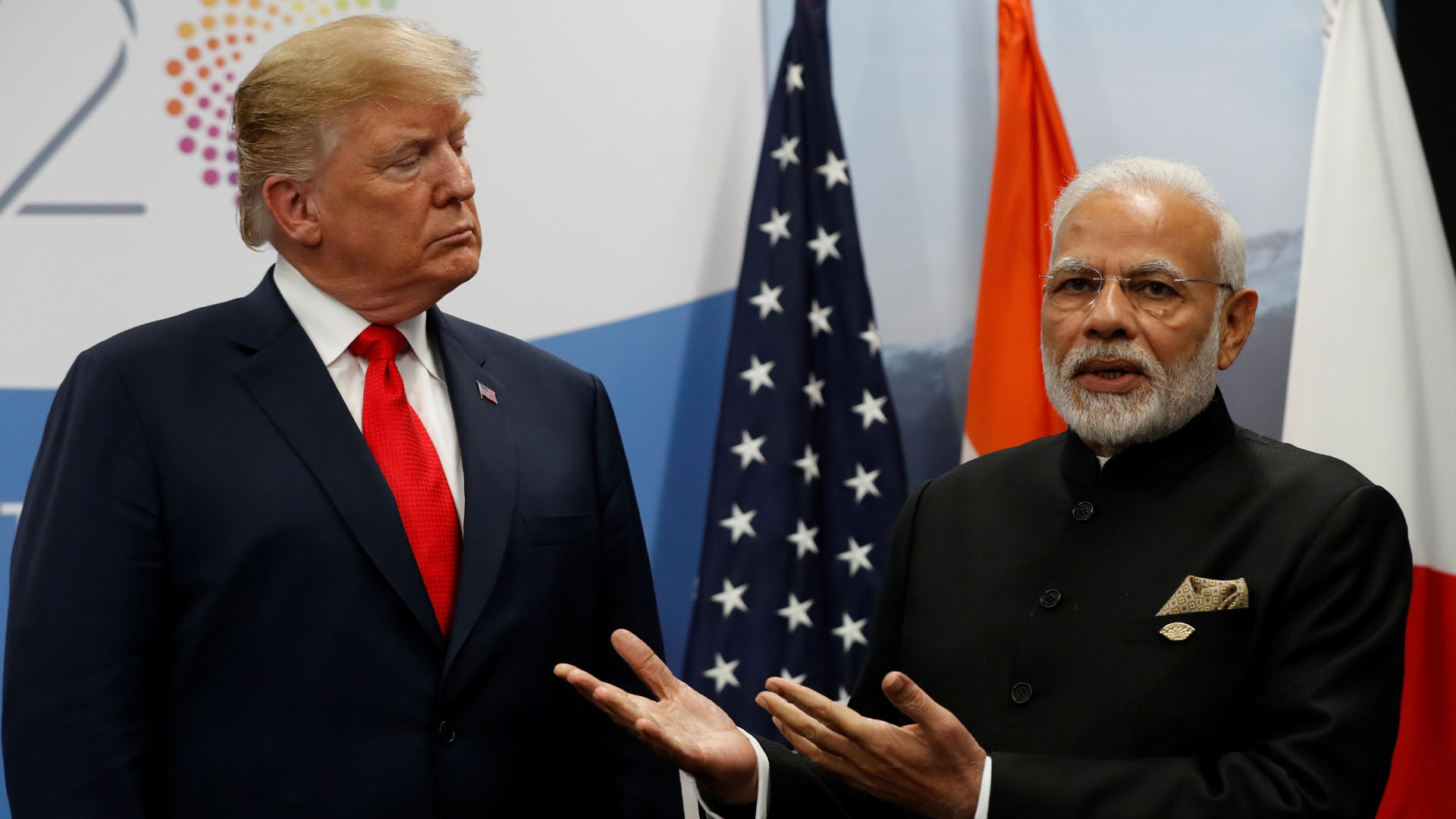
A recent ruling by the U.S. Supreme Court has significantly curtailed the ability of Donald Trump to impose sweeping import tariffs, a development that analysts say will likely allow India to maintain its purchases of Russian crude.
The decision effectively narrows Washington’s leverage over New Delhi’s energy policy, reinforcing India’s long-standing strategy of sourcing oil based primarily on price competitiveness and supply security rather than geopolitical alignment.
Import Trends Show Moderation but Not Exit
Data from energy analytics firm Kpler indicates that India imported roughly 1.16 million barrels per day (mbd) of Russian oil in February, a noticeable drop from the 2025 average of 1.71 mbd.
Market signals suggest refiners have exercised caution in recent months, yet industry expectations point to steady imports in the range of 800,000 to 1 million barrels per day going forward. Even at the lower end of that band, Russia would remain one of India’s largest suppliers, reflecting the persistent cost advantage of discounted Urals crude.
Legal Ruling Reshapes Trade Leverage
The court concluded that sweeping tariffs enacted under emergency economic powers exceeded presidential authority, limiting the scope for punitive trade actions tied to non-trade issues such as energy purchases.
This constraint reduces the likelihood of new tariff threats specifically targeting India’s Russian oil imports. Policy analysts argue that while diplomatic pressure may continue, the legal framework now makes broad unilateral trade penalties more difficult to deploy.
Background: Tariffs and Strained Relations
Energy trade has been a contentious issue between Washington and New Delhi over the past year. At one point, U.S. tariffs on Indian goods climbed to as high as 50%, combining a 25% punitive duty linked to Russian oil purchases with existing reciprocal tariffs.
Following negotiations, those rates were reduced to about 18%, easing pressure on Indian exporters. Although U.S. officials signaled expectations that India would diversify away from Russian crude, no binding commitment was formally written into bilateral agreements.
India’s Energy Strategy Remains Price-Driven
Economists note that India’s import decisions are rooted in three core priorities: affordability, diversification, and supply reliability. Discounted Russian barrels have often traded $10 to $20 per barrel below global benchmarks, creating substantial savings for refiners and helping moderate domestic fuel costs.
At the same time, India continues to expand purchases from other suppliers. The country imports 200,000 to 300,000 barrels per day of U.S. crude, maintaining energy ties with Washington while avoiding dependence on any single source.
As of early 2026, Russia remains India’s largest crude supplier, while the U.S. ranks among the top ten, underscoring the multipolar nature of India’s energy portfolio.
Trade Policy Shifts and Global Tariffs
In the wake of the ruling, the administration moved toward broader trade measures, including a blanket global tariff in the 10% to 15% range, which analysts say dilutes the relative impact of country-specific penalties.
For India, this means that any competitive advantage gained through bilateral tariff reductions may be partially offset by the wider global levy, reshaping export dynamics without directly altering energy trade flows.
Market and Diplomatic Outlook
Industry observers expect the U.S. to tread cautiously in pressing India to scale back Russian imports, particularly given the rapid growth of U.S. energy exports to the Indian market and the strategic importance of the bilateral relationship.
With trade negotiators from both countries preparing to resume talks, the near-term outlook points to a pragmatic equilibrium: India continues purchasing discounted Russian crude while gradually expanding imports from the U.S. and Middle Eastern producers.
Bottom Line
The court’s decision marks a pivotal shift in the intersection of trade law and energy geopolitics. By limiting tariff-based pressure, it effectively preserves India’s flexibility to balance economic interests with diplomatic considerations.
As global oil markets remain volatile and supply chains continue to evolve, India’s diversified sourcing strategy is likely to persist, keeping Russian crude an important—though gradually fluctuating—component of its energy mix.
.webp)
Popular articles



Subscribe to unlock premium content
Visa and the Invisible Engine Powering Global Digital Money

Disney’s Streaming Empire Built on Regional Storytelling Power

The Slow Revolution of Steel and Memory Across Eastern Europe

Visa and the Invisible Engine Powering Global Digital Money
Disney’s Streaming Empire Built on Regional Storytelling Power
Visa and the Invisible Engine Powering Global Digital Money