Trump’s Greenland Push Escalates U.S.–China Tensions in the Arctic

Trump’s Greenland Push Escalates U.S.–China Tensions in the Arctic
By
Junia Wells
Last updated:
January 9, 2026
First Published:
January 9, 2026


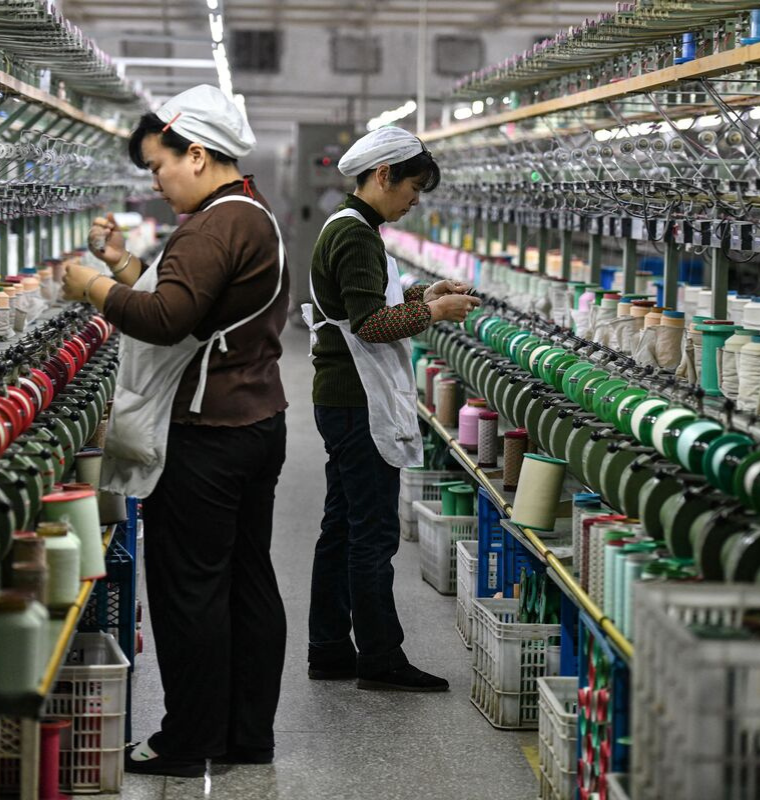
Photo: South China Morning Post
A Strategic Shockwave From Washington
U.S. President Donald Trump’s renewed push to bring Greenland under American control has injected fresh volatility into already strained U.S.–China relations. Coming on the heels of a dramatic U.S. operation in Venezuela, the Greenland rhetoric has heightened concerns in Beijing that Washington is prepared to assert unilateral power to secure strategic assets across critical regions.
Trump has repeatedly argued that Greenland is essential to U.S. national security, citing growing Chinese and Russian activity in the Arctic. Speaking to reporters aboard Air Force One, he described the island as strategically indispensable and warned that rival powers were expanding their presence across Arctic sea lanes and waters surrounding Greenland.
The White House reinforced that message, stating that the administration views Greenland as central to deterring competitors in the Arctic and that multiple policy options remain under consideration. The comments immediately triggered pushback from Beijing, which accused Washington of exploiting the “China threat” narrative to justify geopolitical expansion.
Why Greenland Matters More Than Ever
Greenland sits at the crossroads of security, resources, and future trade routes. As Arctic ice continues to recede, the region is rapidly transforming from a frozen frontier into a viable economic corridor. Control over infrastructure, ports, and airspace in Greenland offers leverage over emerging maritime routes that could reshape global shipping.
For China, the stakes are substantial. Beijing formally labeled itself a “near-Arctic state” in its 2018 Arctic policy, asserting its right to participate in Arctic governance, resource development, and scientific research. Since then, Chinese companies and institutions have sought exposure to Arctic energy projects, logistics networks, and research facilities across the region.
Analysts note that any U.S. move to assert control over Greenland would directly threaten China’s long-term commercial and strategic interests, particularly those tied to minerals and shipping.
Minerals, Energy, and Infrastructure at the Core
Greenland is rich in rare earth elements, uranium, and zinc—materials critical to electric vehicles, renewable energy systems, semiconductors, and defense technologies. Several deposits on the island rank among the largest globally, making Greenland a focal point in the race to secure resilient supply chains outside China.
Chinese firms have previously attempted to gain footholds in Greenland’s mining and infrastructure sectors, though many efforts have faced political and regulatory resistance. Denmark, which retains authority over Greenland’s foreign and security policy, has blocked high-profile Chinese-linked acquisitions on national security grounds. A notable airport construction bid worth roughly $560 million was abandoned in 2019 after Denmark stepped in to finance the project instead.
More recently, environmental regulations and rising geopolitical risks have slowed momentum further. The Kvanefjeld rare earth and uranium project, partly backed by a Chinese state-affiliated company, was halted after Greenland reinstated restrictions on uranium mining. By mid-2025, multiple research institutions estimated that most Chinese-backed resource projects in Greenland had been paused or canceled.
The Arctic Shipping Race
Beyond minerals, shipping routes are a central driver of China’s Arctic ambitions. Melting ice has opened shorter passages between Asia and Europe, cutting transit times dramatically. China launched its first Arctic shipping route to Europe in late 2025, reducing travel time to approximately 20 days—nearly half the duration of the Suez Canal route.
These routes underpin Beijing’s “Polar Silk Road,” an extension of its broader trade and infrastructure strategy. With China–EU trade growing more than 8 percent year over year in 2025, faster and more reliable Arctic shipping lanes offer significant commercial upside while reducing dependence on chokepoints vulnerable to geopolitical disruption.
U.S. defense officials, however, view these developments through a security lens. Washington has increasingly flagged China’s Arctic research programs, satellite facilities, and joint activities with Russia as potential dual-use operations with military implications.
Diplomatic and Military Implications
Experts believe Beijing would respond forcefully—though not necessarily militarily—to any U.S. attempt to take control of Greenland. Likely responses include coordinated diplomatic pressure, challenges through international institutions, and deeper strategic alignment with Russia in Arctic affairs.
Chinese policy advisors have warned that unilateral moves in the Arctic risk destabilizing governance frameworks built around multilateral cooperation and respect for sovereignty. At the same time, Beijing is expected to emphasize support for Danish and Greenlandic autonomy, positioning itself as a defender of international norms in contrast to U.S. assertiveness.
A High-Risk Turning Point
The Greenland issue underscores a broader shift in global competition, where geography, resources, and infrastructure are becoming as critical as technology and finance. As the Arctic opens, the contest for influence is accelerating, and Greenland has emerged as one of its most consequential pressure points.
With U.S.–China rivalry expanding into new domains and Arctic assets gaining strategic weight, the situation marks a potentially defining chapter in polar geopolitics—one where missteps could carry global economic and security consequences well beyond the ice.

Popular articles


Subscribe to unlock premium content
Iceland’s Geothermal Revolution
Bali’s Digital Detox Revolution

Step Into the Future of Art

Iceland’s Geothermal Revolution
Bali’s Digital Detox Revolution
Iceland’s Geothermal Revolution