
Trump Unveils Greenland Deal Framework With NATO Centered on Minerals and Defense Cooperation

Trump Unveils Greenland Deal Framework With NATO Centered on Minerals and Defense Cooperation
By
Alina Sinclair
Last updated:
January 22, 2026
First Published:
April 25, 2026

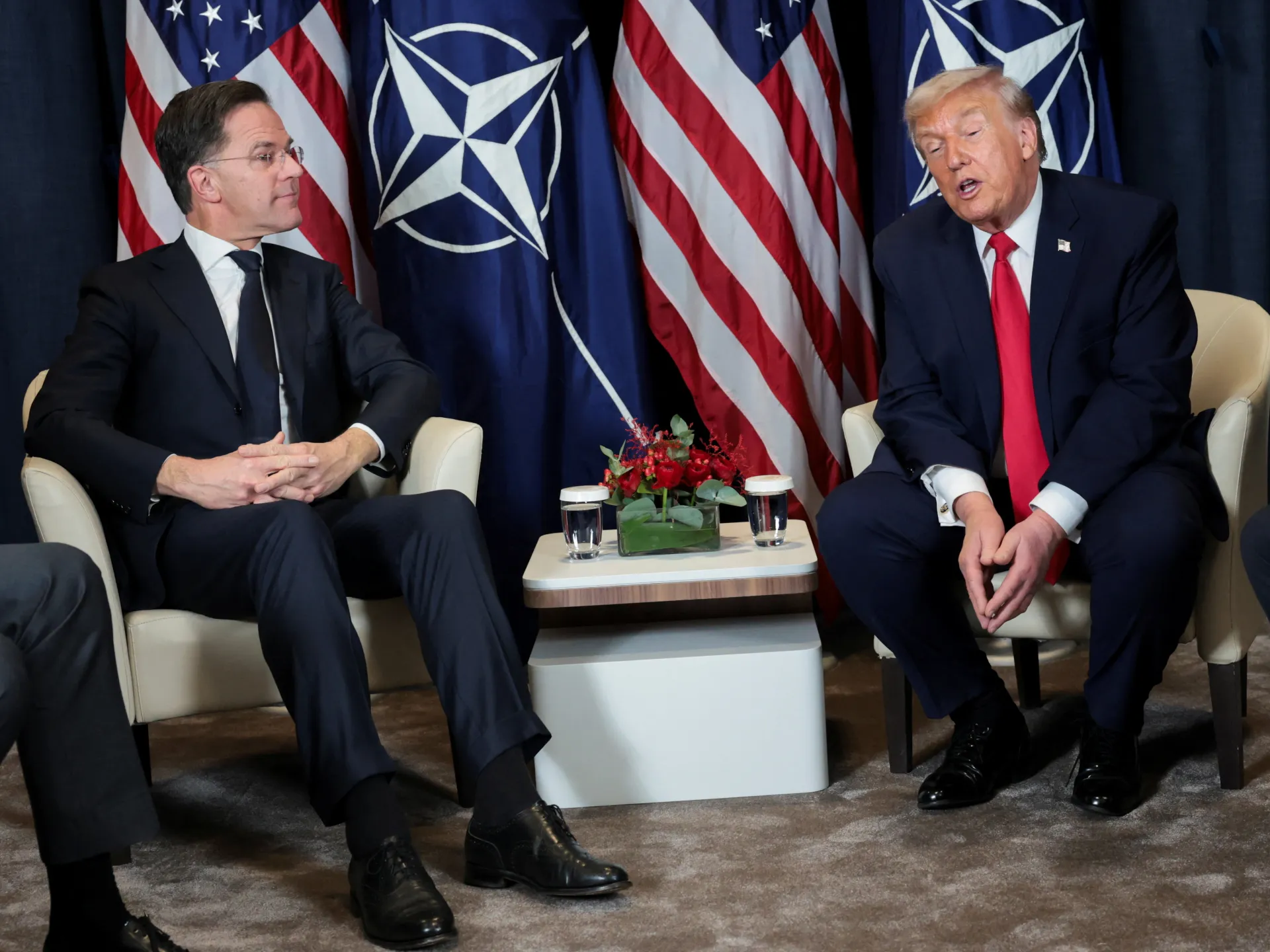
Photo: Al Jazeera
A strategic framework with long-term ambitions
President Donald Trump said the framework agreement he has reached with NATO regarding Greenland focuses heavily on mineral access and joint defense cooperation, signaling a major strategic shift in how the U.S. and its allies view the Arctic region.
Speaking in an interview at the World Economic Forum in Davos, Trump described the arrangement as a lasting one, emphasizing that it would not be temporary or transactional in nature. When asked how long the agreement would remain in effect, he responded that it would last “forever,” underscoring the administration’s intent to lock in long-term strategic advantages.
Mineral rights and the Golden Dome at the core
According to Trump, the framework gives the U.S. and its European allies a role in Greenland’s mineral development while also integrating the territory into broader defense initiatives, including participation in the Golden Dome program.
He said Greenland and allied partners would be involved alongside the U.S. in both mineral rights and defense collaboration, highlighting the dual economic and security dimensions of the deal. Trump described the arrangement as complex, referring to it as a “concept of a deal,” and declined to outline specific legal or commercial terms.
No military force, no immediate tariffs
Earlier in the day, Trump ruled out using military force to acquire Greenland and called instead for immediate negotiations over the island’s future status. Shortly afterward, he said he had reached a preliminary framework with NATO Secretary General Mark Rutte.
As part of the broader reset in relations, Trump said he would not move forward with previously threatened tariffs on Denmark and other European countries that were scheduled to take effect on Feb. 1. The decision helped ease market concerns about escalating trade tensions between the U.S. and Europe.
Why Greenland matters economically
Greenland holds enormous strategic value due to its natural resources. The island ranks eighth globally in rare earth reserves, making it one of the most resource-rich territories in the world relative to its size. Rare earth elements are essential for producing high-strength magnets used in electric vehicles, wind turbines, smartphones, semiconductors, and advanced weapons systems.
Trump has made the development of a secure rare earth supply chain a central pillar of his industrial and national security policy. The U.S. currently relies heavily on China for rare earth processing and refining, a dependence that policymakers across both parties have increasingly described as a strategic vulnerability.
By securing access to Greenland’s reserves through allied cooperation rather than unilateral action, the administration aims to diversify supply chains while keeping production within the Western security bloc.
Defense and Arctic security implications
Beyond minerals, the inclusion of Greenland in the Golden Dome initiative points to heightened U.S. focus on Arctic and missile defense capabilities. Greenland’s geographic position makes it strategically critical for early-warning systems, satellite coverage, and transatlantic defense coordination.
Analysts note that closer integration of Greenland into NATO defense planning could strengthen the alliance’s posture in the Arctic at a time when competition with Russia and China in the region is intensifying.
Alliance tensions and recalibration
Trump’s earlier public push to acquire Greenland, a self-governing territory within the Kingdom of Denmark, had raised concerns that the issue could strain NATO unity. European leaders had warned that unilateral moves could undermine trust within the alliance.
By shifting toward a negotiated framework involving NATO and explicitly ruling out the use of force, the administration appears to be recalibrating its approach to avoid fracturing the alliance while still advancing U.S. strategic objectives.
A long-term bet on resources and security
While many details remain undisclosed, the Greenland framework reflects Trump’s broader strategy of linking trade, industrial policy, and national security. By combining mineral access with defense cooperation, the deal positions Greenland as a cornerstone of Western efforts to secure critical resources and strengthen Arctic defense over the coming decades.
If finalized, the agreement could reshape rare earth supply chains, deepen NATO collaboration in the Arctic, and mark one of the most consequential geopolitical developments involving Greenland in modern history.
.webp)
Popular articles



Subscribe to unlock premium content
Crypto in the Arctic
Iceland’s Seaweed Revolution
Private Island Rentals for Corporate Retreats Hit $1 Billion

Crypto in the Arctic
Iceland’s Seaweed Revolution
Crypto in the Arctic


