Trump Signals Iran Is Under Greater Pressure as Nuclear Talks Resume Amid Rising U.S. Military Presence

Trump Signals Iran Is Under Greater Pressure as Nuclear Talks Resume Amid Rising U.S. Military Presence
By
David Goldfarb
Last updated:
February 25, 2026
First Published:
February 25, 2026

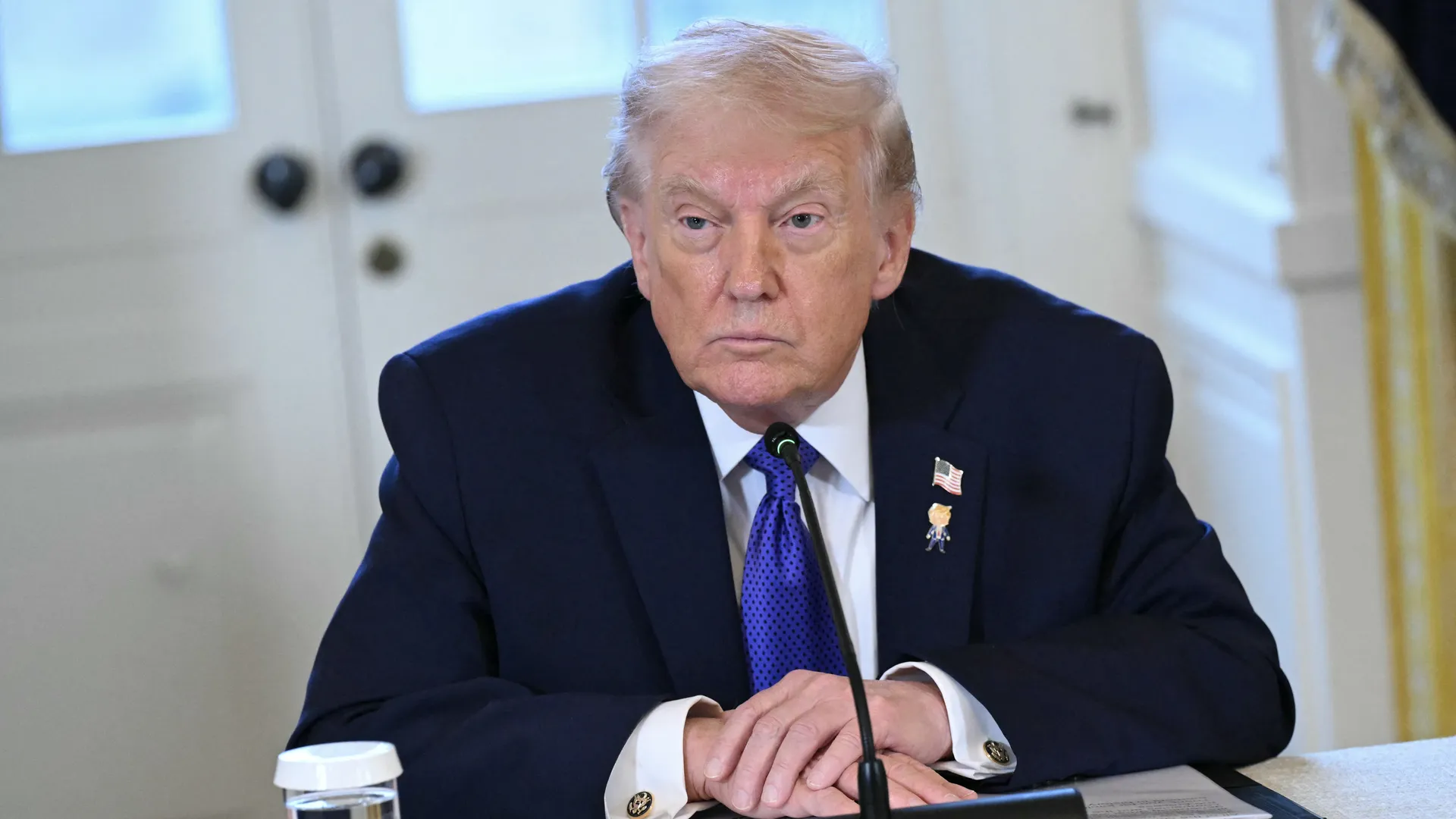
Photo: Axios
Donald Trump said Iran appears more eager to secure a nuclear agreement than the United States, as diplomatic efforts intensify alongside a noticeable buildup of American forces across the Middle East. The remarks came ahead of another round of negotiations focused on Tehran’s nuclear program, highlighting the fragile balance between diplomacy and rising geopolitical tension.
Negotiations Enter Another Critical Phase
Officials from United States and Iran are scheduled to meet in Geneva for a third round of talks aimed at reviving a framework that would limit Iran’s nuclear activities in exchange for sanctions relief.
The central obstacle remains Tehran’s reluctance to provide a categorical commitment that it will never pursue nuclear weapons. U.S. negotiators continue to push for explicit assurances, while Iran maintains that its program is intended for civilian purposes.
Trump reiterated his preference for a diplomatic resolution but emphasized that progress hinges on clearer commitments from Tehran, describing the absence of firm guarantees as the primary barrier to an agreement.
Iran’s Position and Proposed Compromises
Iranian Foreign Minister Abbas Araghchi said a draft proposal is still under review by political leadership in Tehran. The framework is expected to incorporate measures addressing both sides’ concerns, with negotiators aiming to finalize a text that could enable a swift deal if consensus emerges.
Iran has signaled openness to several potential steps, including exporting a portion of its highly enriched uranium stockpile, diluting remaining material, and participating in a regional enrichment arrangement. In return, Tehran is seeking formal recognition of its right to enrich uranium and a broad rollback of economic sanctions.
Escalating Military Posture
Diplomacy is unfolding against a backdrop of rising security tensions. The United States has increased its military readiness in strategic locations across the region, while contingency planning for possible limited strikes has been publicly discussed.
Precautionary measures have also extended to diplomatic operations, with nonessential personnel ordered to leave certain U.S. facilities in the region as a safeguard against potential escalation.
Iranian President Masoud Pezeshkian described earlier talks as producing “encouraging signals,” but cautioned that the country remains prepared for all outcomes, reflecting persistent mistrust between the two sides.
Market Reaction and Oil Price Dynamics
Energy markets have responded quickly to the heightened geopolitical risk.
- West Texas Intermediate crude rose about 0.66% to roughly $66 per barrel
- Brent Crude futures climbed a similar margin to around $71 per barrel
Analysts note that a breakdown in negotiations or any military confrontation could push U.S. crude prices beyond $70, with upside scenarios potentially testing $80 per barrel. However, historically, rallies driven primarily by geopolitical shocks tend to fade once immediate risks subside.
What Comes Next
The coming weeks will be pivotal as negotiators attempt to bridge gaps on enrichment limits, verification mechanisms, and sanctions relief timelines.
A successful agreement could stabilize regional tensions and ease upward pressure on energy prices, while failure would likely heighten volatility across global markets and reinforce the strategic rivalry shaping Middle East geopolitics.
Bottom Line
Trump’s comments underscore Washington’s view that time and economic pressure favor the United States, even as both sides publicly express interest in diplomacy. With negotiations continuing and military readiness increasing simultaneously, the situation remains fluid, leaving global energy markets and geopolitical observers closely watching for any sign of breakthrough or escalation.
.webp)
Popular articles



Subscribe to unlock premium content
Colombia’s Coffee Regions Are Becoming Luxury Travel Destinations Hidden in the Highlands

Chile’s Desert Skies Are Becoming the World’s Most Exclusive Destination
The Rise of Heritage Manor Stays in the United Kingdom Countryside

Colombia’s Coffee Regions Are Becoming Luxury Travel Destinations Hidden in the Highlands
Chile’s Desert Skies Are Becoming the World’s Most Exclusive Destination
Colombia’s Coffee Regions Are Becoming Luxury Travel Destinations Hidden in the Highlands