Trump Approves Funding Bill Restoring Federal Operations After Record Shutdown

Trump Approves Funding Bill Restoring Federal Operations After Record Shutdown
By
Leah Rosenfeld
Last updated:
November 13, 2025
First Published:
November 30, 2025

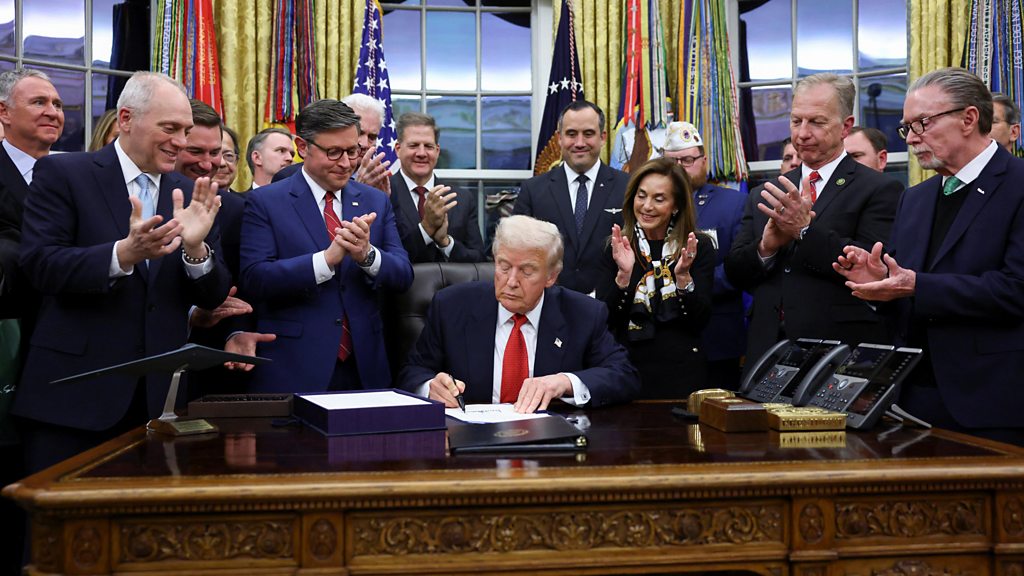
Photo: BBC
The Longest Shutdown in U.S. History Comes to an End
After 43 tense days that marked the longest government shutdown in American history, President Donald Trump has officially signed a bipartisan funding bill into law, reopening federal agencies and allowing more than one million furloughed federal employees to return to work.
The legislation, passed late Wednesday evening, secured approval from the House of Representatives in a 222–209 vote, shortly after clearing the Senate. The short-term funding bill will keep the government running through the end of January, giving lawmakers a narrow window to reach a broader budget agreement.
Speaking from the Oval Office, Trump accused Democrats of attempting to “extort our country,” while emphasizing the human toll the shutdown had taken. “People were hurt so badly,” he said. “We can never let this happen again.”
The Political Battle Behind the Shutdown
The shutdown, which began on October 1, stemmed from a bitter standoff over extending the Affordable Care Act (ACA) tax credits — subsidies that help roughly 20 million Americans afford health insurance. Senate Democrats had refused to approve a funding bill that excluded these extended benefits, forcing government operations to grind to a halt for nearly a month and a half.
Republican leaders, including House Speaker Mike Johnson (R-La.), rallied behind the bill to end the stalemate. “My friends, let’s get this done,” Johnson said before the final vote. Only two Republican representatives — Thomas Massie of Kentucky and Greg Steube of Florida — opposed the measure.
On the Democratic side, six members broke ranks and voted against the funding bill, citing frustration over the lack of ACA subsidy protections.
The Terms of the Deal
The final agreement funds all federal agencies, ensures back pay for furloughed workers, and restores benefits programs that had been frozen during the shutdown. Among the key programs reinstated is SNAP, the federal food assistance initiative that supports 42 million Americans.
The Department of Transportation also confirmed the lifting of air traffic restrictions, which had led to the cancellation of roughly 6% of scheduled flights by Tuesday — a figure that was expected to rise to 10% by the end of the week had the shutdown continued.
Federal employees have been instructed by the Office of Management and Budget to return to work starting Thursday, with back pay expected to be processed within days.
ACA Subsidies and the Cost of Inaction
The temporary funding deal postpones, but does not resolve, the dispute over ACA subsidies. Without an extension, millions could face sharp increases in health insurance premiums as early as next year.
Representative Rosa DeLauro (D-Conn.) warned that premiums could “double or even triple” for many families, with as many as 2 million Americans projected to lose their health plans by 2026 if Congress fails to act.
To secure Democratic support, Senate Republicans agreed to allow a vote in December on legislation addressing ACA tax credits — a move seen as a partial victory for Democrats but one that falls short of guaranteeing long-term stability.
Fallout and Future Implications
The shutdown’s economic toll has been significant. Analysts estimate that the federal work stoppage cost the U.S. economy billions in lost productivity, delayed contracts, and halted services. Small businesses relying on federal permits and contractors experienced ripple effects that may take months to recover from.
Republican leaders, including House Majority Leader Steve Scalise (R-La.), criticized Democrats for prolonging the impasse. “We waited 42 days where time and time again, Democrats, to appease their most radical base, voted to keep that government shut down,” he said, accusing them of prioritizing political optics over economic stability.
Despite the deal, Trump renewed his call for the Senate to eliminate the filibuster — a procedural hurdle requiring 60 votes to pass most legislation — arguing that it prevents swift government action in times of crisis.
Looking Ahead
The agreement represents only a temporary fix, with another funding deadline looming at the end of January. Lawmakers face the challenge of negotiating a sustainable budget that addresses ongoing disputes over health care, entitlement spending, and defense priorities.
For millions of Americans, the reopening of government offices offers much-needed relief. But for Washington, the episode underscores a deepening partisan divide — one that threatens to bring the government to a standstill once again if compromise remains elusive.
As federal employees return to their desks and agencies resume normal operations, the nation breathes a cautious sigh of relief. Yet, the question remains — how long before the next shutdown showdown begins?

Popular articles


Subscribe to unlock premium content
London’s Gourmet Playgrounds

From Bean to Buzz in Thailand

The Secret Life of Pop-Up Luxury Restaurants in Paris

London’s Gourmet Playgrounds
From Bean to Buzz in Thailand
London’s Gourmet Playgrounds