Trade War Troubles Loom for Korean Air, but CEO Stays Optimistic Amidst Turbulence

Trade War Troubles Loom for Korean Air, but CEO Stays Optimistic Amidst Turbulence
By
David Goldfarb
Last updated:
May 1, 2025
First Published:
August 3, 2025

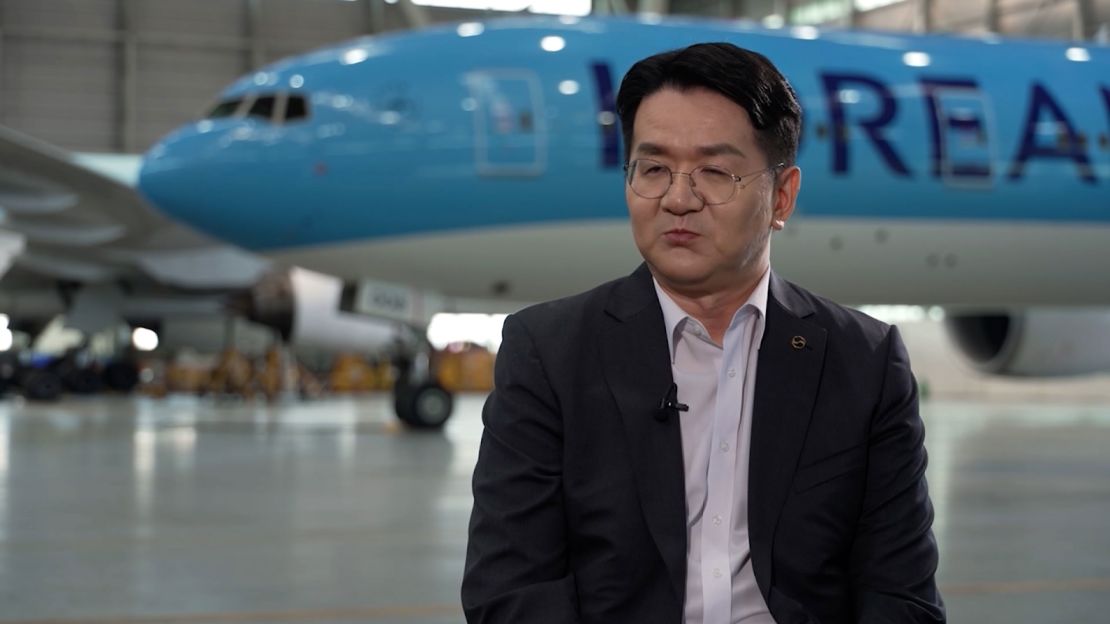
Korean Air CEO Walter Cho in Incheon, South Korea, on Monday. | Charlie Miller/CNN
The Impact of the US-China Trade War on Korean Air
The US-China trade war continues to create ripples in the global economy, and one of the most affected sectors is aviation. Walter Cho, the CEO of Korean Air, one of the world’s leading airlines, has recently expressed concerns about the trade dispute's impact on some of the airline's busiest international routes.
In an interview with CNN, Cho revealed that the carrier is already noticing a decrease in passenger volumes on key trans-Pacific and European routes, with a slight 5% drop compared to last year. While this may seem minor, it could have a significant effect on Korean Air’s bottom line.
“We’re looking at a potential revenue loss of between $50 million to $100 million annually if this trend continues into 2025,” Cho remarked, underscoring the delicate position the airline finds itself in.
South Korea’s position between two of the world’s largest economies, the US and China, places its industries, including aviation, in a vulnerable spot. As Cho put it, “We rely heavily on both economies. The trade war is creating uncertainty, and we're preparing for its continued impact on our business.”
Challenges for the Global Aviation Industry
Korean Air is not alone in its struggles. Several major US airlines, including Delta, American Airlines, and Southwest, have also voiced concerns about declining revenues due to the trade tensions. Delta, for instance, reported in April that growth had stalled, and it had suspended its full-year financial forecasts due to ongoing uncertainties.
Despite these challenges, Cho remains optimistic. He believes that the trade war will soon come to an end and is confident that Korean Air will manage to remain profitable. He also attributes some of the current downturn in passenger traffic to heightened competition in the wake of the post-COVID travel surge.
Maintaining US Routes and Expanding Fleet
While other US-based carriers are cutting back on their flight schedules, Korean Air is committed to maintaining its comprehensive route network to the United States. Cho confirmed that the airline would proceed with plans to reintroduce its Airbus A380 flights between Seoul and Los Angeles, as well as Boeing 747 flights to Atlanta. Reservation data for these routes shows strong demand, especially for summer travel, with flights already filling up from mid-June through early September.
“We can’t just change our schedule based on a 5-10% drop in traffic. We’ve built these routes for the long term, and we plan to keep them intact,” Cho added.
The Threat to Cargo Operations
While passenger traffic is an immediate concern, Korean Air is also bracing for potential disruptions in its lucrative cargo operations. Cargo constitutes about 40% of the airline's business, and the ongoing tariff issues could severely impact this segment. During the pandemic, Korean Air shifted many of its passenger planes to cargo freighters to adapt to the disruption in air travel, but it may need to adjust its cargo operations again in the face of the current trade war.
“The trade war could hit our cargo business hard, especially when tariffs impact Korea and China,” Cho said. “However, we’re not planning to downsize our cargo operations. Instead, we’ll focus on markets like Europe and other regions where demand remains strong, and we’re seeing increased trade between China and Canada.”
The Role of Semiconductors and Trade Uncertainty
Korean Air’s cargo business is particularly vulnerable due to South Korea’s high volume of semiconductor exports, which play a significant role in its economy. Although US tariffs have largely spared semiconductors and other tech products, uncertainties about future tariff policies continue to loom large, according to Shukor Yusof, an aviation industry expert.
“They are feeling the heat,” Yusof said, referring to the pressure faced by South Korean manufacturers, including those in the aviation sector.
A Strong Investment in US Manufacturing
In a notable move, Korean Air recently made a historic purchase of up to 50 widebody airplanes from Boeing, including the Boeing 777-9 and the Boeing 787-10 Dreamliner, in a deal valued at $32 billion. This purchase, which Cho confirmed was made before the escalation of the trade war, strengthens the airline's ties with US manufacturing. The deal was hailed by the White House, reflecting the strategic importance of US-South Korea relations.
Despite past issues with Boeing’s quality control, including the notorious 737 MAX incident, Cho expressed unwavering confidence in the American aerospace giant. “There are only two options, and I’ve always trusted Boeing for my needs,” Cho stated.
Upgrading the Passenger Experience
Even amid economic turbulence and industry challenges, Cho emphasized that Korean Air would not cut back on its planned cabin upgrades. The airline aims to enhance the luxury and comfort of its services to compete with top-tier airlines like Singapore Airlines and Qatar Airways.
Korean Air's future plans include upgrading seating across its entire fleet, which will see more than 150 airplanes refurbished in the next few years. “We’re maintaining the comfort of our passengers, even in economy class,” Cho added. This commitment includes a more spacious seat pitch, new catering options featuring Korean cuisine, and enhanced entertainment and Wi-Fi services.
With the merger of Asiana Airlines now complete, Cho sees the expanded fleet as an opportunity to catch up with global leaders in passenger experience. He also noted that the process of refurbishing the fleet is slower than expected, due to ongoing supply chain challenges.
Korean Air’s Strategic Vision Amidst Uncertainty
Reflecting on the airline’s transformation, Cho acknowledged the significant investment required for this ambitious overhaul, particularly the $1.8 billion deal for the Asiana merger and the ongoing fleet modernization efforts. However, he believes that these long-term investments will pay off, positioning Korean Air as a global leader in the aviation industry.
“We’ve been in business for over 40 years. It’s time for a change,” Cho said, referencing the airline’s most ambitious transformation in decades.
In an industry facing global disruptions and economic uncertainty, Korean Air’s focus on customer experience, strategic fleet investments, and commitment to key routes and markets could help it weather the storm of the ongoing trade war and global economic turbulence.

Popular articles


Subscribe to unlock premium content
The Rise of Ultra-Luxury Wilderness Retreats in Siberia for High-Net-Worth Investors

Remote Himalayan Villages Transforming Ancient Traditions into Lucrative Wellness Ventures

The New Frontier of Investment in African Artisan Mining Communities
The Rise of Ultra-Luxury Wilderness Retreats in Siberia for High-Net-Worth Investors
Remote Himalayan Villages Transforming Ancient Traditions into Lucrative Wellness Ventures
The Rise of Ultra-Luxury Wilderness Retreats in Siberia for High-Net-Worth Investors