Tesla Unveils $20 Billion Investment Blitz as Musk Signals Radical Shift Beyond Electric Cars

Tesla Unveils $20 Billion Investment Blitz as Musk Signals Radical Shift Beyond Electric Cars
By
Calder Monroe
Last updated:
January 30, 2026
First Published:
January 30, 2026

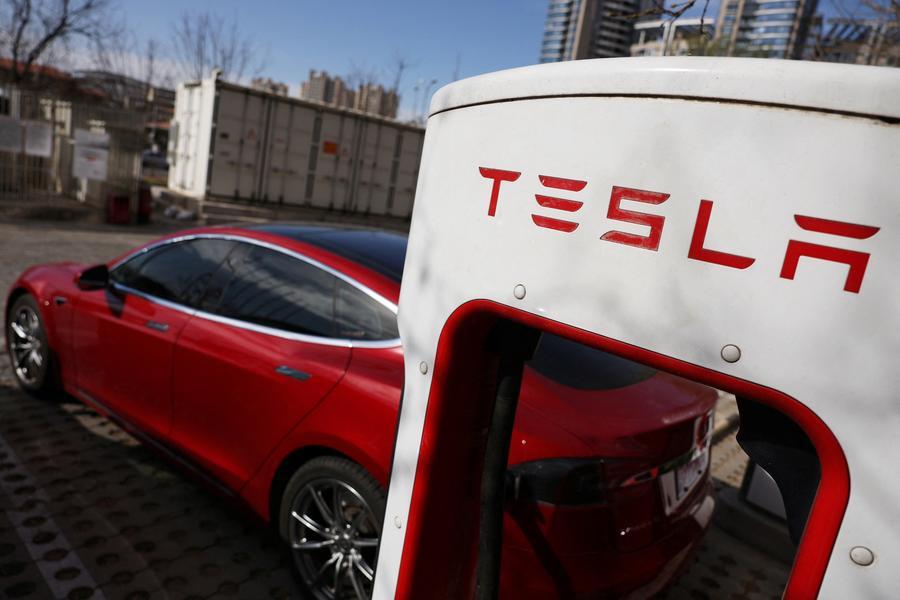
Photo: ZAWYA
Tesla Accelerates a High-Stakes Pivot Away From Cars
Tesla is preparing for one of the most dramatic transformations in its history.
After cutting capital expenditures to $8.6 billion last year, a 24% decline from the prior year, the company now plans to more than double spending in 2026, committing roughly $20 billion to reshape its business around artificial intelligence, humanoid robots, autonomous vehicles, and advanced chip infrastructure.
The shift comes as Tesla grapples with slowing vehicle sales and intensifying global competition, particularly from China’s BYD and European automakers such as Volkswagen and BMW.
“Forget the Tesla you knew,” analysts at Canaccord Genuity wrote following the company’s latest earnings report. They described the strategy as a decisive turning point, calling it a “burn the ships” moment that leaves no room for retreat. The firm reiterated its buy recommendation on Tesla shares.
Despite the ambitious vision, Tesla stock fell 3.5% in the latest session to close at $417.89, bringing its January decline to more than 7%.
Auto Sales Slide as Tesla’s Revenue Shrinks for the First Time
Tesla’s traditional auto business is under pressure.
Automotive revenue, which still represents about 70% of Tesla’s total business, dropped 10% in 2025. The company also reported its first-ever annual revenue decline, marking a major milestone for a brand long associated with rapid growth.
The slowdown reflects a combination of factors: a lack of major new EV model launches, pricing pressure, and fierce competition in key markets. BYD continues to gain share in China with lower-cost electric vehicles, while European rivals are rolling out broader EV lineups aimed directly at Tesla’s core segments.
During the earnings call, Elon Musk confirmed that Tesla will discontinue production of its Model S sedan and Model X SUVs. While those vehicles accounted for less than 3% of deliveries last year, they played a critical role in establishing Tesla as a mainstream EV maker.
The Fremont, California production lines previously dedicated to those models will now be converted into a facility focused on building Optimus humanoid robots.
Fremont Factory to Become a Robotics Hub
Musk said Fremont will increasingly pivot from cars to robots.
The factory will be retooled to support Optimus, Tesla’s bipedal humanoid robot, which the company envisions eventually performing tasks ranging from factory labor to household assistance. Musk has previously suggested Optimus could one day make Tesla a $25 trillion company, compared with its current market capitalization of roughly $1.4 trillion. He has also said that as much as 80% of Tesla’s future value could ultimately come from robotics.
For now, Optimus remains in development.
Musk acknowledged that the robots are not yet deployed in Tesla factories in any meaningful way and described the project as still being in its early research and development phase. While Tesla aims to build a production line capable of manufacturing up to one million Optimus units per year, Musk cautioned that significant production volumes are unlikely before the end of this year, noting the company is still refining both hardware and software.
Tesla did not disclose how much of the $20 billion spending plan will be allocated specifically to Optimus.
Chief Financial Officer Vaibhav Taneja said the capital will be spread across six factories and multiple initiatives, including battery storage refining, development of the Cybercab autonomous vehicle, expansion of the Semi electric truck program, construction of Optimus production capacity, and a major buildout of AI computing infrastructure.
In addition, Tesla plans to continue upgrading its existing factories to increase output and support new product lines.
Robotaxis Expand as Tesla Pushes Toward Full Autonomy
Alongside robotics, Tesla is doubling down on autonomous driving.
The company launched a Robotaxi-branded ride-hailing app in 2025 and has been running pilot services in Austin, Texas. Tesla executives recently confirmed that human safety supervisors have been removed from a small number of vehicles in Austin to conduct fully driverless passenger rides.
Tesla also operates a service in the San Francisco area, though those vehicles still have drivers behind the wheel.
According to the company’s investor presentation, Tesla plans to expand Robotaxi coverage to seven additional U.S. cities in the first half of this year: Dallas, Houston, Phoenix, Miami, Orlando, Tampa, and Las Vegas.
The push puts Tesla in direct competition with Alphabet’s Waymo in the U.S. and Baidu’s Apollo Go in China, both of which are rapidly scaling their own autonomous ride-hailing operations.
Despite years of promises, Tesla has yet to deliver a consumer-ready self-driving system that operates without a human prepared to intervene. Musk reiterated that achieving true autonomy remains a core priority.
Chips Become the Next Strategic Battleground
Another major focus of Tesla’s investment surge is semiconductors.
Musk warned that suppliers including Samsung, Taiwan Semiconductor Manufacturing Co., and Micron cannot produce enough chips to meet Tesla’s long-term needs, particularly as demand grows for AI training, robotics, and autonomous driving.
To address this, Musk floated plans for a massive domestic “Tesla TeraFab,” a vertically integrated facility that would manufacture logic chips, memory, and advanced packaging in one location. The goal would be to secure Tesla’s supply chain while reducing exposure to geopolitical risks.
“We’re going to be paranoid and make sure that we can continue to build batteries and robots and AI chips no matter what happens,” Musk said.
However, Taneja clarified that the current $20 billion spending plan does not yet include construction of a TeraFab, nor does it cover Musk’s longer-term vision of launching solar cell manufacturing in the United States.
Competition Intensifies Across AI, Robotics, and Autonomy
Tesla’s pivot places it in crowded and highly competitive fields.
In humanoid robotics, U.S. companies such as Boston Dynamics and Apptronik are racing ahead, while Chinese firms including Unitree and Agibot are rapidly advancing lower-cost alternatives. In autonomous vehicles, Waymo continues to expand its footprint in American cities, and Apollo Go is scaling aggressively in China.
These rivals bring deep technical expertise and substantial financial backing, raising the stakes for Tesla’s ambitious transformation.
Barclays analysts, who rate Tesla shares as hold, said the end of the Model S and X marks a symbolic turning point for the company.
They described it as a “baton pass” from traditional automotive manufacturing to what they call “physical AI,” adding that Tesla’s latest moves make it unmistakably clear that the company no longer sees itself primarily as a carmaker.
A Defining Moment for Tesla’s Future
Tesla’s $20 billion investment plan represents more than a spending increase. It signals a wholesale redefinition of the company’s identity.
With EV growth slowing and competition intensifying, Musk is betting that robotics, AI, autonomy, and custom chips will drive Tesla’s next era of expansion. The strategy carries enormous potential, but also substantial execution risk, as many of these technologies remain unproven at scale.
For investors, employees, and competitors alike, one thing is clear: Tesla is no longer focused solely on electric cars. The company is attempting to reinvent itself as a vertically integrated AI and robotics powerhouse, and the outcome of that gamble could reshape not only Tesla, but the future of mobility and automation.

Popular articles


Subscribe to unlock premium content
Dining Beneath the Waves
The $45 Million Glow-in-the-Dark Indoor Garden Revolution
Stars in the Palm of Your Hand
Dining Beneath the Waves
The $45 Million Glow-in-the-Dark Indoor Garden Revolution
Dining Beneath the Waves