Tesla Retires Model S and X as Musk Shifts Fremont Factory Toward Optimus Robot Production

Tesla Retires Model S and X as Musk Shifts Fremont Factory Toward Optimus Robot Production
By
Leah Rosenfeld
Last updated:
January 29, 2026
First Published:
January 29, 2026

Getty Images
Tesla Phases Out Its Flagship Models to Make Way for Robots
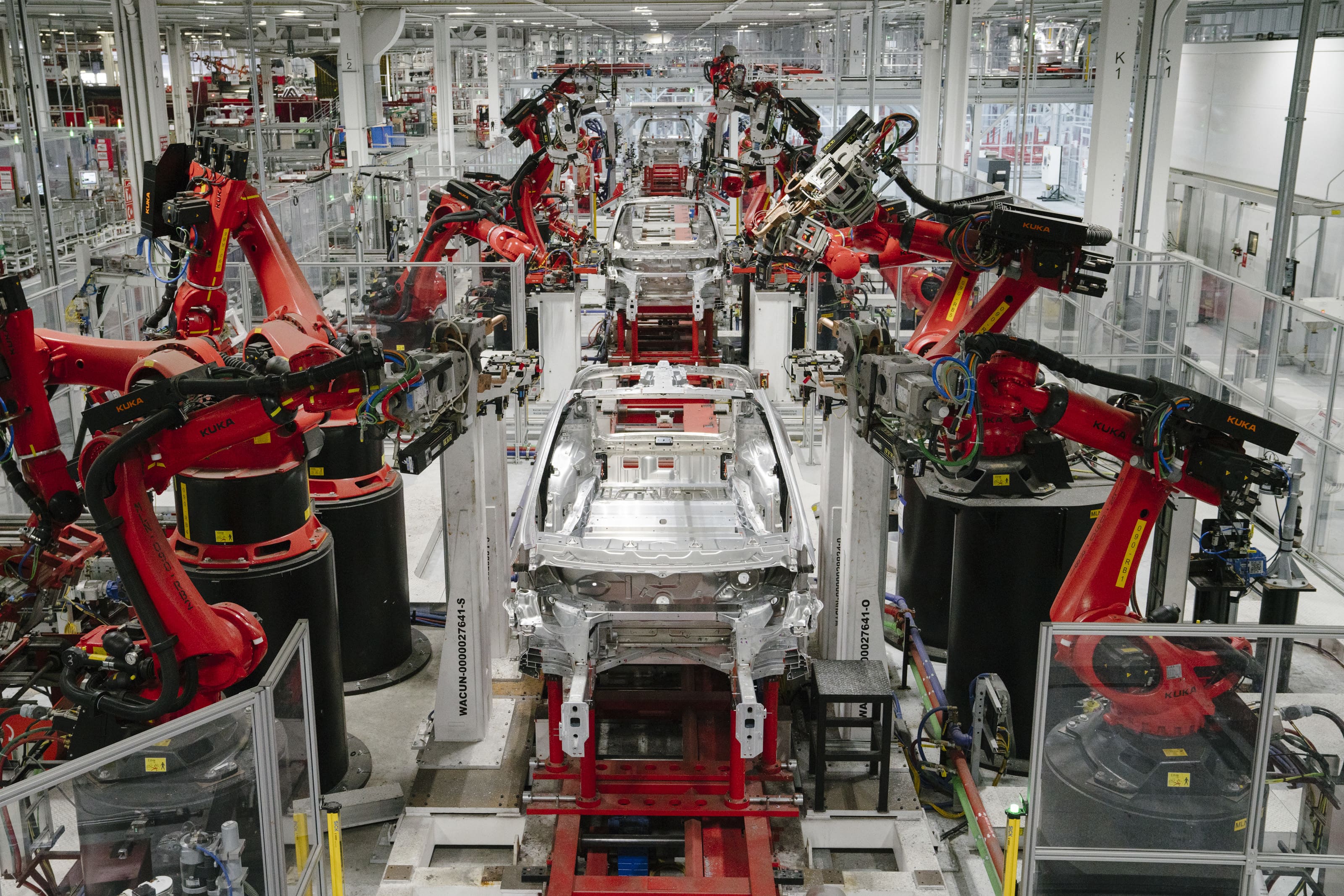
Tesla CEO Elon Musk announced a sweeping change to the company’s manufacturing strategy, confirming that production of the Model S and Model X will officially come to an end. The Fremont, California factory lines currently used for the two vehicles will be converted to build Optimus, Tesla’s humanoid robot.
Speaking during Tesla’s fourth quarter earnings call, Musk described the decision as a natural conclusion for the company’s earliest mainstream vehicles.
“It’s time to basically bring the Model S and X programs to an end with an honorable discharge,” he said, adding that customers interested in either model should place orders soon.
The move marks the end of an era for Tesla. After the original Roadster, the Model S and Model X were the company’s first major production vehicles, helping establish Tesla as a serious automaker and accelerating global adoption of electric cars.
From Luxury EVs to Humanoid Robots
Tesla began selling the Model S sedan in 2012, followed by the Model X SUV in 2015. Both vehicles once represented the cutting edge of electric mobility, but in recent years they have struggled to maintain momentum amid intensifying competition from established automakers and fast growing Chinese EV brands.
Despite multiple refreshes and price cuts, demand for the premium models has steadily weakened. Today, the Model S starts at roughly $95,000, while the Model X begins near $100,000, placing both firmly in the luxury segment.
By contrast, Tesla’s lower priced Model 3 and Model Y dominate sales. Together, those two vehicles accounted for about 97% of Tesla’s 1.59 million global deliveries last year. The Model 3 now starts around $37,000, and the Model Y near $40,000, with more affordable trims introduced late last year to support demand.
With volume increasingly concentrated in just two models, Tesla is choosing to retire its aging premium lineup and redirect factory capacity toward what Musk believes is the company’s next major growth engine.
Fremont Factory to Host Massive Optimus Expansion
Musk said Tesla will replace the existing Model S and X production lines at Fremont with what he described as a “one million unit per year” Optimus manufacturing line.
Because Optimus relies on an entirely new supply chain, Musk noted that almost none of the existing vehicle manufacturing infrastructure will carry over.
“It is a completely new supply chain,” he said. “There’s really nothing from the existing supply chain that exists in Optimus.”
Tesla also plans to expand its workforce at the Fremont facility and significantly increase overall output as robot production ramps up.
In its earnings release, Tesla confirmed it will unveil the third generation of Optimus later this quarter. The company described it as the first version designed specifically for mass production, signaling a transition from prototype demonstrations to early commercial scaling.
Optimus is envisioned as a general purpose, bipedal robot capable of performing tasks ranging from factory labor and warehouse logistics to household assistance. Musk has previously claimed that Optimus could eventually become Tesla’s most valuable product, potentially surpassing its automotive business in the long run.
A Strategic Pivot Amid Slowing EV Growth
The announcement comes at a challenging time for Tesla’s core car business.
Although the company beat Wall Street estimates for the fourth quarter, Tesla also reported its first annual revenue decline on record, with sales falling in three of the past four quarters. Rising competition, pricing pressure, and softer demand in key markets have weighed on growth.
Globally, legacy automakers and new entrants alike are flooding the EV market with alternatives, often at lower prices. In China, Tesla faces fierce competition from domestic brands, while in Europe and the United States, buyers now have dozens of electric options across nearly every price segment.
Against that backdrop, Musk has increasingly shifted Tesla’s narrative away from traditional electric vehicles and toward autonomous driving, artificial intelligence, and robotics, areas where the company currently generates little to no revenue but sees massive long term potential.
Betting on Autonomy and Robotics
Optimus is a central part of Musk’s broader vision to transform Tesla into an AI and robotics company rather than simply an automaker. Alongside the robot initiative, Tesla continues to invest heavily in self driving software and custom AI hardware, positioning autonomy and robotics as future pillars of the business.
While commercial deployment of Optimus remains in its early stages, Tesla has already begun testing the robots inside its own factories. Musk has suggested that internal use will precede external sales, allowing Tesla to refine the technology while improving productivity across its manufacturing footprint.
Industry analysts note that building a humanoid robot at scale presents enormous technical and economic challenges, from perception and dexterity to battery life and safety. Still, Tesla’s ability to integrate software, hardware, and manufacturing under one roof gives it a unique platform to pursue the opportunity.
Closing a Chapter, Opening Another
Ending production of the Model S and X closes a defining chapter in Tesla’s history. Those vehicles helped turn a Silicon Valley startup into the world’s most recognizable electric car brand.
Now, Tesla is betting that its future lies less in luxury sedans and SUVs and more in artificial intelligence powered machines.
With Fremont set to become a hub for humanoid robot manufacturing, Musk is making one of his boldest strategic shifts yet, steering Tesla toward a future centered on autonomy and robotics, even as the company navigates slowing EV growth and its first ever annual sales decline.

Popular articles


Subscribe to unlock premium content
Dining Beneath the Waves
The $45 Million Glow-in-the-Dark Indoor Garden Revolution
Stars in the Palm of Your Hand
Dining Beneath the Waves
The $45 Million Glow-in-the-Dark Indoor Garden Revolution
Dining Beneath the Waves