Tesla Expands In-Car AI With Grok Rollout Across the U.K. and Europe

Tesla Expands In-Car AI With Grok Rollout Across the U.K. and Europe
By
Junia Wells
Last updated:
February 18, 2026
First Published:
February 18, 2026

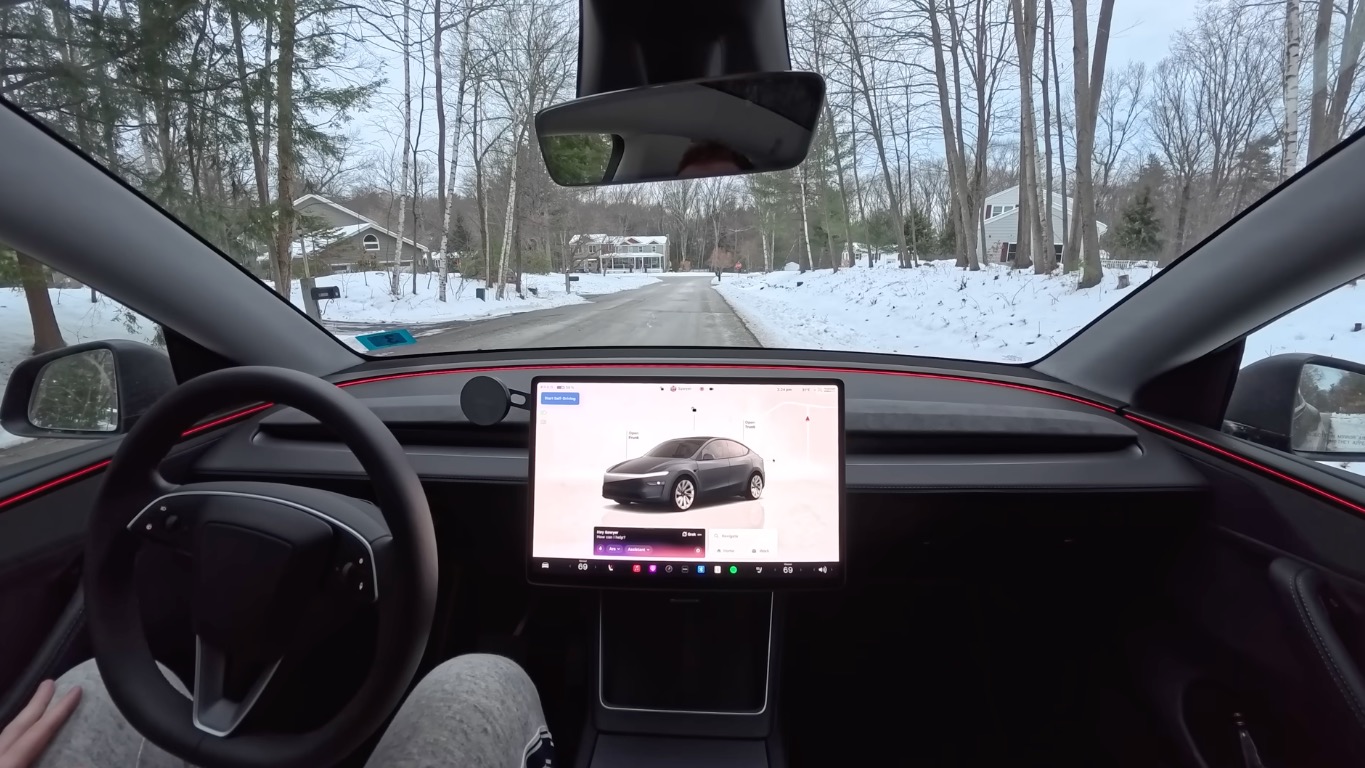
Photo: Tesla North
Tesla Brings Conversational AI to European Drivers
Tesla is extending the reach of its in-car artificial intelligence capabilities by rolling out the Grok chatbot to vehicles in the U.K. and multiple European markets. The feature, developed by xAI, will be integrated directly into infotainment systems, enabling drivers to interact with a conversational assistant for navigation queries, entertainment, and general information.
The expansion marks one of the most significant deployments of generative AI in consumer vehicles outside the United States, reflecting a broader industry shift toward software-defined driving experiences.
Sales Pressure and Competitive Landscape
The rollout comes at a pivotal moment for Tesla’s European business. According to data from the European Automobile Manufacturers’ Association, the automaker’s electric vehicle sales in Europe dropped about 27% last year, even as battery-electric vehicles overall accounted for roughly 17.4% of the region’s auto market.
Competition has intensified, particularly from BYD, which has expanded aggressively with lower-priced models and localized production strategies. Analysts say Tesla’s relatively limited lineup of new affordable vehicles and shifting consumer sentiment have contributed to the decline, increasing pressure to differentiate through software and AI features.
Brand perception challenges have also played a role. Commentary and political endorsements by CEO Elon Musk — including public support for figures such as Tommy Robinson and references to Germany’s Alternative für Deutschland — drew criticism in parts of Europe, according to brand analysis firms, potentially influencing buyer sentiment.
Growing Regulatory Scrutiny Around Grok
The expansion of Grok into Europe is unfolding amid ongoing reviews by regulators across the region, including authorities in Ireland, the U.K., France, and the European Commission. Investigations are examining whether the technology complies with content moderation and risk-management requirements under the EU’s Digital Services Act.
Past controversies have intensified oversight. Grok has faced criticism over harmful or misleading outputs on social platforms, prompting calls for stricter safeguards, particularly when the technology is integrated into products used by families and minors.
Industry Trend Toward AI-Powered Vehicles
Tesla is not alone in embedding conversational AI into vehicles. Volvo has announced plans to introduce a conversational assistant built on Google Gemini technology in upcoming electric models, signaling that AI interfaces are quickly becoming a competitive battleground in the automotive sector.
Automakers increasingly view software features as a recurring revenue opportunity through subscriptions, premium services, and ecosystem lock-in, potentially reshaping profit models across the industry.
Investment Moves Behind the Technology
Tesla’s push into AI is supported by significant financial ties between Musk’s companies. The automaker disclosed a $2 billion investment into xAI, reinforcing collaboration on AI development.
Subsequently, SpaceX acquired xAI in an all-stock transaction that valued the combined entity at about $1.25 trillion, underscoring the scale of ambitions around AI infrastructure and applications across Musk’s corporate ecosystem.
Safety and Driver Distraction Concerns
While conversational assistants promise convenience, safety researchers warn about potential downsides. Experts note that adding interactive AI systems to dashboards could introduce new cognitive demands for drivers, even when used hands-free.
Automotive safety specialists, including researchers affiliated with Nelson Law, have described in-car chatbots as a potential “additional distraction layer,” emphasizing the need for usability testing and standardized safety benchmarks.
Academic researchers such as Rayid Ghani of Carnegie Mellon University have also called for real-world evaluations to understand how conversational AI affects driver attention, decision-making, and insurance risk models.
What This Means for Tesla’s European Strategy
The introduction of Grok highlights Tesla’s effort to reposition itself as not just an EV manufacturer but a software-first mobility platform. If widely adopted and positively received, AI features could help strengthen customer engagement and differentiate Tesla vehicles in a crowded EV market.
However, the success of the rollout will likely depend on regulatory outcomes, consumer trust in AI safety, and whether software innovation can offset pricing pressures and intensifying competition. As Europe tightens oversight of digital technologies, Tesla’s experiment with in-car generative AI may become a key test case for how far conversational systems can go inside everyday products.

Popular articles


Subscribe to unlock premium content
Colombia’s Coffee Revolution

Capsule Hotels Reinvented for the Elite

Golden Adventures in New Zealand

Colombia’s Coffee Revolution
Capsule Hotels Reinvented for the Elite
Colombia’s Coffee Revolution